Quick Facts
- The Root Cause: Thermal runaway, an exothermic reaction cycle that generates internal heat and oxygen, making the fire self-sustaining.
- Temperature Peaks: Battery fires can exceed 800°C (1,472°F) almost instantly, with some reaching extreme peaks of 4,900°F.
- Water Demand: Extinguishing an electric vehicle fire requires 30,000 to 40,000 gallons of water, compared to only 1,000 gallons for standard cars.
- Reignition Risk: Damaged cells can remain unstable and reignite as long as three weeks after the initial incident.
- Toxic Hazard: Combustion releases a dangerous cocktail of gases, including hydrogen fluoride and carbon monoxide.
- Suppression Challenges: Traditional methods like foam or fire blankets often fail because the battery produces its own oxygen internally.
Lithium battery fires are uniquely challenging due to thermal runaway, an exothermic reaction cycle where cells generate their own heat and oxygen. This internal chemical reaction means that even if external flames are suppressed, the heat continues to build, often leading to rapid cell-to-cell propagation. Standard suppression agents are frequently ineffective because they cannot easily reach the internal short circuits driving the fire.
The Science of Destruction: Understanding Thermal Runaway
To understand why lithium battery fires are so devastating, one must look at the microscopic level of the battery cell. At the heart of every lithium-ion battery is a delicate balance of chemicals separated by a thin, permeable membrane. When this membrane fails—due to physical impact, overcharging, or manufacturing defects—it triggers an internal short circuit. This failure marks the beginning of thermal runaway in lithium-ion batteries.
Once a cell enters thermal runaway, it begins an exothermic reaction cycle. The energy stored within the battery is released as heat, which further accelerates the chemical breakdown of the electrolyte. This creates a feedback loop: more heat leads to more reactions, which leads to even more heat. When the temperature reaches approximately 135°C, the plastic separators in adjacent cells begin to melt, leading to cell-to-cell heat propagation.
This chain reaction is what makes lithium battery fires so aggressive. A single failing cell can compromise its neighbors in seconds, turning a small device or a vehicle battery pack into a high-energy furnace. Preventing thermal runaway in lithium ion battery packs remains the holy grail of battery engineering, as the process is incredibly difficult to stop once it gains momentum. The anode-cathode shorting provides a direct path for electrical energy to convert into thermal energy, while electrolyte flammability ensures there is plenty of fuel to keep the reaction going.
The Oxygen Dilemma: Why You Can’t Smother a Lithium Fire
Most people are taught the fire triangle: heat, fuel, and oxygen. If you remove one, the fire goes out. This is why we use fire blankets for kitchen fires or CO2 extinguishers for electrical panels. However, lithium battery fires play by different rules. Because of their oxygen-generating cathodes, these batteries contain all the components of the fire triangle within their own sealed casings.
When the metal oxides in the cathode break down during thermal runaway, they release pure oxygen directly into the fire. This internal oxygen production means that traditional oxygen-deprivation suppression methods, such as foam or standard ABC dry chemical extinguishers, are largely ineffective. You can spray a battery with foam until it is completely covered, but the chemical fire will continue to rage underneath because it does not need the surrounding air to breathe.
Furthermore, the sealed nature of battery packs leads to internal pressure venting. As gases build up inside the rigid battery casing, they eventually burst through relief valves or the casing itself in the form of jet flames. These high-velocity torches can melt steel and spread the fire to nearby structures before first responders can even set up their equipment. Finding the best fire suppression agents for lithium ion battery thermal runaway is an ongoing area of research, but for now, the primary goal is heat removal rather than smothering.
The Logistics of Cooling: Why Water Volume Matters
If you cannot smother the fire, you must cool it. However, cooling a lithium battery is an immense logistical challenge. Battery packs are designed to be durable, waterproof, and well-insulated. While these features are great for daily use, they act as a shield against firefighting efforts. The low thermal conductivity of the battery materials means that the heat stays trapped inside while the water runs off the exterior.
The disparity in resources required for lithium battery fires compared to internal combustion engine (ICE) fires is staggering. To put it into perspective, a typical ICE vehicle fire might be extinguished with 500 to 1,000 gallons of water. In contrast, extinguishing a lithium-ion battery fire in an electric vehicle can require between 30,000 and 40,000 gallons of water. 40,000 gallons. That is the cost of one EV fire.
| Feature | ICE Vehicle Fire | EV (Lithium Battery) Fire |
|---|---|---|
| Water Required | 500 – 1,000 Gallons | 30,000 – 40,000 Gallons |
| Suppression Method | Smothering / Cooling | High-Volume Cooling / Immersion |
| Reignition Risk | Low (once cooled) | High (up to weeks later) |
| Primary Hazard | Fuel spill / External heat | Thermal runaway / Toxic gas / Voltage |
| Duration | 30 – 60 Minutes | Multiple hours to days |
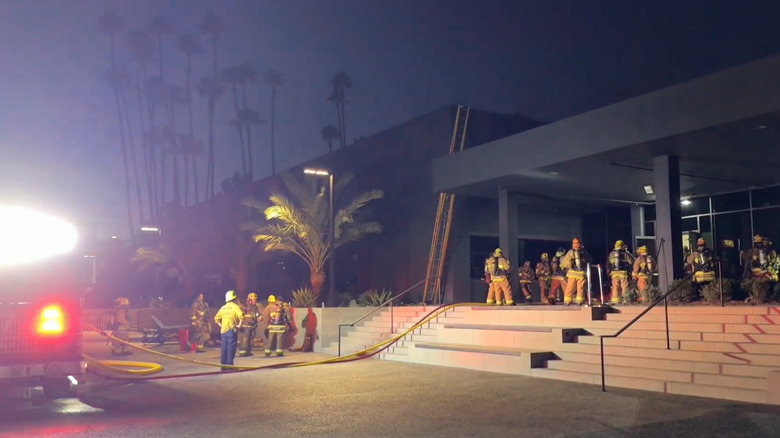
Firefighting protocols for lithium-ion batteries now often include the use of immersion containers. In some jurisdictions, if an EV battery is compromised, firefighters will use a crane to drop the entire vehicle into a large tank of water. This total immersion is often the only way to ensure that every cell is sufficiently cooled to stop the thermal runaway process. Specialized firefighting equipment for electric vehicle battery fires is becoming a standard requirement for modern fire departments, as traditional tools simply aren't enough to handle the high-volume water cooling necessary for these incidents.
Reignition and Toxicity: The Dangers After the Flames
One of the most terrifying aspects of lithium battery fires is their "zombie" nature. A battery that looks completely extinguished and cold to the touch can suddenly burst back into flames hours or even days later. This reignition of lithium battery fires occurs because of residual electrical energy and trapped heat within the battery pack. Even when the external fire is out, damaged cells can remain in a state of thermal instability.
This is why many towing companies and salvage yards have established "quarantine zones" for damaged electric vehicles. A car that was involved in a minor accident on a Monday could potentially ignite on a Friday while sitting in a storage lot. Statistics show that batteries have been recorded to reignite as long as three weeks after the initial incident. This makes post-incident management a long-term commitment rather than a quick cleanup.
Beyond the fire itself, the smoke released is incredibly dangerous. During thermal runaway, lithium-ion cells release flammable gases like hydrogen and carbon monoxide, but more importantly, they release hydrogen fluoride toxicity. This gas is corrosive and can cause deep tissue damage and respiratory failure even at low concentrations. Managing toxic gas exposure during lithium battery fires requires first responders to remain in full breathing apparatus long after the visible flames are gone. Using infrared heat monitoring is the only reliable way to check for hidden "hot spots" within a pack that might indicate a pending reignition.
Modern Mitigation: BMS and Future Materials
The industry is not sitting idle while these risks persist. The focus is shifting toward "intrinsic safety," where the battery is designed to be incapable of entering thermal runaway. One of the primary lines of defense is intelligent BMS monitoring. Modern battery management systems use sophisticated algorithms to track the voltage, current, and temperature of every individual cell group. By detecting the early warning signs of an internal short—such as a slight voltage drop or an unusual temperature rise—the BMS can disconnect the battery before a fire even starts.
Researchers are also developing new materials to slow down the fire if it does occur. This includes PEE@EBF composites designed for smoke reduction and flame retardancy. Some manufacturers are experimenting with solid-state batteries, which replace the flammable liquid electrolyte with a solid ceramic or polymer, theoretically eliminating the primary fuel source for the fire. Until these technologies become mainstream, we rely on infrared heat monitoring and improved first responder training to manage the risks of current lithium-ion technology.
Safety Warning: Never attempt to extinguish a large lithium battery fire yourself with a standard home extinguisher. Evacuate the area immediately and call emergency services, informing them specifically that a lithium battery is involved.
FAQ
Why are lithium battery fires so difficult to put out?
Lithium battery fires are difficult because they generate their own heat and oxygen through a process called thermal runaway. This self-sustaining chemical reaction means traditional smothering techniques fail, and the fire can continue to burn even without access to outside air.
How do you extinguish a lithium battery fire?
Extinguishing these fires requires massive, sustained volumes of water to cool the internal cells and stop the heat-generating chemical reactions. In many cases, total immersion in a water tank for several days is the only way to ensure the battery is safe and won't reignite.
Can you use water on a lithium battery fire?
Yes, water is the preferred cooling agent, but it must be used in very high quantities. While water and electricity usually don't mix, the priority in a battery fire is to lower the temperature of the cells to stop the thermal runaway chain reaction.
Why do lithium batteries explode suddenly?
Batteries can explode due to internal pressure venting. As the chemicals inside break down, they create gas. If this gas cannot escape quickly enough through safety valves, the pressure builds until the battery casing fails catastrophically, often resulting in jet flames or explosions.
What are the warning signs of a failing lithium battery?
Common warning signs include the battery feeling unusually hot to the touch, visible swelling or "pillowing" of the case, a strange metallic or sweet chemical smell (leaking electrolyte), or the device suddenly losing its charge much faster than usual.