Quick Facts
- Core Requirement: Charging a Tesla typically requires between 9 and 12 high-efficiency solar panels for an average daily commute.
- Economic Advantage: Home solar energy costs roughly $0.06 per kilowatt-hour, significantly lower than the $0.12 to $0.30 charged by most grid utilities.
- System Components: A functional setup includes a Photovoltaic (PV) array, an inverter, a charge controller, and a stationary battery like the Tesla Powerwall.
- Annual Savings: U.S. homeowners transitioning to solar for their EVs can save between $800 and $3,100 on energy costs every year.
- 2026 Efficiency Standards: Modern systems prioritize HJT cell technology for better performance in high heat and native support for the NACS charging standard.
- ROI Timeline: While the initial investment is significant, most homeowners reach a break-even point in approximately 11 years.
Planning your home solar EV charging setup? In 2026, the shift toward sustainable transportation requires more than just panels. This guide breaks down the essential components, from the Photovoltaic (PV) array to the Tesla Wall Connector, ensuring energy self-sufficiency for your Model 3, Y, or S. Charging a Tesla typically requires at least nine to twelve high-efficiency solar panels dedicated solely to the vehicle, depending on your daily driving distance and local sun hours. This calculation is based on an average EV consumption of approximately 4,700 kWh annually. Since panels rarely operate at peak capacity and degrade over time, installing extra panels or using net metering is recommended to ensure a reliable energy supply.
Understanding the Ecosystem: Essential Components
One of the most common misconceptions I encounter as an IoT editor is the idea that you can simply run a cable from a solar panel directly into your car. In reality, a home solar EV charging setup is a sophisticated ecosystem of interconnected devices. To make this work, you need a system that can handle the variable nature of sunlight and convert it into the steady, high-power stream your vehicle requires.
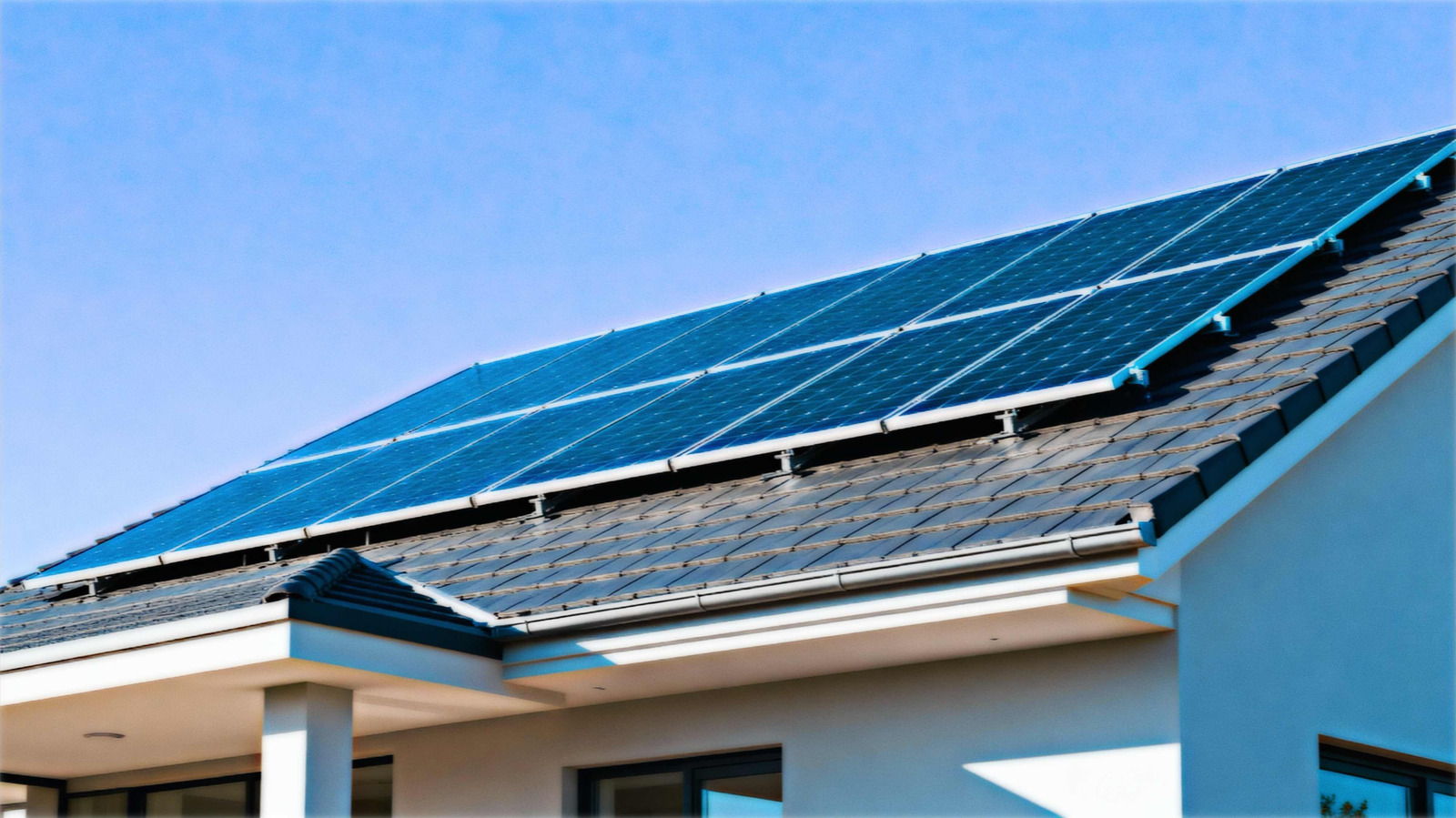
The journey begins at the Photovoltaic (PV) array on your roof. These panels generate Direct Current (DC) electricity, but your home and your car’s internal charging system operate on Alternating Current (AC). This is why the dc to ac inverter requirements for solar ev charging are so critical. The inverter serves as the brain of the operation, synchronizing the electricity flow with your home’s needs and the grid.
Furthermore, integrating tesla powerwall with home solar for ev charging provides a necessary buffer. Solar production peaks during the day when your car might be at work, and production drops to zero at night when most people prefer to charge. The Powerwall stores excess daylight energy, allowing you to charge your vehicle after the sun goes down. Finally, the Tesla Wall Connector acts as the physical interface, safely delivering power to the vehicle via the NACS charging standard.

Sizing Your Solar: The 2026 Calculation Formula
Determining how many solar panels to charge a tesla per day requires a bit of math tailored to your specific driving habits. A standard Tesla Model 3 with a 75 kWh battery is an efficient machine, but it still demands a significant amount of energy. According to industry data, a Tesla Model 3 typically requires approximately 6 solar panels with a 350W rating just to cover a modest 50-mile daily commute.
To calculate your total solar panels needed for ev charging, use this three-step formula:
- Annual Mileage: Determine how many Kilowatt-hours (kWh) your vehicle consumes annually. For most drivers, this is about 4,700 kWh.
- Solar Irradiance: Factor in your local Peak sun hours. A home in Arizona will produce much more energy per panel than one in Washington state.
- System Buffer: Add a 20% margin for weather fluctuations and the natural degradation of panel efficiency over time.
When planning, you must also consider deciding between direct solar ev charging and net metering. Net metering allows you to "sell" excess solar power back to the grid during the day and "buy" it back at night at a credit. If your utility offers favorable net metering rates, you might need a smaller battery storage system. However, for true energy self-sufficiency, a larger panel array and dedicated storage are the gold standard for 2026.
| Feature | Level 1 (120V) | Level 2 (240V) | DC Fast Charging |
|---|---|---|---|
| Solar Compatibility | High (Low Draw) | Excellent (Home Standard) | Low (Requires Industrial Solar) |
| Charging Speed | 3-5 miles per hour | 20-44 miles per hour | 100+ miles in 30 mins |
| Efficiency | Lower (Heat Loss) | High (Optimized) | Very High (Bypasses Onboard Inverter) |
Hardware Selection: Efficiency in Hot and Cold Climates
As we move through 2026, not all panels are created equal. When comparing high efficiency solar panels for tesla charging 2026, the focus has shifted from simple wattage to performance under stress. If you live in a region with high summer temperatures, the Temperature coefficient of your panels becomes your most important metric. Traditional panels lose efficiency as they get hot; however, new Heterojunction (HJT) cell technology maintains a lower coefficient, typically around -0.24%/°C, ensuring your Tesla gets maximum power even in July heat.
Smart home enthusiasts will appreciate the advancement in Smart energy monitoring. Modern inverters and the Tesla app now offer granular data on how much of your car's charge is coming directly from the sun versus the grid. This allows homeowners to take advantage of Time-of-Use (TOU) pricing. By programming your setup to avoid charging during peak grid demand hours and prioritizing storage during peak sun hours, you maximize the value of every photon captured by your Photovoltaic (PV) array.
Datasheet Decoder: What to Look For
- Wattage: Aim for 400W+ panels to minimize the physical footprint on your roof.
- Degradation Rate: Look for warranties that guarantee at least 90% production after 25 years.
- Bifaciality: If you are installing a ground-mounted system, bifacial panels can capture sunlight reflecting off the ground, increasing yield by up to 15%.
The Financial Case: ROI and 2026 Incentives
The economics of solar ev charging have never been more compelling. While the upfront cost of a full system—including panels, a Tesla Powerwall, and the Wall Connector—can range from $25,000 to $35,000, the long-term savings are staggering. Internal data from Tesla suggests that U.S. homeowners using solar for both their home and EV save between $800 and $3,100 annually on energy costs.
Furthermore, the cost of charging with home solar is estimated at roughly $0.06 per kilowatt-hour, a fraction of the cost of standard grid electricity. When you combine these savings with the 30% Federal Investment Tax Credit (ITC) and local rebates, the break-even point for a comprehensive system is now hovering around 11 years. Beyond the numbers, there is a profound sense of security in knowing your daily transportation is powered by the sun, insulated from the volatile fluctuations of global oil prices and utility rate hikes.
FAQ
Can you charge an electric car with solar panels?
Yes, it is entirely possible and increasingly common. However, you cannot connect the panels directly to the car. You need a system that includes an inverter to convert DC power from the panels into AC power for the vehicle, and ideally, a battery storage system to manage the energy flow.
How many solar panels does it take to charge an EV?
For a typical Tesla driver with a 50-mile daily commute, you generally need about 6 high-efficiency panels (350W-400W) dedicated to the vehicle. If you want to cover all of your home's energy needs plus the vehicle, most installations range between 15 and 25 panels total.
Is it cheaper to charge an electric car with solar power?
Absolutely. The levelized cost of solar energy is approximately $0.06 per kWh, whereas grid electricity in the United States often costs between $0.12 and $0.30 per kWh. Over the lifespan of the vehicle, this can result in tens of thousands of dollars in savings.
Do I need a home battery to charge my EV with solar?
While not strictly required if you are connected to a grid with net metering, a home battery like the Tesla Powerwall is highly recommended. It allows you to store solar energy produced during the day and use it to charge your car at night, which is when most EV owners prefer to plug in.
Can I charge my EV directly from solar panels?
No. Solar panels produce Direct Current (DC) at varying voltages depending on sunlight intensity. EV charging systems require a steady, regulated stream of Alternating Current (AC) or specifically regulated high-voltage DC. An inverter and charge controller are necessary to bridge this gap.
What equipment is needed for solar EV charging?
A complete setup requires a Photovoltaic (PV) array (the panels), a DC-to-AC inverter, a charge controller, a home battery storage system (optional but recommended), and a Level 2 charging station such as the Tesla Wall Connector.
Designing a home solar EV charging system is one of the most rewarding smart home projects you can undertake. By choosing the right components and accurately sizing your array, you transform your home into a self-sustaining power plant. If you are ready to make the switch, I recommend consulting with a certified installer to perform a site-specific solar audit, ensuring your roof orientation and local solar irradiance are optimized for the best possible return on investment.