Quick Facts
- Primary Backbone: The F-16 accounts for approximately 40% of the entire US Air Force fighter fleet as of mid-2024.
- Inventory Numbers: There are roughly 840 F-16s in service, nearly doubling the F-35A fleet and quadrupling the F-22A inventory.
- Cost Efficiency: The F-16 cost per flight hour sits at roughly $27,000, making it three times cheaper to operate than the F-22 Raptor.
- Combat Record: The platform maintains an exceptional F-16 Fighting Falcon combat success and kill ratio of 76:1.
- Modern Upgrades: New F-16V Block 70/72 features include AESA radar and a structural life extended to 12,000 hours.
- Numerical Dominance: Quantity remains a capability, allowing the Air Force to maintain high operational readiness for non-stealth-required missions.
The F-16 Fighting Falcon remains the most numerous fighter in the U.S. Air Force due to its proven combat success, multi-role versatility, and significantly lower operating costs compared to fifth-generation aircraft like the F-35. With a mission-ready fleet of approximately 840 units, the F-16 provides a high volume of reliable tactical air power while the military continues to transition to newer stealth platforms.
Despite the rise of stealth, the F-16 Fighting Falcon remains the most numerous jet in the USAF. Here is why the F-16 fleet size still dwarfs the F-35 and F-22. To understand the current landscape of American air power, one must look beyond the sleek lines of the latest stealth jets and toward the workhorse that has defined tactical aviation for decades.
The Numbers Game: US Air Force F-16 Fleet Size
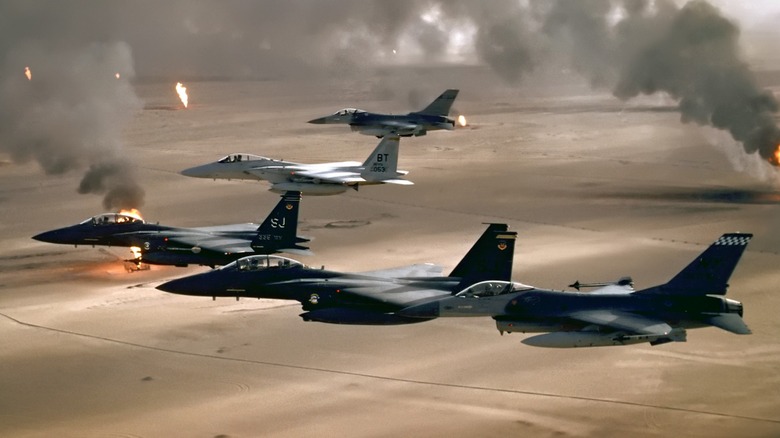
In the world of military procurement, numbers tell a story that marketing brochures often gloss over. As of late 2024, the U.S. Air Force maintains a total force inventory of 838 F-16 Fighting Falcons. When you compare this to the 443 F-35A Lightning II and the mere 185 F-22A Raptor aircraft currently in service, the scale of reliance on this 4th-generation platform becomes clear.
This US Air Force F-16 fleet size and distribution is not an accident. While the F-22 Raptor was originally intended to replace the F-15 and F-16 in air superiority roles, its production was capped at 187 units due to high costs and a shifting geopolitical landscape. This left a gap that only a versatile, mass-produced jet could fill. In modern air doctrine, quantity is considered a capability of its own. Having 800+ airframes allows the Air Force to maintain global presence, conducting daily air sovereignty missions and training exercises that would prematurely wear out the more expensive, limited-number stealth fleets.
Economics of the Air: F-16 Cost Per Flight Hour vs F-35
The primary driver behind the longevity of the F-16 Fighting Falcon is simple math. Every time a fighter jet leaves the tarmac, it consumes thousands of dollars in fuel, specialized maintenance, and parts. The F-16 cost per flight hour is remarkably low for a high-performance supersonic jet, which enables higher sortie rates and more frequent pilot training.
| Aircraft Model | Cost Per Flight Hour (Estimated) | Active Inventory (Approx.) |
|---|---|---|
| F-16 Fighting Falcon | $27,000 | 838 |
| F-35A Lightning II | $42,000 | 443 |
| F-22A Raptor | Over $80,000 | 185 |
When comparing the F-16 cost per flight hour vs F-35, the older jet provides a significant budgetary relief. A single hour of F-22 flight time costs nearly as much as three hours of F-16 flight time. This "High-Low" fleet mix strategy allows the Air Force to reserve the expensive 5th-generation jets for high-threat environments while using the F-16 for routine patrols, close air support, and missions where stealth is not a prerequisite for survival.
Bridging the Gap: F-16V Block 70/72 Features
Calling the modern F-16 an "old" plane is technically inaccurate. While the original airframe design dates back to the 1970s, the latest variants are categorized as 4.5-generation fighters. The F-16V Block 70/72 features bring the jet into the modern era by integrating technology originally developed for the F-35.
Key F-16 Block 70/72 upgrade features include:
- APG-83 AESA Radar: This Active Electronically Scanned Array radar provides the Viper with 5th-generation radar capabilities, allowing it to track more targets at longer ranges with higher precision.
- Modern Mission Computer: A high-speed processor that integrates data from various sensors to provide the pilot with superior situational awareness.
- Auto-GCAS: The Automatic Ground Collision Avoidance System has already been credited with saving multiple pilots' lives by taking control of the aircraft if it detects an impending impact with the ground.
- Advanced Electronic Warfare: New internal suites allow the jet to jam enemy sensors more effectively, increasing survivability in contested airspace.
These enhancements ensure that the F-16 remains a lethal component of the tactical flexibility required by Lockheed Martin and the Air Force to face contemporary threats.
Structural Longevity: Why the Viper Isn't Retiring
The physical airframe of the F-16 has proven to be incredibly durable. Through various F-16 structural service life extension programs, also known as SLEP, the Air Force has been able to keep these jets flying far longer than originally anticipated. Initially designed for a 4,000 to 8,000-hour service life, many F-16s are now being cleared to fly for up to 12,000 hours.
By reinforcing the bulkhead and replacing key structural components, the Air Force ensures that the Viper continues to serve as the reliable workhorse of the fleet. This longevity is essential because the transition to an all-stealth fleet is a decades-long process. The F-16 remains the go-to platform for close air support and air-to-ground missions in environments where the enemy lacks sophisticated anti-aircraft systems.
Tactical Roles: When to Use 4th Generation vs 5th Generation Fighters
In modern air combat doctrine, the Air Force uses a "Quarterback vs Missile Truck" metaphor to explain the synergy between different aircraft generations. When to use 4th generation vs 5th generation fighters depends entirely on the mission profile.
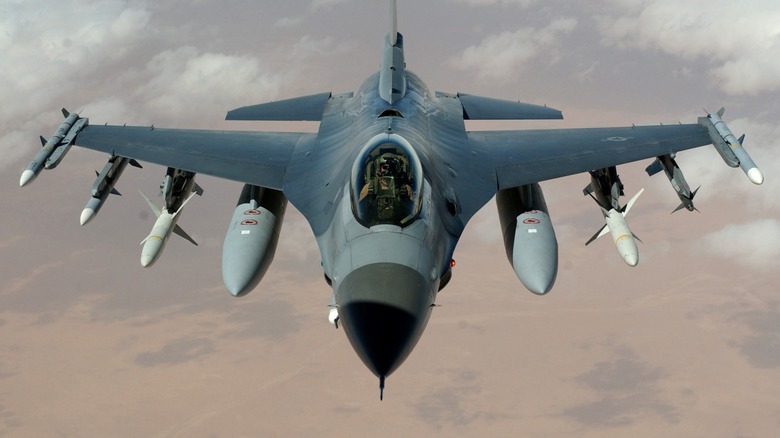
The F-35 and F-22 use their stealth and advanced sensors to act as the "quarterbacks." They penetrate deep into enemy territory undetected, identifying targets and coordinating the battle. However, stealth aircraft have limited internal weapon bays to maintain their low-observable profile. This is where the F-16 comes in. With 11 external hardpoints, a 4th generation jet can carry a massive payload of AMRAAM missiles and precision-guided bombs.
By working together, the F-35 provides the eyes, while the F-16 provides the muscle. This combination maximizes the strengths of both platforms while minimizing the operational readiness strain on the more delicate stealth coatings of the 5th-generation fleet. The F-16 Fighting Falcon accounts for approximately 40% of the U.S. Air Force fighter fleet precisely because it is the most efficient way to deliver large quantities of munitions once air superiority has been established.
FAQ
Is the F-16 still in production today?
Yes, the F-16 is still very much in production. While the US Air Force is currently focused on procuring F-35s, Lockheed Martin continues to manufacture the F-16 Block 70/72 at its facility in Greenville, South Carolina, primarily for international partners and foreign military sales.
What is the difference between an F-16 and an F-35?
The primary difference is stealth and sensor integration. The F-35 is a 5th-generation fighter built with a radar-evading shape and internal weapons bays, while the F-16 is a 4th-generation fighter that carries its weapons externally. The F-35 is designed for high-end "Day 1" operations against advanced defenses, whereas the F-16 is a more cost-effective multi-role platform for a wider range of missions.
Why is the F-16 often referred to as the Viper?
Although the official name is the Fighting Falcon, pilots and crews almost universally call it the Viper. This nickname originated early in the aircraft's history because its sharp nose and sleek profile reminded pilots of the Colonial Viper starfighters from the television show Battlestar Galactica, and because of its "snake-like" agility in dogfights.
What is the expected service life of an F-16 airframe?
The original design life was 8,000 flight hours. However, thanks to the Service Life Extension Program, many F-16 airframes are being upgraded to reach 12,000 flight hours, allowing them to remain in active service well into the 2040s.
How much does a single F-16 fighter jet cost?
The cost of a new F-16 Block 70/72 typically ranges from $60 million to $70 million depending on the specific configuration and support package. This is considerably less than the F-35A, which currently carries a flyaway cost of approximately $80 million to $85 million, not including its significantly higher long-term maintenance expenses.