Quick Facts
- Radar Reduction: Low-observable airframes can reduce a radar cross-section by over 1,000x compared to conventional jets.
- Infrared Gap: While radar visibility is slashed, thermal signature reduction is typically limited to only a 2-5x improvement.
- Detection Range: Modern IRST systems can track the infrared signature of supersonic stealth aircraft from distances of 50 to 100 kilometers.
- Thermal Penalty: Sustained supersonic flight generates intense skin friction heating, raising surface temperatures by hundreds of degrees Celsius.
- Speed Cap: To protect delicate coatings, the F-35's maximum sustained speed was reduced from Mach 1.8 to Mach 1.6 during its development phase.
- The Solution: Supercruise allows jets to maintain supersonic speeds without the massive thermal bloom of an afterburner.
Stealth fighter tracking has evolved beyond traditional radio waves to exploit a fundamental law of physics: kinetic energy creates heat. While aircraft like the F-35 are nearly invisible to radar, high-speed flight creates a significant thermal problem. High speeds generate intense skin friction heating and exhaust plumes that passive infrared search and track sensors can detect from miles away, effectively turning a supersonic stealth jet into a distinct thermal beacon against the cold backdrop of the high-altitude atmosphere.
The Infrared Achilles' Heel: Why Radar Invisible Isn't Thermal Invisible
For decades, the gold standard of stealth has been the reduction of a radar cross-section. By using jagged, faceted shapes or smooth, continuous curves, engineers can make a massive fighter jet appear no larger than a golf ball on an enemy radar screen. However, being invisible to radio waves does not make an aircraft invisible to heat-seeking sensors. This is the primary challenge in modern stealth fighter tracking.
While radar is an "active" sensor—it sends out a signal and listens for the bounce—infrared search and track (IRST) systems are "passive." They do not emit any signals, meaning a pilot often has no idea they are being tracked. The effectiveness of these sensors relies on the contrast between the aircraft and the sky. In the cold, thin air of the upper atmosphere, any object generating heat stands out.
The disparity in stealth effectiveness is staggering. Engineers have mastered the art of reducing radar returns by a factor of 1,000 or more, yet reducing the infrared signature of supersonic stealth aircraft is far more difficult, often achieving only a 2x to 5x reduction. Because of this, detecting stealth fighters through aerodynamic fluctuations and thermal emissions has become a viable counter-stealth strategy for modern air defense systems.
| Feature | Radar Stealth (RCS) | Infrared Stealth (Thermal) |
|---|---|---|
| Primary Mechanism | Shape and Radar Absorbent Material | Cooling, Masking, and Material Science |
| Reduction Factor | ~1,000x or more | ~2x to 5x |
| Detection Method | Active Radio Wave Reflection | Passive Heat Signature (IRST) |
| Speed Impact | Minimal (unless shape deforms) | High (due to friction and compression) |
Aerodynamic Heating and the F-117 Nighthawk
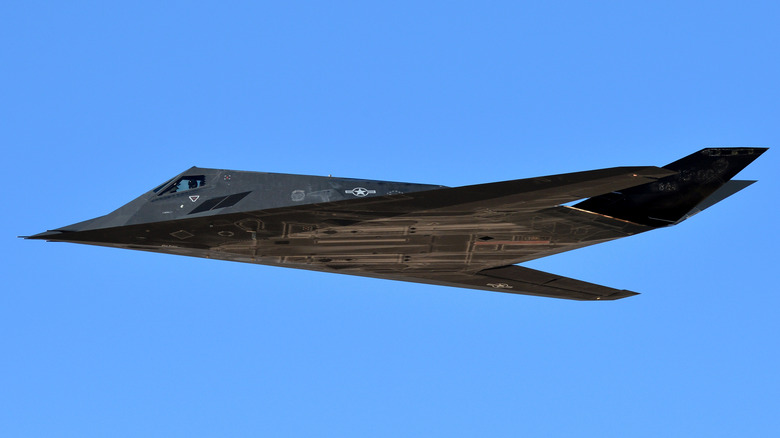
To understand why speed is the enemy of stealth, we have to look back at the first operational stealth jet, the F-117 Nighthawk. Many enthusiasts wonder why F-117 Nighthawk was limited to subsonic speeds. The answer lies in the delicate balance between physics and materials.
When an aircraft moves through the air, it encounters skin friction heating. At the front of the aircraft, known as the stagnation point, air is compressed so violently that it releases immense thermal energy. For the F-117, its faceted surfaces were designed specifically to deflect radar, but those same surfaces were not optimized for the intense heat of supersonic flight.
Furthermore, the radar-absorbent materials used on early stealth jets often contained iron-ball paint or specialized polymers designed to convert radar energy into heat. If the airframe is already hot due to high-speed friction, these aerodynamic heating effects on radar absorbent materials can cause the coatings to degrade, peel, or lose their effectiveness entirely. This forced the Nighthawk to remain subsonic to keep its F-117 Nighthawk heat signature low enough to avoid detection by early Soviet infrared sensors.
The Afterburner Problem: Breaking Stealth at Mach 1.0
The moment a pilot pushes the throttle past the Mach 1.0 threshold, the stealth equation changes. Traditionally, reaching supersonic speeds required the use of afterburners—a process of spraying raw fuel into the engine exhaust to create massive thrust. While effective for speed, afterburners create a catastrophic problem for stealth fighter tracking.
Engaging afterburners generates exhaust plumes with temperatures ranging from 1,000 K to 1,500 K, creating a high-contrast thermal profile that simplifies tracking. This plume suppression becomes nearly impossible at these temperatures. For an infrared sensor, an afterburning jet is not a "stealth" aircraft; it is a scorching torch moving across a frozen canvas.
This impact of afterburner use on stealth aircraft detection means that even if the airframe is invisible to radar, the engine's heat can be seen from massive distances. Modern infrared search and track systems can detect this thermal bloom from distances of up to 100 kilometers, negating the expensive radar-evading features of the supersonic stealth fighter design during high-speed intercepts.
Modern Evolution: Supercruise and Thermal Management
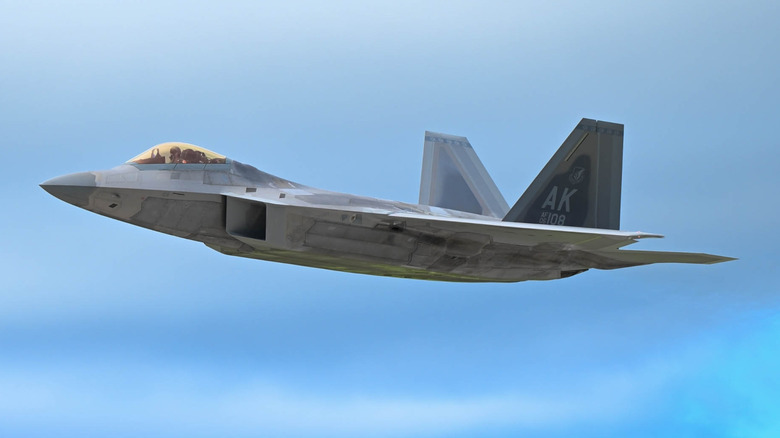
To combat the "thermal beacon" effect, modern designers have pivoted toward advanced thermal management. The most significant breakthrough is supercruise, the ability to maintain supersonic speeds without the use of heat-intensive afterburners.
The F-22 Raptor is the gold standard for this technology. By using high-thrust engines that do not require afterburners to stay above Mach 1, the Raptor achieves a much lower infrared signature. This is how F-22 Raptor maintains stealth at supersonic speed while still outperforming older jets. Additionally, the F-22 utilizes advanced composite structures that are more resilient to heat than the old coatings on the F-117.
Engineers also use the aircraft’s fuel as a heat sink, pumping it around the airframe to absorb the heat generated by skin friction before it is burned in the engine. This internal cooling keeps the exterior skin temperature lower, reducing the contrast for enemy sensors. This integrated approach to supersonic stealth fighter design ensures that the jet remains a multi-spectral ghost, hiding from both radio waves and thermal cameras.
FAQ
Can radar track stealth fighters?
Stealth fighters are designed to have a very low radar cross-section, but they are not completely invisible. Modern high-frequency radars and networked radar arrays can sometimes detect stealth aircraft, though usually at much shorter ranges than conventional planes. Stealth is about reducing the tracking range to give the pilot the advantage of the first shot, rather than being 100% undetectable.
What technology is used to detect stealth aircraft?
The most common alternative to radar is infrared search and track (IRST) technology. These sensors look for the heat generated by the engines and the friction of the air against the airframe. Other emerging technologies include passive radar, which uses existing civilian signals like FM radio or cell tower waves to detect disturbances in the atmosphere caused by an aircraft.
Can infrared sensors detect stealth fighters?
Yes, infrared sensors are one of the most effective ways to track stealth aircraft. Because stealth focuses heavily on deflecting radar waves, the thermal energy produced by the jet—especially at high speeds—remains a vulnerability. Modern sensors can pick up the heat of the airframe and the exhaust plume even when the radar return is negligible.
How does passive radar track stealth planes?
Passive radar does not emit its own signals. Instead, it listens for reflections of "signals of opportunity," such as digital television, radio broadcasts, or mobile phone signals. When a stealth plane flies through these signals, it creates a "shadow" or a slight disturbance. By using multiple receivers to analyze these disturbances, a tracking system can calculate the aircraft's position without ever revealing its own location.
Is stealth technology becoming obsolete against modern sensors?
Stealth is not becoming obsolete, but it is becoming one part of a larger electronic warfare puzzle. As sensor technology improves, stealth aircraft must rely more on electronic jamming, long-range weapons, and advanced thermal management to stay safe. It is an ongoing arms race between low-observable airframes and the increasingly sensitive sensors designed to find them.
The future of stealth, embodied in 6th-generation designs like the B-21 Raider, will likely focus even more on "all-aspect" and "multi-spectral" invisibility. In the high-stakes world of aerial combat, being fast is a virtue, but being cool is a necessity. As long as speed generates heat, the battle between the engine's thrust and the sensor's lens will define the next era of air superiority.