Quick Facts
- Top Pick for Pro Use: Milwaukee M18 Fuel 2836-20
- Best Value and Weight: DeWalt 20V MAX XR DCS356B
- Vibration Winner: Milwaukee (approximately one-third the vibration of the DeWalt)
- Cutting Speed Winner: Milwaukee (wider oscillation angle)
- Price Point: Milwaukee ($249) vs DeWalt ($199)
- Battery System: 18V Milwaukee M18 vs 20V Max DeWalt (both 18V nominal)
The Milwaukee M18 Fuel 2836-20 is widely regarded as the superior option for vibration control and professional ergonomics. While the DeWalt XR DCS356B is lighter and more budget-friendly, Milwaukee's vibration dampening technology significantly reduces operator fatigue during long periods of use, making it a preferred choice for heavy-duty tasks like flooring installation and trim carpentry. When comparing Milwaukee vs DeWalt multi-tool performance, the Milwaukee model consistently pulls ahead in speed and smoothness.
The Voltage Myth: M18 vs 20V MAX XR Technology
When entering the Milwaukee M18 Fuel 2836-20 vs DeWalt DCS356B comparison, the first thing many users notice is the voltage branding. It is essential to clarify that both systems operate at an 18V nominal level. DeWalt uses the 20V Max terminology to describe the maximum initial battery voltage (measured without a workload), while Milwaukee sticks to the nominal 18V rating. In practical terms, the power delivery is nearly identical.
Both of these manufacturers have integrated brushless motor technology into these flagship models. This engineering choice is critical because it offers up to 50% more runtime compared to older brushed models and ensures constant speed electronics. These electronics allow the tool to maintain its speed even when you are pushing it through dense oak or stubborn nails. When considering M18 Fuel vs 20V Max XR oscillating tool battery life, the efficiency of the brushless motor is the primary driver of performance, regardless of the marketing label on the battery.
Furthermore, battery platform compatibility is often the deciding factor for many buyers. If you already have a garage full of red tools, staying within the M18 ecosystem makes sense. However, if you are starting from scratch, you have to weigh the premium build of Milwaukee against the broader, often more affordable range of the DeWalt 20V Max line.
Cutting Performance: The Science of the Oscillation Arc
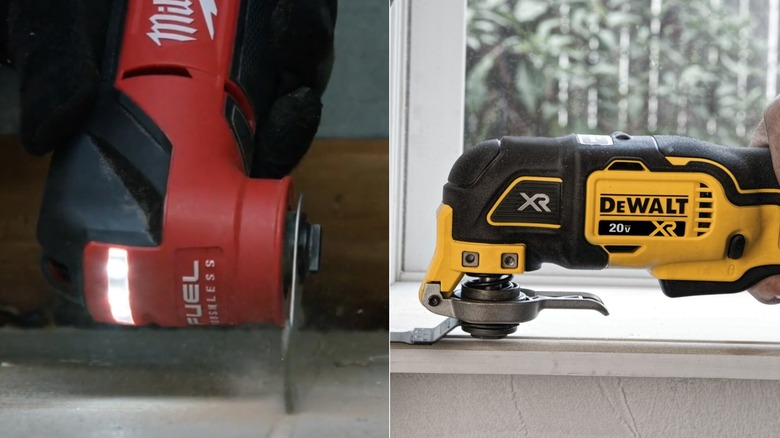
In the world of oscillating tools, speed is determined by how far the blade moves and how fast it moves. This is where the Milwaukee vs DeWalt multi-tool oscillation angle impact becomes evident. Milwaukee features a 4.2-degree oscillation angle, which is significantly wider than the 1.6-degree angle found on the DeWalt XR.
Think of it as taking bigger bites out of the material. A wider arc means more material removal per stroke. In our head-to-head benchmarking, the Milwaukee M18 Fuel completed cuts through 1/2-inch copper pipe in 9.85 seconds, while the DeWalt 20V MAX took over 12 seconds to complete the same task. While a few seconds might not seem like much for a single cut, it adds up quickly during a full day of plunge cutting or flush trimming door jambs.
The oscillating multi-tool oscillation arc comparison shows that Milwaukee is optimized for demolition and high-speed cutting. DeWalt’s smaller angle, while slower, can sometimes offer slightly more control for high-precision tasks like grout removal where you don't want the blade wandering too far from the line. However, for most professional applications, the aggressive nature of the Milwaukee 2836-20 is a clear advantage.
Vibration Dampening and Professional Ergonomics
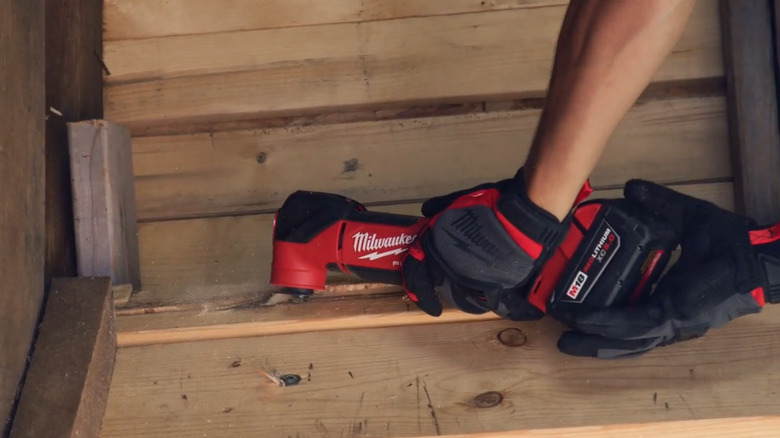
If you have ever used a cheap multi-tool for more than ten minutes, you know the tingling, numb sensation it leaves in your hands. This is where the Milwaukee M18 Fuel 2836-20 vs DeWalt DCS356B comparison really diverges. Milwaukee has prioritized vibration dampening to a degree that sets a new industry standard.
During performance testing, measurements indicated that the Milwaukee model produces roughly one-third the vibration of the DeWalt 20V MAX model. This makes it the best oscillating multi-tool for low vibration professional use. The internal components are essentially isolated from the outer housing, meaning the motor is doing the work, but your hands aren't feeling the recoil.
On the other hand, ergonomics involve more than just vibration. The DeWalt DCS356B is notably lighter, weighing in at approximately 2.33 lbs (tool only), compared to the Milwaukee at 3.0 lbs. For overhead work or reaching into tight cabinets, that half-pound difference matters. The DeWalt also features a very comfortable ergonomic grip that feels natural for users with smaller hands. However, for all-day use on a job site, the Milwaukee’s superior thermal management and lack of vibration usually win the day, despite the extra weight.
Speed Control: Auto-Load Dial vs Variable Speed Trigger
One of the most debated features in the DeWalt DCS356B vs Milwaukee 2836 speed control settings is the interface for adjusting oscillations. DeWalt uses a variable speed trigger combined with a 3-speed toggle switch. This allows you to cap the maximum speed and then feather the trigger to get the exact movement you need. It is an intuitive system that feels very much like using a drill.
Milwaukee takes a different approach by using a variable speed dial with a unique Auto-Load setting. When set to Auto-Load, the tool starts at a lower speed to help you start your cut precisely without the blade jumping. Once the tool feels the resistance of the cut, it automatically ramps up to full speed. This is incredibly helpful for trim carpentry where a clean start is everything.
- Milwaukee: 10,000 to 20,000 OPM with a 10-setting dial plus Auto-Load.
- DeWalt: 0 to 20,000 OPM via trigger with 3 speed ranges (13,000 / 17,000 / 20,000 OPM).
The Milwaukee system is generally preferred for consistency, as you don't have to maintain a steady finger pressure on the trigger for long periods. You just turn it on and let the constant speed electronics handle the load.
Blade Changes and Accessory Compatibility
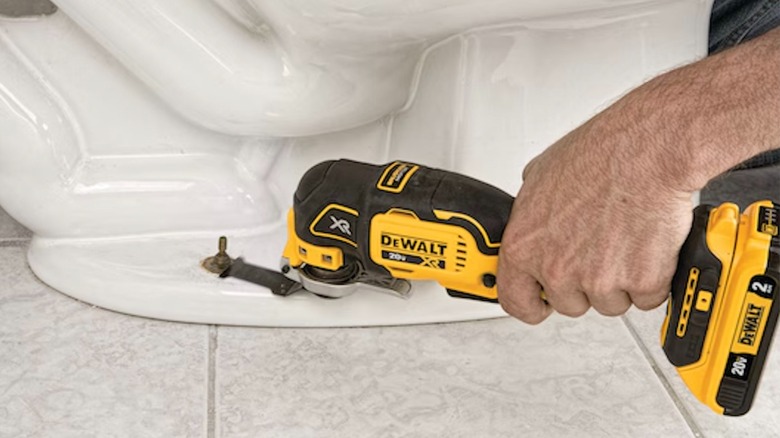
Time is money on the job site, and how you change blades is a major factor in efficiency. DeWalt is famous for its tool-less blade release system, which uses a spring-loaded lever. You simply squeeze the lever, swap the blade, and release. It is widely considered the fastest system on the market and requires no loose parts.
Milwaukee also uses a tool-less system, but it involves a bolt-and-lever mechanism. You flip a lever on top, unscrew a bolt slightly, change the blade, and then tighten and flip the lever back. While it is certainly secure and provides great job site durability, it is a few seconds slower than DeWalt’s quick-change system.
Both tools are compatible with most major blade brands, though you may occasionally need a universal accessory adapter for certain proprietary blade types. Neither tool uses the Bosch-designed Starlock system, which is faster but limits you to more expensive blades. If you find yourself switching between wood-cutting blades and scrapers frequently throughout the day, the DeWalt lever might be more to your liking.
Final Verdict: Is Milwaukee Worth the Premium?
After looking at the data, the question remains: is the Milwaukee multi-tool worth the price over DeWalt? The Milwaukee 2836-20 typically retails for about $50 more than the DeWalt DCS356B.
For the All-Day Pro, the answer is a resounding yes. The combination of the wider oscillation angle for faster material removal and the industry-leading vibration control makes it a much more pleasant tool to use for hours on end. It is a more robust tool with better thermal management, meaning it won't overheat as quickly during intense demolition.
For Value Seekers and DIYers, the DeWalt DCS356B is the smarter purchase. It is a high-value workhorse that provides plenty of power for most home renovation projects. It is lighter, easier on the wallet, and the variable speed trigger offers a level of control that many people find more natural.
In the end, the Milwaukee vs DeWalt multi-tool debate comes down to how much you value your hands feeling fresh at the end of the day. If vibration is your enemy, go red. If you want a lightweight, fast-changing tool that gets the job done for less, go yellow.
FAQ
Which oscillating multi-tool is better: Milwaukee or DeWalt?
Milwaukee is generally considered better for professional, heavy-duty use due to its significantly lower vibration and faster cutting speeds. DeWalt is often preferred for its lower price point, lighter weight, and intuitive variable speed trigger, making it an excellent choice for general construction and DIY projects.
Does the Milwaukee multi-tool have less vibration than DeWalt?
Yes, the Milwaukee M18 Fuel multi-tool produces roughly one-third the vibration of the DeWalt 20V MAX model. This is achieved through an internal dampening system that isolates the motor from the handle, which greatly reduces operator fatigue during long periods of use.
Is the Milwaukee M18 Fuel oscillating tool worth the extra cost?
For professionals who use the tool daily, the extra cost is usually justified by the time saved in cutting and the reduced physical strain on the user. For occasional home use, the DeWalt provides better value as the performance gap may not be as noticeable on smaller tasks.
What is the difference between Milwaukee and DeWalt oscillating tools?
The primary differences lie in the oscillation angle (4.2 degrees for Milwaukee vs 3.2 degrees total for DeWalt), the vibration levels, and the speed control interface. Milwaukee uses a variable speed dial with an Auto-Load feature, while DeWalt uses a 3-speed toggle combined with a variable speed trigger.
Do DeWalt multi-tools have a quick-change blade system?
Yes, DeWalt features a highly regarded spring-loaded quick-change lever that allows for extremely fast blade swaps without the need for tools or loose parts. It is generally considered the fastest blade change system in the 18V/20V category.