Our Top Picks
- The Heavy-Duty Choice: The Milwaukee M18 inflator is the premier option for users handling 33-inch or larger tires, offering high-volume output and a longer reach.
- The Value Choice: For those with standard passenger cars, the M12 compact inflator provides sufficient power at nearly half the weight and a lower price point.
- Red Flag Alert: Prospective buyers should watch for the 20 PSI overinflation bug reported by some owners, which can lead to safety concerns if not monitored.
The Milwaukee M18 inflator is a professional-grade tool designed for heavy-duty applications, but real-world users frequently report red flags including digital gauge inaccuracies of up to 20 PSI, strict thermal shutdown requirements, and sporadic durability issues within the first year of ownership. While its TrueFill Technology aims to provide automated precision, the tool occasionally struggles with Milwaukee M18 inflator problems related to overinflation and electronic glitches.
Red Flag 1: Digital Gauge Inaccuracy and Overinflation
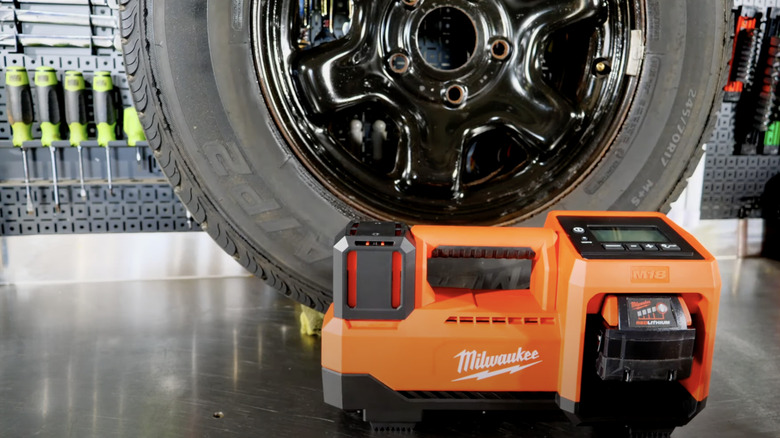
One of the most significant concerns raised by the community involves the digital pressure gauge and its role in the automatic shut-off feature. The Milwaukee M18 inflator is marketed with TrueFill Technology, a system engineered to sense the internal tire pressure, compensate for the airflow, and shut off exactly at the target PSI. However, a growing number of owners have documented a "Wait-Check-Fill" cycle that does not always result in an accurate reading.
In some instances, users have reported that the unit continues to pump air well past the set limit, leading to overinflation by up to 20 PSI. This discrepancy often occurs because the tool interprets the backpressure in the hose as the actual tire pressure, or vice versa. For a professional grade tool, this lack of milwaukee m18 inflator automatic shut off accuracy is more than just an inconvenience; it can be a safety hazard for those working with high-pressure commercial tires. Owners looking for milwaukee m18 inflator overinflation problems and fixes often find that they must manually verify the pressure with a secondary analog gauge, which defeats the purpose of an automated system. Unit calibration appears to vary significantly between batches, leaving some users with a perfectly tuned machine and others with a unit that consistently misses the mark.
Red Flag 2: Long-Term Durability and Early Failures
Milwaukee has built a reputation for ruggedness, but the Milwaukee M18 inflator has faced scrutiny regarding its longevity. While many users praise the all-brass Schrader chuck and the heavy-duty housing, a subset of the community has experienced milwaukee m18 inflator durability issues after one year of regular use. These failures often manifest as the motor turning on but failing to build pressure, or the internal piston seizing entirely.
Customer feedback on retail platforms suggests that while 87.1% of reviewers are satisfied, the remaining group often encounters "dead on arrival" units or tools that fail just as the initial heavy-use period concludes. Fortunately, the Milwaukee battery platform is backed by a robust warranty support system, offering a five-year limited warranty on the tool itself. However, for a professional in the field, the downtime required for a warranty claim can be costly. When evaluating Milwaukee M18 inflator durability, it is essential to consider whether the tool will be used for occasional roadside emergencies or daily fleet maintenance. For the latter, the mechanical strain on the internal components appears to be a common point of failure.
Red Flag 3: Thermal Management and the 33% Duty Cycle
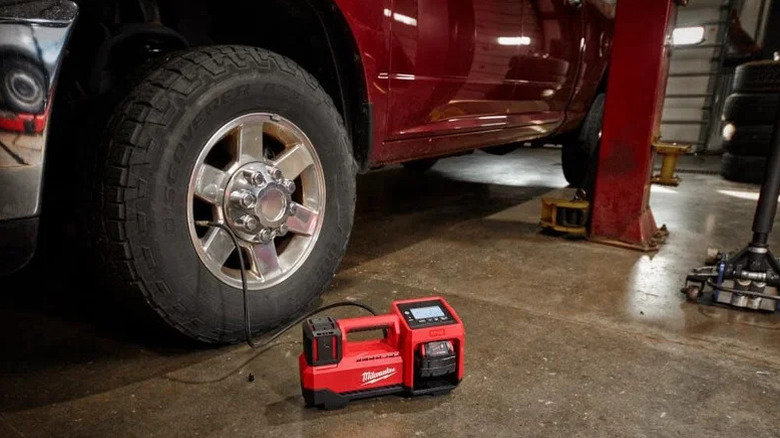
A common misconception among new owners is that a professional grade inflator can run indefinitely. The Milwaukee M18 inflator features a specific duty cycle that users must respect to avoid permanent damage. Specifically, the tool has a specified duty cycle of 33% at 80 PSI. This means that for every 10 minutes of continuous pumping, the unit requires approximately 20 minutes of cooling time.
Expert Tip: To maximize the life of your inflator, never exceed 10 minutes of continuous runtime. If the housing feels excessively hot to the touch, allow the unit to rest for at least 20 to 40 minutes before resuming. This is especially critical when performing milwaukee m18 inflator performance on commercial tires, where the volume of air required is significantly higher than a standard passenger vehicle.
While the unit includes anti-vibration feet to keep it stable and reduce internal friction, the heat generated during high-PSI applications is substantial. For professionals managing fleet maintenance, this duty cycle can be a bottleneck. If you are tasked with topping off twenty truck tires in a row, the thermal protection system will likely trigger a shutdown, forcing an unplanned break. This limit is a design characteristic rather than a defect, but it remains a red flag for those who expected a continuous-duty machine.
Red Flag 4: Undocumented Error Codes and UI Glitches
Modern tools rely heavily on electronics, and the Milwaukee M18 inflator is no exception. However, users have frequently complained about the milwaukee m18 tire inflator error codes guide being insufficient. When the tool encounters an issue—such as a voltage drop or a thermal spike—it displays a code on the digital pressure gauge. Unfortunately, many of these codes are not clearly defined in the standard user manual.
One common "glitch" involves a frozen screen where the buttons become unresponsive. In these cases, the fix is usually to remove and reinsert the battery, but the lack of clear documentation leaves many DIYers frustrated. These electronic Milwaukee M18 inflator problems often point to a disconnect between the software and the hardware. While the M18 battery platform is incredibly reliable, the internal logic board of the inflator can sometimes struggle with rapid changes in pressure or battery temperature. For those who rely on the tool for time-sensitive tasks, these sporadic UI failures can be a major deterrent.
Red Flag 5: Quality Control and Retail Returns
The final red flag involves the buying experience itself. There have been numerous reports of milwaukee m18 inflator quality control red flags to watch for, specifically regarding the condition of the tool upon arrival. Some customers purchasing from major retailers have reported receiving units that appear to be previous returns—sometimes missing the all-brass Schrader chuck or the inflation needles stored in the back of the unit.
Furthermore, sporadic quality control issues like air leakage from the factory-installed hose or misaligned internal fans have been documented. While these are often covered by after-sales service, they highlight the importance of inspecting the tool immediately upon purchase. Ensure that the digital pressure gauge is clear of scratches and that the hose connection is airtight before the return window closes.
Milwaukee M18 vs M12: Which One Fits Your Needs?
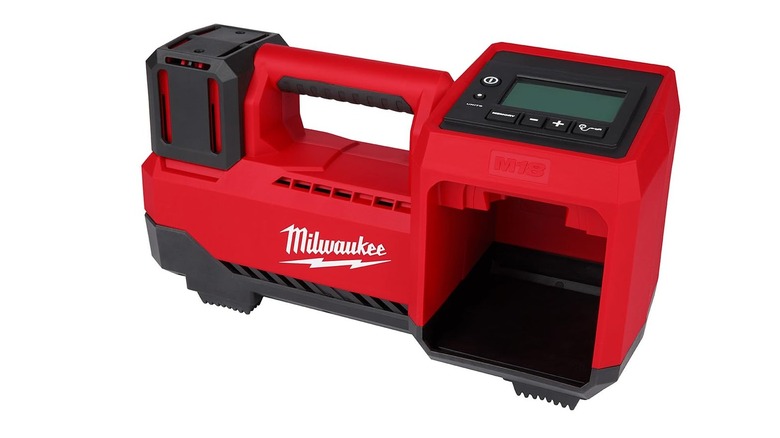
Deciding between the M18 and the M12 often comes down to the specific vehicles you service. The Milwaukee M18 inflator is built for much larger tasks, but the M12 has its own set of advantages for the average consumer. When looking at milwaukee m18 vs m12 inflator for truck owners, the M18 is almost always the winner due to its 150 PSI rating and 36-inch hose.
| Feature | Milwaukee M18 Inflator (2848-20) | Milwaukee M12 Inflator (2475-20) |
|---|---|---|
| Hose Length | 36 Inches | 26 Inches |
| Max Pressure | 150 PSI | 120 PSI |
| Weight | 8.4 lbs (Bare Tool) | 4.3 lbs (Bare Tool) |
| Best For | Trucks, RVs, Trailers | Passenger Cars, Motorcycles |
| Duty Cycle | 33% @ 80 PSI | Prone to faster overheating |
For many, the question is: is the milwaukee m18 inflator worth it for diy mechanics? If you already own several M18 batteries, the extra power is a luxury that makes tire maintenance faster. However, the M12 is significantly more portable and easier to store in a trunk for roadside emergencies. The M18's ability to fill 20 and 40 standard car tires on a single 5.0Ah battery charge makes it a powerhouse for those who don't want to swap batteries frequently.
FAQ
How fast can the Milwaukee M18 inflator fill a tire?
The speed depends on the tire size and the starting pressure. For a standard light truck tire (33 inches), the M18 can typically top off from 30 to 35 PSI in under a minute. For a full fill from flat, it is significantly faster than the M12, often completing the task in roughly 4 minutes, provided the duty cycle is respected.
Can the M18 inflator handle large truck or trailer tires?
Yes, the M18 is specifically designed for high-pressure applications up to 150 PSI. It is the preferred choice for commercial trailers and heavy-duty trucks because its 36-inch hose provides the necessary reach, and its motor is tuned for higher volume output compared to compact models.
How does the M18 inflator compare to the M12 inflator?
The M18 is roughly double the weight and size of the M12 but offers 30 extra PSI and a much faster fill rate. While the M12 is excellent for cars and bikes, the M18 is the better choice for professionals and owners of larger vehicles who need a more robust thermal management system and a longer reach.
Is the Milwaukee M18 inflator worth the price for home use?
For most home users with only passenger cars, the M18 might be overkill. However, if you are already on the M18 battery platform and want a tool that can handle everything from a wheelbarrow to a high-pressure RV tire, the investment is justified by the time saved and the professional-grade build quality, despite the potential gauge inaccuracies.
Ultimately, the Milwaukee M18 inflator remains a top-tier choice for those who need cordless power and high-pressure capability. While the red flags regarding gauge accuracy and the 33% duty cycle are real, they are often manageable for a user who understands the tool's limitations. By verifying pressure with a manual gauge and allowing for proper cooling periods, the M18 can be the backbone of your tire maintenance kit.