Quick Facts
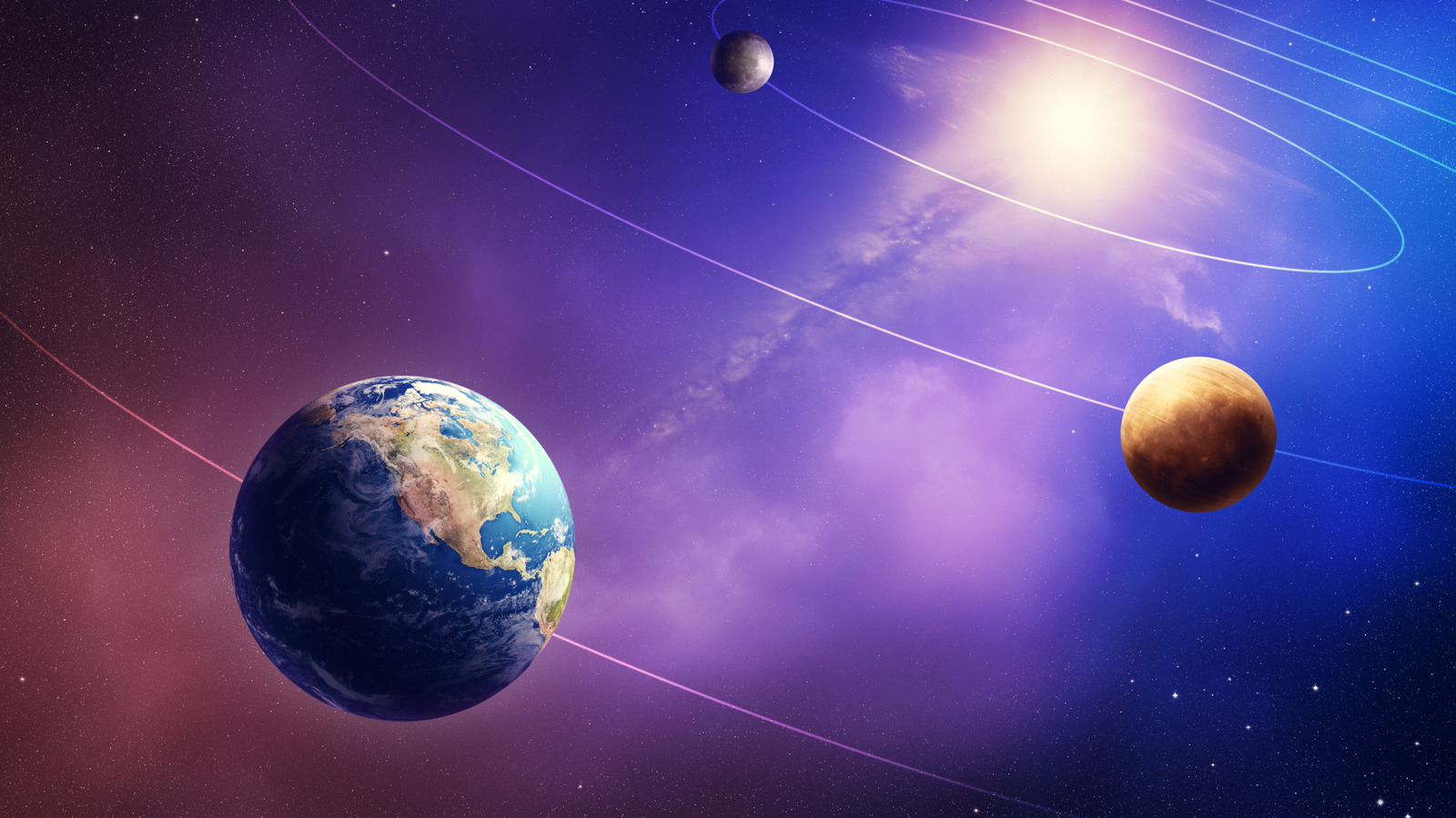
- The Gravity Mirror: Despite their size difference, both planets share a surface gravity of 0.38g due to Mercury's extreme density.
- Mercury’s Thermal Swing: Surface temperatures fluctuate between a high of 430°C during the day and a low of -180°C at night.
- Mars’ Deep Freeze: The Red Planet experiences an average surface temperature of approximately -60°C, plummeting to -225°F at the poles.
- Atmospheric Void: Mars maintains a surface pressure roughly 0.6% of Earth's, while Mercury’s pressure is less than one-trillionth of Earth's.
- Survival Window: Without a suit, a human would survive for only about two minutes on either planet before asphyxiation and ebullism set in.
- Key Hazards: Mercury is defined by 14x solar irradiance, while Mars is plagued by lethal perchlorate toxicity in its regolith.
For human planetary survival, Mercury presents an immediate thermal threat requiring advanced shielding against 14x solar intensity, while Mars offers a thin atmosphere for resource utilization but carries long-term risks from toxic soil and dust storms. Both pose extreme hazardous planetary environments with identical gravity but vastly different biological failure modes.
The Thermal Trap: Managing Extreme Temperature Swings
When we discuss planetary survival, the conversation usually begins and ends with temperature. On Earth, we live within a remarkably narrow thermal corridor. On Mercury, that corridor is obliterated. Because the planet lacks a functional atmosphere to distribute heat, it exists in a state of perpetual thermal whiplash. The side facing the sun is bombarded with solar irradiance levels that would turn human tissue into charcoal in seconds, while the dark side mimics the deep freeze of interstellar space.
Managing extreme temperature swings on Mercury surface requires more than just high-end insulation; it requires active thermal protection systems. If you were to stand on the day side, the human skin protection against high solar radiation on Mercury would need to be equivalent to the shielding on a spacecraft entering Earth's atmosphere. Without it, the biological failure mode is instantaneous. The heat would cause the moisture in your skin to vaporize immediately, leading to third-degree burns before you could even register the pain.
Mars, by contrast, is a world of cold. While a summer day at the equator might reach a comfortable 70°F, the thin atmosphere cannot retain that heat. As soon as the sun sets, the temperature drops off a cliff. For an astronaut, maintaining thermal homeostasis on Mars is a constant battle against the slow drain of body heat. While Mercury attempts to cook or flash-freeze you, Mars simply waits for your batteries to die so it can turn you into a permanent ice sculpture. The physiological impact of space travel in these regions is heavily dictated by how well we can mimic Earth’s 15 psi and stable temperatures within a pressurized habitat.
Atmospheric Asphyxiation and the 'Two-Minute' Rule
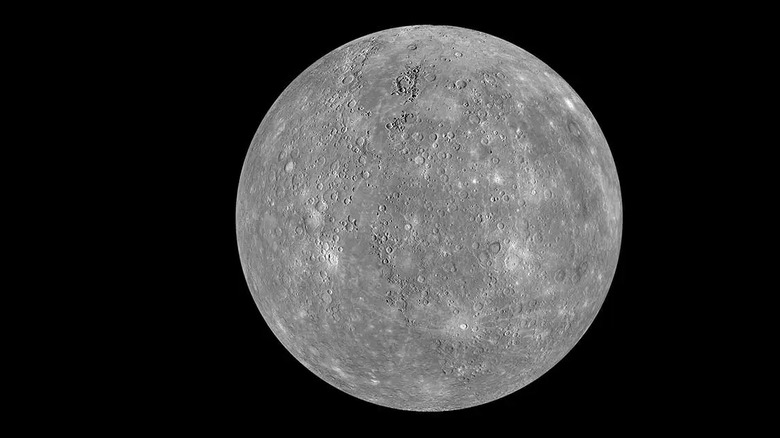
The vacuum of Mercury and the thin CO2 atmosphere of Mars offer two different paths to the same lethal end. On both worlds, the lack of atmospheric pressure is the primary killer. We often think of "holding our breath" in space, but that is the worst thing you could do. In a vacuum or near-vacuum, the air in your lungs would expand rapidly, tearing the delicate alveoli tissue.
Then comes ebullism. At extremely low pressures, the boiling point of liquids drops below the internal temperature of the human body. This doesn't mean your blood "boils" in the traditional sense, but the water in your soft tissues and muscle groups turns to vapor. You would swell to twice your normal size, a process known as atmospheric desiccation. On Mercury, this happens instantly. On Mars, where the pressure is slightly higher, it might take a few seconds longer, but the result is the same.
Comparing life support systems for Mars and Mercury missions reveals a fundamental "Landing Paradox." Mars has just enough atmosphere to make landing difficult—it is too thin for effective parachutes for heavy loads, yet thick enough to cause significant friction and heat. Mercury, having only a trace exosphere, requires fully propulsive landings. For any extravehicular activity (EVA), the gear must handle these pressure differentials while providing a constant stream of oxygen. In the world of space medicine, these environments are considered the ultimate test of human durability.
The 0.38g Paradox: Gravity and Fluid Redistribution
One of the most fascinating aspects of a solar system habitability comparison is the "Gravity Mirror" between these two very different worlds. Mercury is the smallest planet, barely larger than our Moon. Mars is significantly larger in volume. However, Mercury is incredibly dense, possessing a massive metallic core that makes up about 85% of its radius. This density creates a gravitational pull nearly identical to that of Mars: 0.38g.
While this makes walking and carrying heavy equipment much easier than on Earth, the physiological effects of 0.38g gravity on human health are concerning for long-term stays. On Earth, gravity pulls our blood and fluids toward our lower extremities. In lower gravity, we experience fluid redistribution, where blood moves toward the head and torso. This leads to the "puffy face, chicken legs" syndrome seen in ISS astronauts.
More critically, bone demineralization becomes a major hurdle for planetary survival. Without the constant load-bearing stress of 1G, the body begins to shed calcium. For a mission to either planet, astronauts would need intensive exercise regimens to prevent their skeletons from becoming brittle. Interestingly, the shared gravity means that any habitat design or rover developed for the Martian surface could, in theory, be mechanically compatible with the Mercurian surface, though the thermal requirements would remain vastly different.
Invisible Killers: Radiation and Regolith Toxicity
Even if you solve the heat, the pressure, and the gravity, you still have to deal with the things you can’t see. On Mercury, the primary invisible threat is cosmic ionizing radiation and the relentless solar wind. Being so close to the sun, Mercury is bathed in a constant stream of high-energy particles. Without a thick atmosphere or a robust magnetospheric shielding, the radiation levels are high enough to cause acute radiation sickness in a matter of days. Radiation shielding for human missions to Mars and Mercury must utilize high-hydrogen materials or subterranean dwellings to protect the biological integrity of the crew.
Mars presents a different kind of chemical warfare: regolith toxicity. The Martian soil is rich in perchlorates—salts that are toxic to human thyroid function and can interfere with protein stability. Every time an astronaut enters a habitat, they risk bringing this toxic dust with them. Furthermore, survival risks of Mars dust storms vs Mercury solar winds are a major point of mission planning. Martian dust storms can go global, lasting for months and blotting out the sun, which is a death sentence for solar-powered equipment.
In the field of Astrobiology, we study how these harsh conditions affect the potential for life. While Mars has the ingredients for life (water ice and organic molecules), its soil is a minefield. Mercury is a sterile, scorched rock where the only "life" would be the humans huddled inside heavily armored bunkers. The contrast highlights the difficulty of our expansion into the stars; every planet has a unique way of trying to break the human body.
FAQ
What are the key requirements for planetary survival?
Planetary survival requires a multi-layered approach to life support, including pressurized habitats to prevent ebullism, advanced thermal regulation to maintain homeostasis, and robust radiation shielding. Furthermore, long-term stays necessitate systems for oxygen generation and the mitigation of low-gravity effects like bone loss.
What are the biggest challenges humans face living on other planets?
The biggest challenges include the physiological impact of space travel such as fluid redistribution, the psychological toll of isolation, and the engineering hurdles of in-situ resource utilization. Hazardous planetary environments also present specific local threats, such as toxic perchlorates on Mars or extreme solar irradiance on Mercury.
How long could a human survive on Mars without protection?
A human would lose consciousness in about 15 seconds due to the lack of oxygen and succumb to the effects of low pressure and cold within approximately two minutes. The thin atmosphere provides no protection against the vacuum-like conditions that cause ebullism and rapid heat loss.
How does radiation affect survival on other planets?
Radiation on other planets increases the risk of DNA damage, cancer, and acute radiation syndrome. On Mercury, the threat comes from intense solar flares and solar wind, while Mars suffers from cosmic ionizing radiation that penetrates its thin atmosphere, necessitating thick shielding or underground living quarters.
What is the impact of low gravity on human health during long-term stays?
The 0.38g gravity on Mars and Mercury leads to significant bone demineralization and muscle atrophy because the body is no longer working against Earth's full gravitational pull. It also causes fluid redistribution toward the upper body, which can affect vision and cardiovascular health over months or years.