Quick Facts
- Primary Cause: Drill bit slipping usually stems from a bit that is slightly off-center within the three-jaw grip or a failure to engage the internal locking mechanism.
- The Missed Step: Modern keyless chucks often require a secondary reverse click—turning the collar back slightly after hand-tightening—to lock the bit in place.
- Maintenance Fact: A dirty or unlubricated chuck can lose up to 50% of its gripping force due to internal friction and debris.
- Safety Stat: In the United States, power tools are responsible for more than 400,000 emergency room visits annually, often resulting from improper usage or the omission of basic maintenance.
- Quick Fix: To ensure maximum torque transfer, set your drill to the dedicated drill mode on the clutch and verify the bit shank is free of sawdust or metal shavings.
To fix a drill bit slipping, you must ensure the bit is perfectly centered within the three-jaw grip before tightening. Once hand-tightened until the ratcheting action begins, perform a sharp, short reverse turn on the collar until you hear or feel a single click; this final step engages the internal lock that prevents the chuck from loosening under high torque.
The Foundation: Centering and the Gravity Method
Every professional woodworker or contractor has felt that sudden, jarring halt where the motor spins but the bit stays still. Usually, this happens because the drill bit slipping started before you even pulled the trigger. If a bit is even a fraction of a millimeter off-center, the three-jaw grip cannot apply equal pressure across the bit shank. This misalignment creates a weak point where torque transfer fails, leading to the bit spinning freely and scoring the metal, which only makes future slipping more likely.
To combat this, I recommend the Gravity Method. Instead of holding the drill horizontally and trying to eye the center, point the drill chuck straight up toward the ceiling. Drop the bit into the opening. By letting gravity pull the bit down, it rests flush against the internal spindle lock. This naturally aligns the bit with the central axis of the tool. While holding it in this vertical position, begin centering a drill bit in keyless chuck by slowly tightening the collar with your hand. You want the jaws to meet the bit simultaneously. If one jaw hits first, the bit is tilted, and you are almost guaranteed to experience a drill bit loose in chuck scenario once you hit a knot in the wood or a thick piece of steel.
Beyond positioning, the condition of the bit shank itself is a silent contributor to failure. If the shank is covered in oil from the factory or has dried sap from a previous project, the jaws won't be able to bite into the metal. Before inserting the bit, give the shank a quick wipe with a rag. This simple act of precision drilling preparation ensures that the friction remains between the jaws and the bit, rather than being lubricated by debris.
The Step You Missed: Engaging the Internal Lock
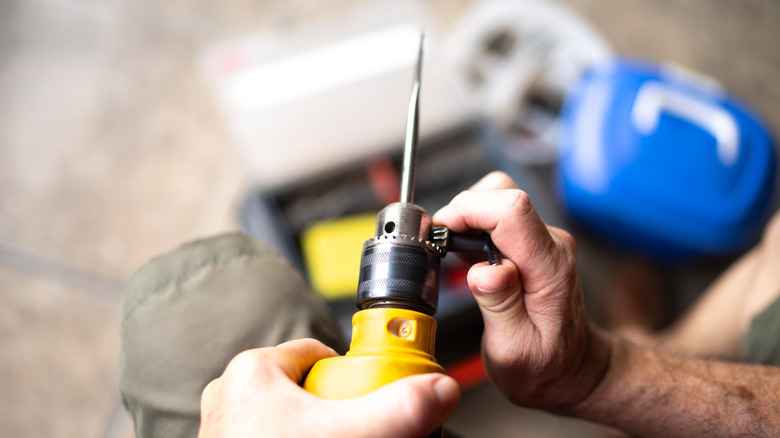
If you have ever wondered why your bit stays tight for five minutes and then suddenly wobbles loose, you are likely missing the secondary locking motion. Most high-end cordless drills from brands like Milwaukee, DeWalt, and Makita utilize a specific drill chuck clicking mechanism explained by engineers as a dual-stage lock.
When you rotate the collar to tighten the tool, you will eventually hear a series of rapid clicks. This is the ratcheting action. Most DIYers stop here, assuming the "clicking" means it is as tight as it can go. However, the secret to how to tighten keyless drill chuck properly is what happens next. After you have tightened the collar as far as it will go clockwise, give the collar a firm, short turn in the opposite direction (counter-clockwise). You should feel a distinct thud or a single, heavy click.
This reverse motion engages an internal wedge that locks the ratcheting pawls in place. Without this "one click back" step, the vibration and torque of the motor can slowly cause the hand-tightened collar to back off, leading to a drill bit slipping mid-hole. Think of it like a deadbolt on a door; the first turn closes the door, but the second turn locks it.
Pro Hack: Motor-Assisted Tightening for High Torque
There are times when even the best hand-tightening isn't enough, especially when you are using high-resistance accessories like hole saws, spade bits, or large augers. In these cases, you can use the power of the drill itself to secure the load. This is a common drill bit loose in chuck troubleshooting technique used on job sites, though it requires a steady hand.
First, ensure your drill is in the lowest gear (usually marked as "1"). Low gear provides the most torque. Grip the chuck collar firmly with one hand—wearing a leather work glove is highly recommended to avoid friction burns—and gently squeeze the trigger while the drill is in the forward (clockwise) direction. The motor will force the jaws closed with significantly more pressure than your forearm strength alone could provide. Once the motor stalls or the ratcheting action becomes too difficult to hold, finish with the manual "one click back" locking maneuver mentioned earlier.
This method maximizes the torque transfer from the spindle to the bit shank. However, always check your clutch adjustment before doing this. If your clutch is set to a low number, the drill will simply click over and won't tighten the chuck. Switch to the "drill" icon setting to ensure the full power of the motor is directed into the jaws.
Maintenance: When Debris Weakens Your Grip
Sometimes, the hardware isn't the problem; the environment is. Industry experts cite worn-out or contaminated chucks as the most common cause of drill bit slippage during operation. Over time, the accumulation of debris like sawdust and metal shavings inside the chuck jaws can prevent the mechanism from closing fully, significantly reducing the grip on the drill bit shank.
If you find that you are constantly dealing with a drill bit slipping despite proper technique, it is time for a deep clean. Open the jaws to their maximum width and use a can of compressed air to blow out the internal cavity. You would be surprised at how much fine sawdust buildup can pack into the base of the jaws, acting like a cushion that prevents a secure metal-to-metal contact. For stubborn grime, a small nylon brush or an old toothbrush can help clean drill chuck jaws effectively.
If the entire chuck assembly feels loose on the drill itself, you may need a more aggressive fix. To tighten drill chuck with hex key and mallet, insert a large L-shaped hex key into the chuck and tighten the jaws around the short end. Lay the drill flat on a workbench and give the long end of the hex key a sharp blow with a mallet in the clockwise direction. This reseats the chuck onto the spindle. Remember that tool maintenance is a preventative measure; a clean, well-lubricated chuck functions with 100% of its intended gripping force, whereas a neglected one struggles to hold even the smallest bits.
Hardware Diagnostics: Warped Bits vs. Broken Chucks
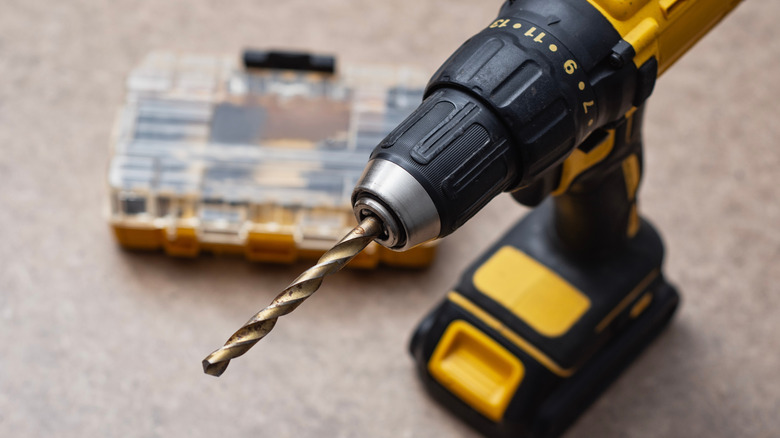
If you have cleaned the tool and mastered the locking click, but the bit still wobbles or slips, the issue might be the bit itself. A common mistake is assuming every drill bit is perfectly straight. To diagnose this, perform the Roll Test.
- Place the drill bit on a perfectly flat surface, like a cast-iron saw table or a glass countertop.
- Roll the bit forward with your palm.
- Watch the tip of the bit closely as it rolls.
- If the tip appears to "hop" or move up and down, the bit is warped.
A warped bit creates uneven centrifugal force, which will eventually force the jaws open no matter how tight they are. Furthermore, inspect the three-jaw grip for signs of a damaged drill chuck. When you open and close the chuck, do all three jaws move at the exact same speed and distance? If one jaw is lagging or stuck, the bit will never sit straight, and you will perpetually face a drill bit loose in chuck problem. In this case, the internal springs or gears may be stripped, and the only reliable solution is a full chuck replacement.
Finally, distinguish between bit slipping and clutch slipping. If you hear a loud clicking sound and the bit isn't turning, but the chuck itself is also stationary, your clutch is simply doing its job by preventing over-torquing. If the chuck is spinning but the bit is still, that is the true drill bit slipping issue we have addressed here.
FAQ
Why does my drill bit keep slipping?
The most common reasons are the bit not being centered in the three-jaw grip, debris like sawdust buildup inside the chuck, or failing to engage the secondary locking mechanism found on most modern keyless chucks.
How do I stop a drill bit from slipping in the chuck?
Ensure the bit shank is clean, use the gravity method to center it vertically, tighten the collar until it starts ratcheting, and then perform the "one click back" reverse turn to lock the internal mechanism.
What causes a drill chuck to loosen while drilling?
Vibration and high torque can cause the chuck to back off if the internal lock isn't engaged. Additionally, if the drill is used in reverse (counter-clockwise) without being properly tightened, the jaws will naturally open.
How do you tighten a drill chuck correctly?
Place the bit in the center, tighten the collar by hand clockwise until you hear the ratcheting action, and then turn it slightly back (counter-clockwise) until you hear a single click or feel a lock.
Is my drill chuck broken if it won't hold the bit?
Not necessarily. It may just be dirty or the bit might be warped. If cleaning the jaws and using a new bit doesn't solve the issue, or if the jaws move unevenly, then the internal mechanism is likely worn out and requires replacement.