Quick Facts
- Weight: 895 grams (Exceeds the 250g FAA registration threshold)
- Registration Cost: $5 for 3 years via FAA DroneZone
- Recreational Requirement: TRUST certificate (Free)
- Commercial Requirement: Part 107 Remote Pilot Certificate ($175 fee)
- Remote ID: Built-in Standard Remote ID (Mandatory for all 2026 flights)
- Standard Fine: Up to $27,500 for non-compliance and illegal operations
Yes, the DJI Mavic 3 Classic requires FAA registration and, depending on your use case, either a TRUST certificate or a Part 107 Remote Pilot Certificate. Because its takeoff weight is 895 grams, it exceeds the 250g exemption limit, making a Mavic 3 Classic license or registration mandatory for all operators in the United States.
FAA Drone Registration for Mavic 3 Classic
When you unbox a drone as capable as the Mavic 3 Classic, it is easy to get caught up in the excitement of its 4/3 CMOS Hasselblad camera and 15 stops of dynamic range. However, as an editor who has spent years testing imaging gear, I cannot stress enough that your first pre-flight check must be legal rather than technical. The most important number to remember is 250 grams. This is the FAA threshold for mandatory registration.
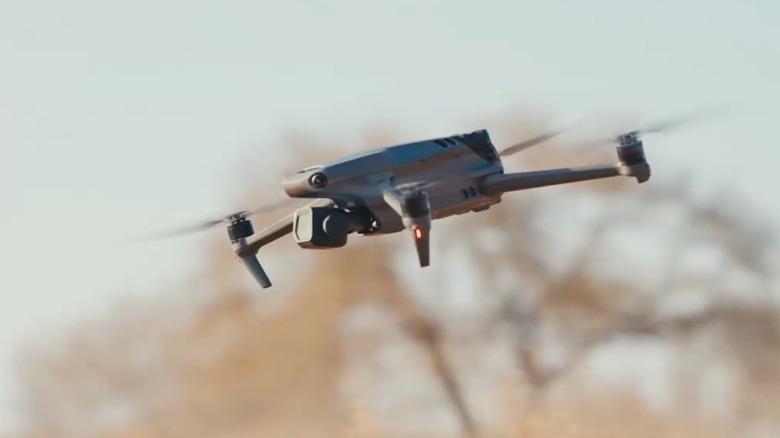
The DJI Mavic 3 Classic has a takeoff weight of 895 grams, which exceeds the FAA's 250-gram (0.55 lbs) threshold requiring mandatory drone registration for all types of flight. Unlike the smaller Mini series, which can sometimes bypass registration when used strictly for fun, there is no ambiguity here: you must register this aircraft.
To complete your FAA drone registration Mavic 3 Classic, you need to visit the FAA DroneZone website. The process is straightforward but requires precision. You will need to create an account, provide your contact information, and pay a five-dollar fee that covers you for three years. During this process, you will be asked for the serial number of the aircraft and its Remote ID capabilities.
Once you receive your registration number, the law requires you to physically label your drone. This number must be visible on the exterior of the aircraft—common placements include the side of the fuselage or one of the rear arms. If you are wondering how to register Mavic 3 Classic with FAA DroneZone correctly, ensure you select the correct category: Section 44809 for recreational flyers or Part 107 for commercial work. Failing to register is not just a minor oversight; it places you outside the protection of the National Airspace System regulations and exposes you to significant liability.
Recreational vs. Commercial: Which License Do You Need?
The question of whether you need a Mavic 3 Classic license depends entirely on the intent of your flight. In the eyes of the FAA, there is a sharp divide between flying for the "pure enjoyment" of flight and flying for any other purpose. This distinction determines whether you follow the Exception for Limited Recreational Operations (Section 44809) or the Small UAS Rule (Part 107).
Under FAA rules, recreational pilots of the DJI Mavic 3 Classic are required to pass The Recreational UAS Safety Test (TRUST) and carry proof of passage during operation. This is a free, online aeronautical knowledge test designed to ensure you understand basic safety concepts like yielding to manned aircraft and maintaining Visual Line of Sight. It is not a license in the professional sense, but it is a legal requirement.
If your photography goes beyond personal hobby use, the requirements change. A Part 107 Remote Pilot Certificate is mandatory for anyone operating the DJI Mavic 3 Classic for commercial or non-recreational purposes in the United States. This includes taking photos for a real estate listing, inspecting a roof for a friend's business, or even uploading footage to a monetized YouTube channel. To obtain this certificate, you must pass a more rigorous Aeronautical Knowledge Test at an FAA-approved testing center and register via the IACRA Portal.
| Feature | Recreational (TRUST) | Commercial (Part 107) |
|---|---|---|
| Primary Requirement | Pass the TRUST exam | Pass the Part 107 exam |
| Cost | Free | Approx. $175 (Testing Center Fee) |
| Registration Required | Yes (Aircraft must be registered) | Yes (Aircraft must be registered) |
| Flight Restrictions | Strictly for hobby/fun | Business, hobby, or non-profit |
| Night Flying | Permitted with anti-collision lights | Permitted with anti-collision lights |
| Controlled Airspace | Requires LAANC Authorization | Requires LAANC Authorization |
Choosing the right path is vital. If you are an aspiring professional, completing the Mavic 3 Classic Part 107 requirements early in your journey is a wise investment. It grants you the legal authority to earn money with your gear and provides a deeper understanding of weather patterns, sectional charts, and emergency procedures.
Activating Remote ID on the Mavic 3 Classic
Remote ID is often described as a digital license plate for drones. It allows the FAA, law enforcement, and other federal agencies to identify a drone in flight and locate its control station. For a pilot using a high-performance machine like the Mavic 3 Classic, understanding the Mavic 3 Classic Remote ID setup is non-negotiable for 2026 compliance.
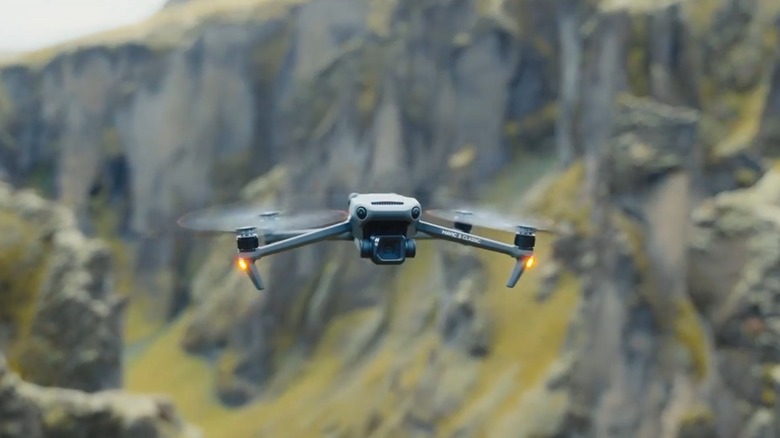
The good news is that the Mavic 3 Classic features integrated Standard Remote ID. This means the hardware is already inside the drone; you do not need to purchase an external broadcast module. However, the pilot is responsible for ensuring this feature is active. Most of this happens automatically within the DJI Fly App.
To verify your status or find your serial number for the UAS Declaration of Compliance, you can navigate to the "About" section within the DJI Fly App settings. You will see a Remote ID serial number that is typically different from your standard aircraft serial number. When you are filling out your details on the DroneZone portal, make sure you enter this specific Remote ID serial number.
Activating DJI Mavic 3 Classic built-in Remote ID ensures that you are broadcasting your position and the position of your controller as required by law. While some pilots have privacy concerns, the FAA views this as a cornerstone of safely integrating drones into the National Airspace System. As we approach stricter enforcement, having a drone that natively supports these protocols is a major advantage.
FAA Rules and 2026 Compliance Risks
Flying a drone is an exercise in responsibility. The FAA has the authority to issue significant penalties for those who bypass the Mavic 3 Classic license rules. A single violation of the Part 107 or recreational safety rules can lead to a fine of $27,500. For most of us, that is a life-altering sum of money that far outweighs the five dollars spent on registration or the time spent taking the TRUST exam.
Beyond the license itself, you must follow the operational rules of the National Airspace System. You must always maintain Visual Line of Sight with your Mavic 3 Classic. While the drone has incredible zoom capabilities and range, if you cannot see it with your own eyes (without binoculars), you are in violation of FAA rules. Furthermore, you must respect the concept of Civil Twilight. If you are flying 30 minutes after sunset or 30 minutes before sunrise, your drone must be equipped with anti-collision lighting visible for at least three statute miles.
There are also specific Mavic 3 Classic controlled airspace flight rules. If you are near an airport, you cannot simply take off. You must use the Low Altitude Authorization and Notification Capability (LAANC) system to receive near-instant approval to fly. Most modern apps, including DJI Fly, will show you these restricted zones, but the pilot remains the final authority on whether a flight is legal.
Warning: Flying without a valid Part 107 certificate when performing commercial work, or failing to register a drone over 250g, can result in civil penalties up to $27,500. The FAA is increasingly using social media footage to identify and fine non-compliant pilots.
As we look toward the future, the FAA's focus is on total compliance. By 2026, the integration of Remote ID and strict pilot certification will be the standard. Why the Mavic 3 Classic weight requires registration is ultimately a matter of safety; at nearly 900 grams, this drone has enough mass to cause real damage if not operated by a trained, licensed pilot.
FAQ
Does the DJI Mavic 3 Classic require a pilot license?
Yes, it requires at least a TRUST certificate for recreational flyers or a Part 107 Remote Pilot Certificate for anyone using the drone for commercial purposes.
Do I need to register my DJI Mavic 3 Classic with the FAA?
Yes, because the Mavic 3 Classic weighs 895 grams, it must be registered through the FAA DroneZone portal for a five-dollar fee, regardless of how you plan to fly it.
Do I need a Part 107 certificate to fly a Mavic 3 Classic?
You only need a Part 107 certificate if you are flying for business, work, or any non-recreational purpose; if you are flying strictly for fun, the TRUST certificate is sufficient.
Is Remote ID required for the Mavic 3 Classic?
Remote ID is mandatory for the Mavic 3 Classic, and fortunately, the drone has this technology built-in and ready to broadcast as required by FAA regulations.
What happens if I fly a Mavic 3 Classic without a license?
Operating without the proper license or registration can result in heavy civil fines up to $27,500, potential criminal charges, and the seizure of your equipment.
Final Word
Owning a DJI Mavic 3 Classic is a privilege that comes with the responsibility of being an informed member of the aviation community. Whether you are chasing the perfect golden hour landscape or providing high-end inspections for a client, taking the time to secure your Mavic 3 Classic license and FAA registration is the only way to protect your investment and your reputation. Before you take your first flight, head over to the FAA DroneZone, get your registration tag on the drone, and ensure you have the right certificate in your wallet. Safe flying is the only way to keep our skies open for the incredible creative work this drone was designed to produce.