Our Top Picks
- Best for Precision: USB Lithium Soldering Pen – Ideal for circuit boards and small electronics without the hassle of a cord.
- Best for Gardening: 2026 USB Lithium Pruning Shears – High portability for light plant maintenance and floral work.
- Best for Assembly: 4V Cordless Screwdriver – Perfect for flat-pack furniture where higher torque tools might strip the wood.
- Best for Home Maintenance: USB Lithium Power Scrubber – Saves your wrists when cleaning tile grout and bathroom fixtures.
Ryobi USB Lithium tools have expanded into a massive 35-tool ecosystem, but are they actual tools or just gadgets? This guide breaks down user feedback on torque, stalling, and weight to see if this 4-volt platform fits your DIY needs. After extensive field testing and analyzing real user reports, we have found that Ryobi USB Lithium tools are worth the investment for hobbyists and light-duty maintenance, though they fall short for heavy professional use due to significant torque limitations.
The Reality of 4V Power: Stalling and Torque Limits
When we talk about the Ryobi USB Lithium tools, the elephant in the room is always power. Specifically, the tendency for these tools to experience stalling under load. For a user accustomed to the raw strength of an 18V drill, the transition to the 4-volt platform can be jarring. This is a system designed for finesse, not force. Techtronic Industries, the parent company behind Ryobi, has engineered these tools for portability and convenience, which inherently requires a trade-off in torque.
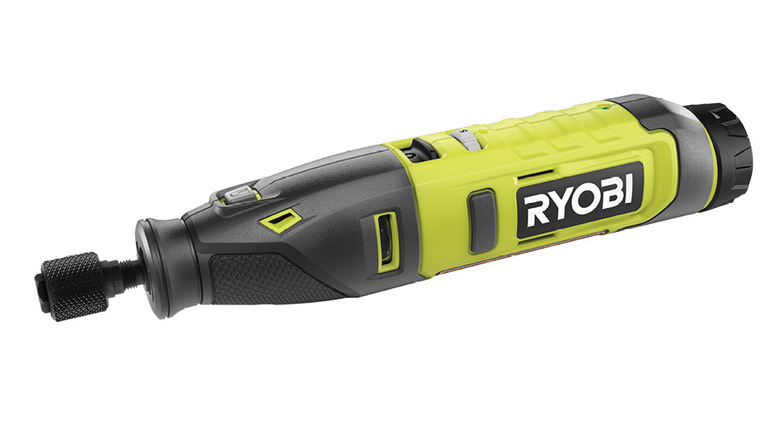
One of the most frequent complaints involves the rotary tool. While it is excellent for precision engraving, users often report bit runout or the motor bogging down when tasked with heavy sanding or cutting through thick metal. This isn't necessarily a defect, but rather a limitation of the 4V architecture. If you find yourself fixing Ryobi USB Lithium rotary tool stalling issues, the best approach is to reduce the pressure. These tools rely on high RPMs rather than high torque; forcing the tool causes internal resistance to spike, which triggers the safety cutoff to protect the small motor and battery.
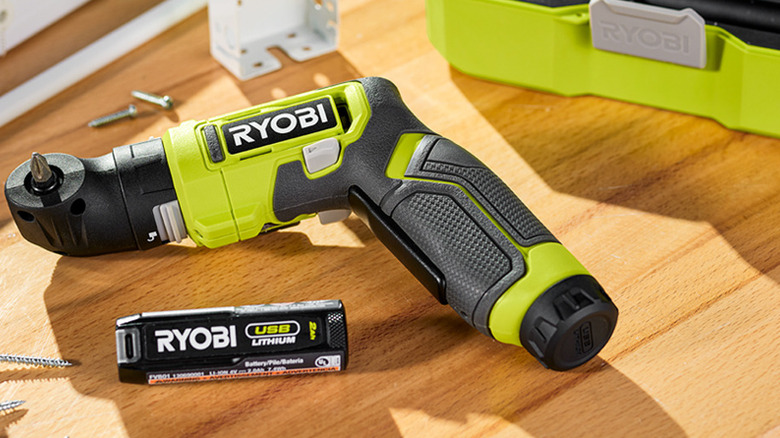
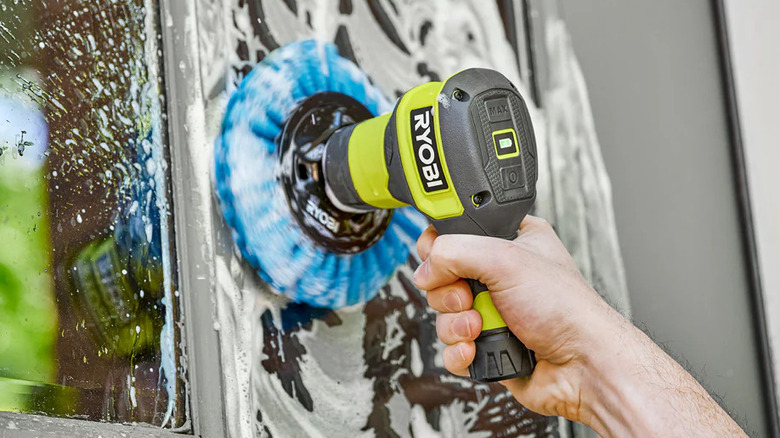
Similarly, the performance of Ryobi USB Lithium power scrubber on grout has received mixed reviews. For light surface stains on bathroom tiles, it is a game-changer. However, if you are tackling years of deep-seated grime on a large floor, you might find the head stops spinning if you lean into it too hard. The same applies to the screwdriver; the Ryobi 4V cordless screwdriver torque for furniture assembly is perfectly adequate for M5 bolts and small wood screws, but it will struggle with long deck screws or dense hardwoods.
Pro Tip: Avoiding the Stall To get the best performance out of the 4V system, let the tool maintain its speed. If you hear the motor pitch drop, back off slightly. For cleaning and sanding, multiple light passes are always more effective than one heavy, high-pressure pass.
Tools to Buy for Light Duty
- LED Flashlights and Magnifiers: Excellent runtime and USB-C convenience.
- Glue Pen: Heats up quickly and is much easier to maneuver than corded versions.
- Power Carver: Ideal for softwoods and hobby crafts where a larger tool would be unwieldy.
- Pruning Shears: The 2026 Ryobi USB Lithium pruning shears release details suggest a tool perfectly balanced for routine garden deadheading.
Tools to Evaluate Carefully
- Rotary Tool: Great for engraving, but unsuitable for heavy-duty metal grinding.
- Power Scrubber: Best for sinks and mirrors; may underperform on large-scale floor grout.
- Soldering Pen: Excellent for small electronics repair but struggles with thick automotive wiring.
Ryobi USB Lithium vs 18V ONE+: Which Should You Buy?
The debate of Ryobi USB Lithium vs 18V comparison usually comes down to the scope of your projects. The 18V ONE+ system is a titan of the DIY world, capable of building decks, framing walls, and handling professional-grade tasks. In contrast, the 4V platform is about accessibility.
Consider the P306 Glue Gun from the 18V line versus the 4V USB glue pen. The 18V version can reach 365 degrees Fahrenheit in about four minutes and stay there for hours. It is a beast. However, for a kid's school project or a quick repair on a Christmas ornament, the 18V tool is heavy and cumbersome. This is where the 4-volt platform shines. It offers compact ergonomics that reduce hand fatigue during long sessions of precision work.
| Feature | Ryobi USB Lithium (4V) | Ryobi 18V ONE+ |
|---|---|---|
| Primary Use | Light home repairs, hobbyist crafts | Construction, heavy DIY, yard work |
| Weight | Most tools under 1.5 lbs | Usually 3 lbs to 10+ lbs |
| Charging | USB-C integrated on battery | Dedicated 18V slide-on charger |
| Portability | Fits in a kitchen drawer or glovebox | Requires a dedicated tool bag/box |
| Torque | Low (Optimized for precision) | High (Optimized for power) |
For most homeowners, Ryobi USB Lithium vs 18V ONE+ for light home repairs isn't an "either-or" situation. Most experienced users find that the 4V tools complement their 18V kit. You use the 18V drill to hang the TV mount, but you use the 4V screwdriver to assemble the remote control or tighten a loose hinge on a jewelry box.
Ecosystem Growth: 35+ Tools and USB-C Convenience
Since its debut, the Ryobi USB Lithium line has matured significantly. What started as a few basic tools has grown into a versatile ecosystem that prioritizes the user's mobile lifestyle. The shift toward USB-C charging is perhaps the most significant "quality of life" improvement in the history of power tools. You no longer need a bulky wall charger; you can top up your batteries using your phone charger, a laptop port, or a portable power bank in your car.
The introduction of the removable lithium battery has also been a masterstroke by Techtronic Industries. Unlike older 4V tools with internal batteries, you can swap these out to keep working. Furthermore, the newer Ryobi USB Lithium 3.0 Ah battery provides 50% more runtime than the standard 2.0 Ah battery and even features an integrated USB-C port that allows it to charge external mobile devices.
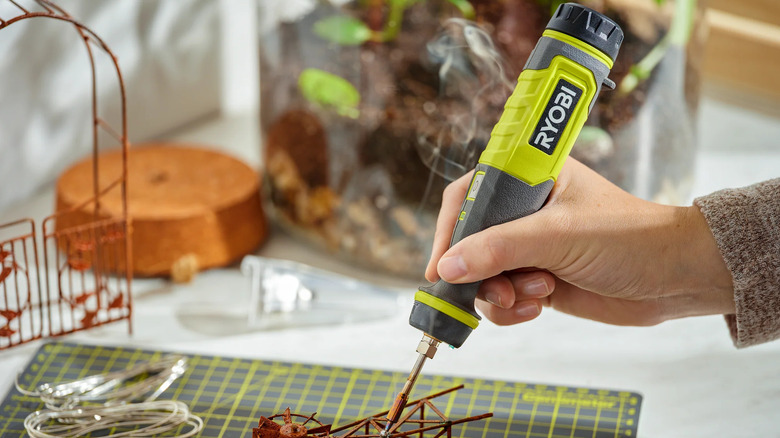
For those focused on specialized tasks, the Ryobi USB Lithium soldering pen for small electronics repair is a standout. It removes the tether of the power outlet, allowing you to work on a drone in the field or repair a wire under a car dashboard without dragging an extension cord. We also see niche additions like the IPX7-rated drain auger and the power carver, which cater to very specific hobbyist applications that were previously underserved by the larger 18V platforms.
As the ecosystem continues to grow, we are seeing more "prosumer" features trickling down, such as quick-change collets on the rotary tools and improved internal resistance management in the motors. While they will never be torque monsters, the refinement in build quality makes them much more reliable than the generic 4V tools found in big-box bargain bins.
FAQ
What tools are available in the Ryobi USB Lithium range?
The range currently includes over 35 tools, spanning from basic screwdrivers and rotary tools to specialized equipment like soldering pens, power scrubbers, glue guns, carvers, and even a small drain auger. They also offer lifestyle products like LED flashlights and portable fans.
How long does a Ryobi USB Lithium battery last?
Runtime varies significantly by tool and task. A 2.0 Ah battery might last for several hours in a low-drain LED light but only 20 to 30 minutes in a high-drain tool like the power scrubber or rotary tool under constant load. Upgrading to the 3.0 Ah battery generally provides a 50% increase in usable time.
Can you charge Ryobi USB Lithium batteries with a standard USB-C cable?
Yes, one of the primary benefits of this system is that the batteries feature a built-in USB-C port. You can charge them using any standard USB-C cable connected to a wall brick, laptop, or vehicle port. Ryobi also sells multi-port chargers for users with several batteries.
Are Ryobi USB Lithium batteries interchangeable between tools?
Yes, the 4V batteries are completely interchangeable across the entire Ryobi USB Lithium ecosystem. This allows you to buy "tool-only" versions of new releases at a lower cost once you already own a few batteries and a charging cable.
Is the Ryobi USB Lithium system compatible with 18V ONE+ tools?
No, the two systems are physically and electrically distinct. The 4V batteries cannot be used in 18V tools, and 18V batteries are far too large for the compact 4V tools. They are designed to be complementary systems rather than interchangeable ones.
Are Ryobi USB Lithium tools worth the price for DIYers?
For those who focus on light-duty maintenance, crafts, or precision electronics, these tools offer excellent value due to their ergonomics and convenience. However, if you are looking for a primary toolset for home renovation or heavy construction, you should stick with the 18V ONE+ platform.