Quick Facts
- Market Saturation: By 2026, 61% of U.S. households are expected to own at least one security camera, making surveillance a neighborhood standard.
- Deterrence vs. Reality: While 60% of burglars may avoid homes with visible cameras, independent research shows no direct correlation between camera density and lower neighborhood crime rates.
- Forensic Utility: Doorbell cameras are most effective as tools for evidence collection after a crime occurs rather than preventing the crime in progress.
- Privacy Cost: Over 2,600 police departments now partner with camera manufacturers, creating a massive surveillance network that often bypasses traditional warrants.
- Financial Shift: The smart home security market is hitting $44.2 billion, pivoting from passive recording to AI-powered proactive detection.
- Systemic Friction: High-quality footage often fails to lead to arrests due to the use of masks, stolen vehicles, and limited police resources.
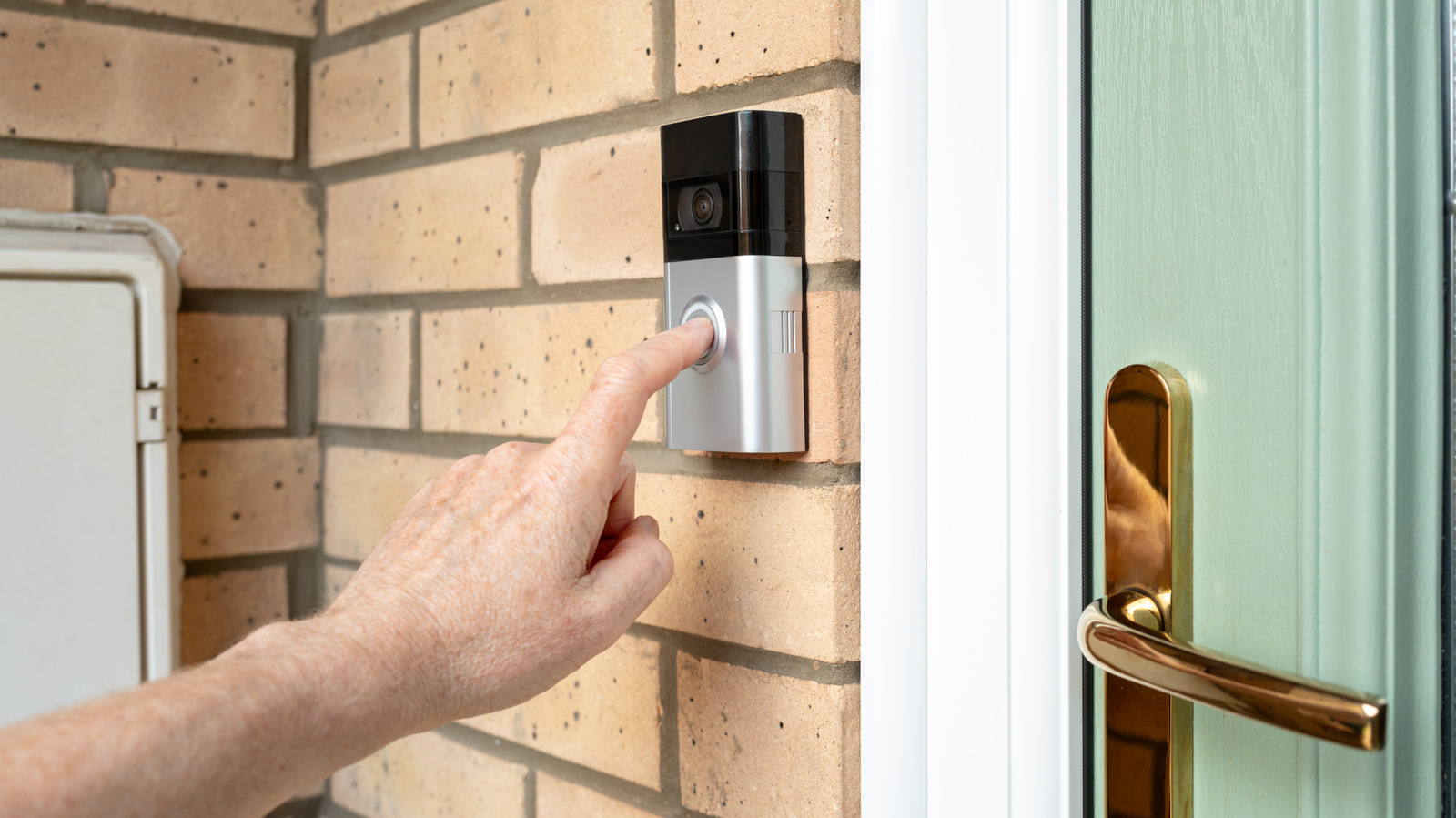
As we reach mid-2026, over 60% of U.S. households utilize doorbell camera security. But is a free camera enough to stop property crime? While manufacturers claim high reduction rates, independent data suggests a more complex reality regarding home security camera effectiveness. Doorbell camera security is a powerful tool for evidence collection and forensic investigation, but it is often not a standalone solution for stopping crime. Its effectiveness as a deterrent is limited by systemic friction and the need for a multi-layered home security strategy.
The Deterrence Myth vs. Forensic Reality
For years, the marketing narrative surrounding doorbell camera security has been simple: install a camera, and the "bad guys" will go elsewhere. On the surface, the data supports this. According to research from the University of North Carolina, 60% of burglars reported they would seek an alternative target if they identified a visible security camera at a home. This suggests a powerful deterrent effect for the individual homeowner. If your porch is glowing with a blue LED ring and your neighbor’s is dark, the opportunistic thief will likely choose the path of least resistance.
However, when we zoom out to the neighborhood level, the picture changes. Independent research from institutions like MIT and data from police partners suggest that doorbell cameras have a limited impact on overall crime deterrence. In cities like North Aurora, police departments reported significant crime drops after implementing camera sharing programs. Yet, when compared to neighboring towns like Aurora that lacked such programs, the crime rates followed nearly identical downward trends. This suggests that property crime rates tend to fluctuate based on socioeconomic factors and seasonality rather than the density of surveillance devices in a neighborhood.
This gap between perception and reality is what I call the deterrence myth. While your camera might move a crime one house over, it isn’t necessarily lowering the crime rate in your zip code. Instead, we have moved into an era where doorbell camera security is primarily a forensic tool. It excels at evidence collection. For example, in the 2025 Brown University incident, doorbell footage was instrumental in tracking a suspect's path across three blocks, even though the camera didn't stop the initial package theft. By 2026, video doorbell ownership reaching an estimated 58.9 million individuals means we have more eyes on the street than ever, but these eyes are recording history, not always changing it.
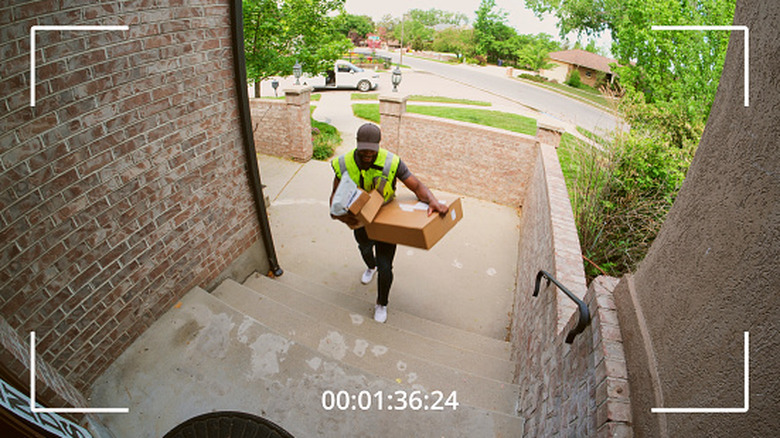
We also have to consider systemic friction. You can have 4K footage of someone stealing your e-bike, but if the thief is wearing a gaiter and a hoodie—a standard practice in the post-2020 era—the forensic value drops significantly. Police resources are often stretched thin, and property crime, while devastating to the victim, is frequently categorized as a low-priority investigation. This is the hard truth of home security camera effectiveness in 2026: the hardware is better than ever, but the judicial and investigative systems behind it haven't scaled at the same rate.
The Hidden Cost of Free: Privacy and Police Partnerships
In recent years, local governments have increasingly offered free or subsidized devices to residents. While a free gadget sounds like a win for your wallet, you must evaluate the smart doorbell privacy trade-offs inherent in these programs. These initiatives often involve a police doorbell camera partnership that can lead to increased community surveillance.
When you accept a city-provided camera, you are often asked to enroll in a registry. Privacy experts warn that these initiatives may create a widespread network of police access, even when footage requires owner consent. By 2026, the global smart home security market is expected to grow to $44.2 billion, and a large portion of that growth is driven by the shift from passive recording to AI-powered proactive threat detection. This AI doesn't just see a person; it categorizes behavior. When that data is shared within a surveillance network, the line between personal safety and public monitoring blurs.
Residents should evaluate whether a free city-provided doorbell camera worth the privacy trade-offs before signing up. Here is what you should consider regarding these partnerships:
- Consent Loops: Even if you don't voluntarily share footage, some platforms have historically allowed law enforcement access during "emergencies" without a warrant, though policies are tightening in 2026.
- Community Atmosphere: Widespread use of apps like Neighbors can lead to a "digital gated community" mentality, where every delivery driver or stranger is treated as a potential threat, often amplifying local anxieties.
- Data Retention: Once footage is shared with law enforcement, it enters a public record system where you no longer have control over how long it is kept or how it is used in facial recognition databases.
If you are already part of a network and feeling uneasy, you should know how to opt out of police doorbell camera sharing programs. Most major manufacturers now allow you to toggle off "Request for Assistance" notifications in your security settings. This ensures that your front porch security remains your own, and you won't be paged every time an officer is looking for footage in your area. Using cameras with local storage and end-to-end encryption can also help maintain privacy while avoiding the mounting monthly costs of the $44 billion subscription market.
Maximizing Your System: Beyond the Doorbell
If you decide that doorbell camera security is the right move for your home, you shouldn't treat it as a "set it and forget it" solution. To maximize the security benefits, you need to think about practical integration and the limitations of doorbell cameras for neighborhood crime deterrence. A single lens on your front door is a start, but it's not a complete strategy.
First, let's talk about the doorbell camera placement guide for capturing clear facial images. Most people mount their doorbells too high. If your camera is looking at the top of a thief's hat, the footage is useless for identification. The sweet spot is roughly 48 to 54 inches from the ground. This height allows the camera to capture a straight-on view of a face as someone approaches the door. Additionally, you must consider the lighting. Even the best infrared night vision struggles with "hot spots" from streetlights or reflections. Integrating your camera with motion-activated lighting ensures that the sensor switches from grainy night vision to full-color HD the moment someone enters your zone.
Cloud Storage vs. Local Storage in 2026
The shift in the industry toward subscription models has made local storage a premium feature. Here is how the two compare for the modern homeowner:
| Feature | Cloud-Based Storage | Local Storage (SD/NVR) |
|---|---|---|
| Monthly Cost | $5 - $15 per month | $0 (After initial hardware cost) |
| Privacy | Data sits on corporate servers | Data stays in your home |
| Access Speed | Fast, depends on internet | Instant for local, slower for remote |
| Security | Vulnerable to server breaches | Vulnerable to physical theft of device |
| Encryption | Standard | End-to-end (if supported) |
When comparing the effectiveness of doorbell cameras vs traditional home security systems, the doorbell is often the "outer layer." A traditional system with door and window sensors provides an immediate siren and professional monitoring that a camera alone cannot offer. In 2026, the best setups use the doorbell for artificial intelligence alerts—letting you know specifically that a "Package" or "Familiar Face" is at the door—while the traditional alarm handles the actual intrusion.
Finally, remember that these devices should be viewed as one part of a multi-layered security strategy. Physical deterrents like high-quality deadbolts, reinforced strike plates, and even thorny landscaping under windows still do a lot of the heavy lifting. A camera can tell you that you were robbed, but a deadbolt can prevent it from happening in the first place.
FAQ
Do doorbell cameras prevent package theft?
Doorbell cameras are highly effective at documenting package theft, but they rarely prevent it in the moment. While some cameras now feature active deterrents like sirens or flashing lights to scare off "porch pirates," most thefts occur so quickly that the owner only sees the alert after the thief has fled. To truly prevent theft, use a camera in conjunction with a secure delivery box or a smart lock that allows for in-home delivery.
Is a monthly subscription required for doorbell cameras?
While many leading brands push monthly subscriptions to access recorded footage and advanced AI features, it is not strictly required for all devices. Many 2026 models offer local storage via microSD cards or HomeBase stations, allowing you to view live feeds and save clips without a recurring fee. However, without a subscription, you may lose access to cloud backups and sophisticated person-detection alerts.
Do doorbell cameras record 24/7?
Most battery-powered doorbell cameras only record when they detect motion to preserve power. Hardwired models have the capacity for 24/7 continuous recording, but this often requires a specific professional-grade subscription or a connection to a local Network Video Recorder (NVR). For most homeowners, motion-based recording is sufficient for capturing significant events while saving storage space.
How far away can a doorbell camera detect motion?
By 2026, most mid-to-high-end doorbell cameras can detect motion up to 25 or 30 feet away. However, the accuracy of these alerts depends on the sensor type. Many now use Radar or PIR (Passive Infrared) sensors to reduce "false positives" from swaying trees or passing cars, allowing you to set specific activity zones that focus only on your walkway or porch.
Can doorbell cameras see in the dark?
Yes, nearly all modern doorbell cameras equipped with doorbell camera security features include infrared LEDs for night vision. High-end models in 2026 also feature "Color Night Vision," which uses high-sensitivity sensors to pull in ambient light from streetlamps or porch lights to provide a full-color image even in low-light conditions. Clear night vision is essential for capturing identifying features like clothing colors or vehicle makes.