Quick Facts
- Best Overall: Ring Battery Doorbell Plus (Offers the best balance of price and high-end video features)
- Best for Tech Enthusiasts: Ring Battery Doorbell Pro (Includes advanced radar-based tracking and path mapping)
- Resolution: Both models feature 1536p HD+ video with a 150-degree horizontal and vertical Head-to-Toe field of view
- Motion Sensing: The Pro uses Radar-powered detection for 3D Motion Detection, while the Plus uses standard passive infrared sensors
- Connectivity: The Pro supports dual-band 2.4GHz and 5GHz Wi-Fi, whereas the Plus is limited to 2.4GHz
- Digital Zoom: The Pro model offers 10x digital zoom compared to the 6x digital zoom on the Plus
- Power Source: Both utilize the standard Rechargeable Quick-Release Battery and support optional hardwiring
The Ring Doorbell Comparison between the Pro and Plus models reveals that while both offer the signature 1536p resolution and Head-to-Toe field of view, the Pro model justifies its higher price through radar-powered 3D motion detection and dual-band Wi-Fi connectivity. Both devices integrate seamlessly into the smart home security ecosystem and share the same Rechargeable Quick-Release Battery, making them versatile options for renters and homeowners alike.
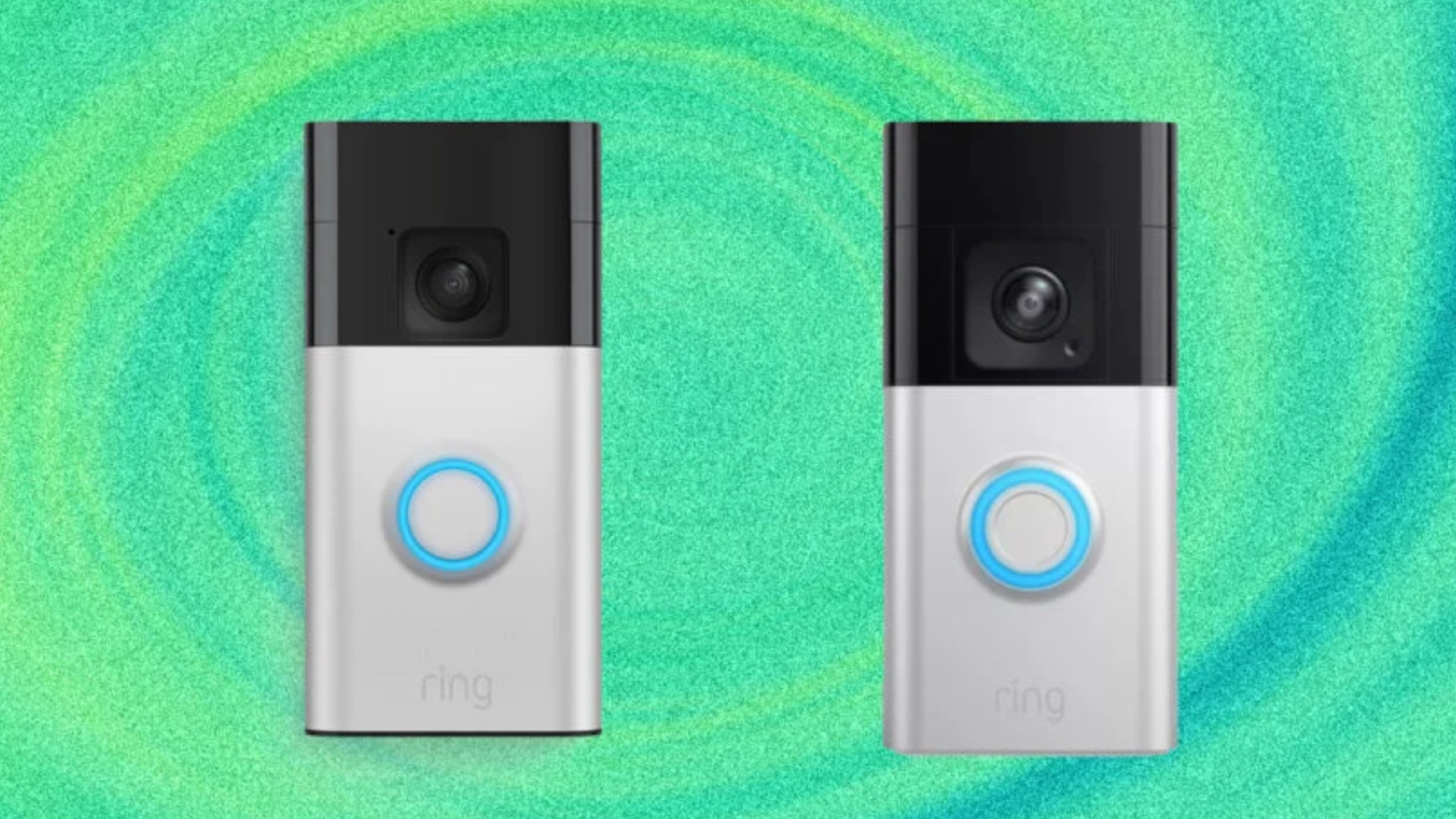
Visuals and Vision: Resolution and Head-to-Toe View
When we look at the ring battery doorbell pro vs plus video resolution comparison, we see that Ring has significantly raised the floor for its battery-powered lineup. For years, battery doorbells were the "lite" versions of their hardwired cousins, often stuck with lower resolutions and narrower views. That changed with these two models. Both the Ring Battery Doorbell Plus and the Ring Battery Doorbell Pro both feature 1536p HD+ video resolution with a 150-degree horizontal and vertical field of view to provide head-to-toe visibility of visitors.
This Head-to-Toe field of view is a game-changer for package security. In older models with a standard widescreen aspect ratio, you could often see a visitor's face but not the porch floor where your Amazon delivery was sitting. With the 1:1 aspect ratio found on both the Plus and Pro, you get a full view of the doorstep. This is essential for utilizing the Package Alerts feature found in Ring Protect subscription plans, as the camera needs to see the ground clearly to identify when a box has been dropped off or moved.
However, the differences emerge when you need to see details at a distance. In a ring battery doorbell pro 10x zoom vs plus 6x zoom comparison, the Pro model clearly wins. The 10x digital zoom on the Pro allows you to crop into a face or a license plate at the edge of your driveway with significantly more clarity than the 6x zoom on the Plus. While both utilize HDR video quality to balance bright sunlight and deep shadows, the Pro model's image processing feels slightly more refined, especially in high-contrast environments.
For night recording, both devices offer Color Night Vision. Instead of the grainy black-and-white footage of the past, these cameras use ambient light to "paint" the scene in color. This makes it much easier to identify the color of a car or a visitor's jacket in low-light conditions.
| Feature | Ring Battery Doorbell Plus | Ring Battery Doorbell Pro |
|---|---|---|
| Video Resolution | 1536p HD+ | 1536p HD+ |
| Field of View | 150° H / 150° V | 150° H / 150° V |
| Motion Detection | Standard PIR | Radar-powered 3D Motion |
| Wi-Fi | 2.4GHz | 2.4GHz & 5GHz |
| Digital Zoom | 6x | 10x |
| Audio | Two-Way Talk | Audio+ (Noise Cancellation) |
Motion Detection: Radar-Powered Precision vs Standard Sensors
The most significant technical divergence between these two devices lies in how they "see" motion. To understand why one might choose one over the other, we have to look at the Ring doorbell 3d motion detection benefits. The Ring Battery Doorbell Pro is equipped with radar-powered 3D Motion Detection and a Bird's Eye View feature for aerial path tracking, whereas the Battery Doorbell Plus relies on standard motion zones.
Standard motion sensors, like those on the Plus, use passive infrared (PIR) technology. These sensors look for heat signatures moving across their field of view. While effective, PIR can sometimes be fooled by a hot car driving by or a large bush swaying in the sun. You can set Advanced Motion Zones to mask out the street, but the detection is essentially two-dimensional.
The Pro model adds a radar sensor to the mix. Radar measures the specific distance of an object from the camera. This allows you to set a "tripwire" at a specific distance—say, 10 feet from your door. The camera will ignore anything happening 15 feet away (like the sidewalk) but will trigger instantly the moment someone crosses that 10-foot threshold. This leads to a massive reduction in "junk" notifications.
Furthermore, the Bird's Eye View feature uses this radar data to create a satellite-map overlay of your property. When you watch a recorded clip, you see a series of dots showing the exact path the visitor took. Did they come straight to the door, or did they linger by the side window? In a ring doorbell 3d motion detection vs standard motion sensors showdown, the Pro provides a level of situational awareness that standard PIR simply cannot match. This is particularly useful for homes with large front yards or complex layouts where standard motion zones are difficult to calibrate.
Connectivity and Battery Life: Dual-Band vs 2.4GHz
A smart doorbell is only as good as its connection to your router. In our Ring doorbell battery life comparison, we found that both the Pro and Plus perform similarly regarding longevity, typically lasting between six and twelve months depending on how many "events" they record per day. Both use the same Rechargeable Quick-Release Battery, which makes it easy to swap in a fresh pack without taking the whole doorbell off the wall.
However, the connection quality is where the Pro pulls ahead. A primary technical difference between the models is that the Ring Battery Doorbell Pro supports dual-band Wi-Fi connectivity for both 2.4GHz and 5GHz frequencies, while the Battery Doorbell Plus only supports 2.4GHz Wi-Fi.
In a ring battery doorbell battery life pro vs plus context, the 5GHz band is less about battery savings and more about signal latency. In modern homes crowded with smart speakers, laptops, and tablets, the 2.4GHz band can become incredibly congested. This leads to delayed notifications or "choppy" video. By moving the doorbell to the 5GHz band, you often get a faster, more stable stream. If your router is far from the front door, however, the 2.4GHz band is still better at penetrating walls. Having the choice on the Pro model is a significant advantage for home automation integration.
Both models also feature Color Pre-Roll technology. This feature captures a few seconds of video before a motion event is even triggered, meaning you see the approach of a visitor rather than just their back as they walk away. On the Pro, this pre-roll is in full color and high definition, whereas older or cheaper Ring models often have a lower-resolution, black-and-white pre-roll.
Value Proposition: Is the Pro Worth the Extra Cost?
When deciding is the ring battery doorbell pro worth the price difference, it really comes down to your home's physical environment and your tolerance for false alerts. The Plus usually retails for around $149, while the Pro sits at $229. That $80 gap buys you the radar sensor, dual-band Wi-Fi, and better audio processing.
Looking at the Ring Battery Doorbell Pro vs Plus features, here is how I categorize the best buyer for each:
Buy the Ring Battery Doorbell Plus if:
- You have a standard suburban lot with a clear view of the street.
- Your main goal is getting a Head-to-Toe view of packages.
- You are on a budget but still want top-tier video resolution.
- Your Wi-Fi router is older and only supports 2.4GHz.
Buy the Ring Battery Doorbell Pro if:
- You live on a busy street where standard motion sensors frequently trigger on passing cars.
- You have a complex yard and want to know exactly where people are walking via Bird's Eye View.
- You have a high-end mesh Wi-Fi system and want to utilize the 5GHz band for faster live views.
- You want the absolute best digital zoom for identifying fine details.
Regardless of which model you choose, remember to factor in the cost of Ring Protect subscription plans. To get the most out of either camera—including cloud storage, Package Alerts, and person detection—you will need a subscription. Without it, the doorbell is mostly a live-view device.
FAQ
What is the difference between the various Ring Doorbell models?
Ring offers three main categories: wired, battery-powered, and professional-grade. The Battery Doorbell Plus and Pro represent the top of the battery-powered line. The main differences across the entire range involve video resolution (720p vs 1080p vs 1536p), power source, and motion detection technology (PIR vs Radar).
Which Ring doorbell has the best video quality?
Currently, the Ring Battery Doorbell Pro and the Ring Video Doorbell Pro 2 share the crown for the best video quality. They both offer 1536p HD+ resolution and HDR, but the Pro 2 (wired) often has slightly better frame rates due to constant power.
Do all Ring doorbells require a monthly subscription?
They do not strictly require one to function as a doorbell and live-view camera. However, to save video recordings to the cloud, use the Bird's Eye View history, or receive specific Package Alerts, a Ring Protect subscription is necessary.
Which Ring doorbell is best for night vision?
Both the Battery Doorbell Plus and Pro are excellent for night vision because they support Color Night Vision. The Pro model has a slight edge due to its more powerful image processor, which helps reduce noise and graininess in very dark conditions.
How long does the battery last on a Ring Doorbell?
Under typical usage, you can expect the Rechargeable Quick-Release Battery to last between 6 and 12 months. This varies significantly based on how many motion events are recorded, the length of the clips, and environmental factors like extreme cold.
Are the more expensive Ring doorbells worth the extra cost?
If you have a challenging mounting location or high-traffic street, the more expensive models with radar-powered 3D motion detection are worth the cost because they significantly reduce false notifications. If you just want to see who is at the door, the Battery Doorbell Plus is the better value.