Quick Facts
- Market Outlook: The global modular laptop core module market is valued at approximately USD 1.42 billion in 2024 and is projected to reach USD 6.11 billion by 2033.
- The Price Gap: Early adopters should expect to pay a 40-50% premium upfront compared to traditional laptops with similar raw specifications.
- Top Repairability: The Framework Laptop 13 and Framework Laptop 16 lead the industry with perfect 10/10 iFixit scores.
- Eco-Impact: Extending a laptop’s lifespan through repair can reduce its annual climate change impact by up to 44%.
- Hardware Standard: 2026 models are moving toward LPCAMM2 for high-speed, user-replaceable memory, bridging the gap between performance and modularity.
Modular laptops typically carry a higher upfront cost compared to traditional laptops with similar specifications. This premium covers the engineering required for user-swappable components, such as mainboards and expansion cards. While traditional models from brands like Acer or Dell may offer more storage or RAM for the same price, modular systems aim to provide better long-term value by allowing users to upgrade individual parts rather than replacing the entire device.
What is a Modular Laptop?
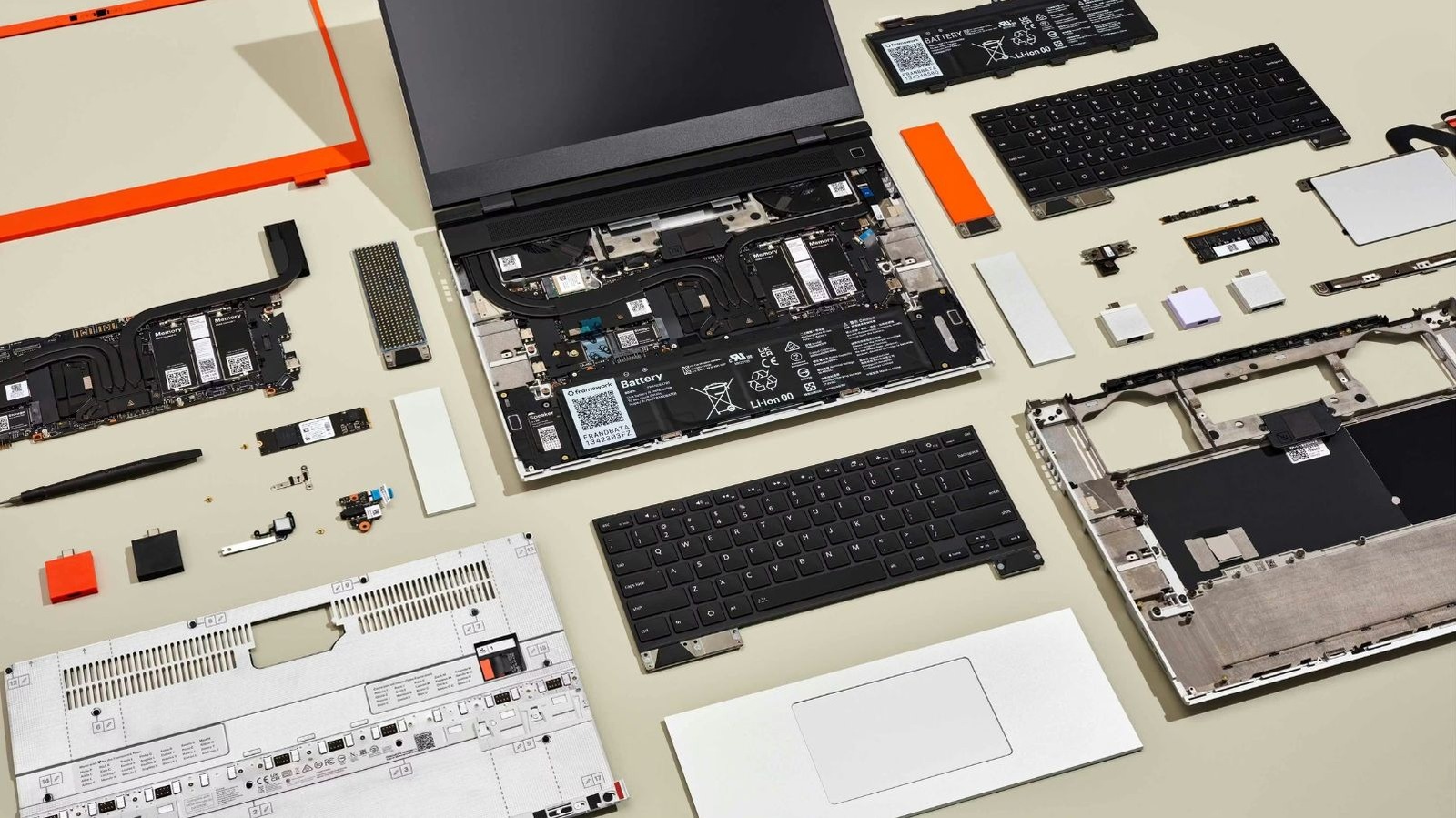
For years, the laptop industry has trended toward what I call "disposable thinness." To make devices a few millimeters thinner, manufacturers began soldering everything to the motherboard. If your RAM failed or your USB-C port got loose, the entire machine was essentially electronic waste. Modular laptops represent a hard pivot away from that philosophy. These are systems designed with the intent that the user—not a specialized technician—should be able to open the chassis and replace or upgrade almost every component.
In 2026, the concept has matured. We are no longer looking at clunky, industrial-looking bricks. A modular machine today looks and feels like a premium ultraportable, but with a secret: it uses Barebone systems architecture. This means you can buy the chassis and screen as one unit and then choose your own processor, memory, and storage. The most defining feature of these machines is the use of expansion cards. Instead of being stuck with whatever ports the manufacturer chose, you can slide in a HDMI port today and swap it for a MicroSD reader tomorrow.
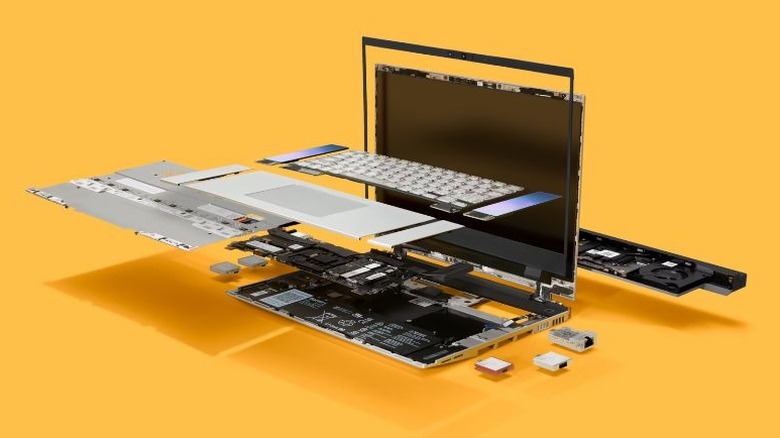
The primary trade-off between modular and traditional laptops involves immediate affordability versus long-term repairability. Traditional laptops often feature soldered components that limit upgrades but allow for thinner designs and lower retail prices. In contrast, modular laptops support the Right to Repair movement, enabling users to swap ports, batteries, and screens. For 2026 users, this means a modular chassis can stay relevant across multiple CPU generations, even as performance demands increase.
The Cost Dilemma: Analyzing the 2026 Repairability Tax
When you look at the sticker price of a modular laptop, you might experience a bit of "repairability tax" shock. Let’s be honest: you are paying for the engineering that makes the device easy to take apart. In a traditional laptop, components are crammed together to save space and cost. Making those same components modular requires extra connectors, reinforced sockets, and a more robust chassis design.
Currently, the global modular laptop core module market is valued at approximately USD 1.42 billion in 2024, and that scale is helping to bring prices down, but the gap remains significant. For example, if you compare a high-end modular system like the Framework 16 to a traditional gaming laptop like the Acer Nitro 16, the price difference for similar internal specs is roughly $470.
| Feature | Modular (Framework 16) | Traditional (Acer Nitro 16) |
|---|---|---|
| Initial Cost (Approx) | $1,649 | $1,179 |
| RAM Configuration | Swappable (LPCAMM2) | Soldered or 1-Slot |
| GPU | Replaceable Module | Soldered / Permanent |
| I/O Ports | Fully Customizable | Fixed |
| iFixit Score | 10/10 | 4/10 |
| DIY Kit Savings | Yes (approx. $150) | No |
One way to mitigate this cost is through a modular laptop diy kit vs pre-built cost comparison. Most modular brands offer a "DIY Edition" where you source your own RAM, storage, and OS. For a tech-savvy builder, this can bring the entry point down significantly, sometimes as low as $549 for a base mainboard and chassis. However, for most users, how to justify the higher price of modular laptops comes down to a shift in perspective: you aren't buying a computer; you're buying a platform.
Modular vs. Traditional: A 6-Year Total Cost of Ownership (TCO)
To really understand if modular laptops are worth it, we have to look past the first credit card statement. As a hardware editor, I always evaluate gear based on the total cost of ownership modular vs traditional laptops over a five-to-seven-year cycle.
In a traditional cycle, a user might buy a $1,000 laptop today. In three years, the battery is at 60% health, the 16GB of RAM feels sluggish, and the CPU struggles with new AI-driven software. Since everything is soldered, that user usually buys a new $1,000 laptop. Total spent over six years: $2,000.
In a modular cycle, you buy a premium modular chassis for $1,300. Three years later, you don't throw it away. You spend $450 on an upgrading mainboard vs buying new laptop 2026 guide which might feature the latest Strix Point architecture. You spend another $100 to double your memory. You’ve now got a "new" machine for a $550 investment. Total spent over six years: $1,850.
The math gets even more favorable when you consider the impact of rising ram prices on modular laptop value. Because you can buy your own modules on the open market rather than paying the manufacturer's 300% markup on "factory upgrades," you save money every time you need more power. Furthermore, repairing a laptop to extend its lifespan can reduce its annual potential impact on climate change by 28% to 44% compared to buying new. That is a massive win for Sustainable computing.
Repairability Scorecard: 2026 Brand Rankings
Not all "repairable" laptops are created equal. Some brands are embracing the spirit of modularity, while others are doing the bare minimum to satisfy new EU regulations. When looking at repairable laptop brands, I look for three things: availability of parts, clear repair manuals, and a lack of proprietary glue or screws.
The Framework Laptop 13 and the newer Framework Laptop 12 have both received a perfect 10 out of 10 repairability score from iFixit for their highly modular designs and ease of component replacement. This is the gold standard for E-waste reduction.
| Brand / Model | Repairability Score | Key Factor |
|---|---|---|
| Framework (All Models) | 10/10 | QR codes on every part; no glue. |
| ASUS Vivobook S14 (2026) | 9/10 | Adoption of socketed LPCAMM2 RAM. |
| Dell Latitude 7000 Series | 7/10 | Good manuals but proprietary parts. |
| Surface Laptop (7th Gen) | 6/10 | Improved over years, but still uses glue. |
| MacBook Air/Pro | 2/10 | Everything is soldered; difficult entry. |
The biggest repairability trade-offs for ultraportable 2026 laptops usually involve the screen. While Framework makes it easy to pop off a magnetic bezel and swap the panel, brands like Apple and Microsoft still use adhesive that makes a cracked screen a $500+ professional repair job. If you value your Right to Repair, look for machines that use screws, not glue.
Verdict: Who Should Invest in Modularity?
Total cost of ownership for modular laptops can be lower over a five-to-seven-year period despite the higher initial investment. By performing DIY repairs and incremental hardware updates, owners avoid the expense of professional service fees and full system replacements. In a market where rising component prices and proprietary hardware are common, the ability to reuse a chassis and only upgrade the mainboard or memory offers a more sustainable and cost-effective path for tech enthusiasts.
So, is it for you? I recommend modularity for three specific groups:
- The Professional "Lifer": If you are a developer or a writer who has a specific keyboard or screen they love, modularity allows you to keep that "perfect" physical interface while swapping the brains every few years.
- Privacy and Linux Advocates: Many modular systems include physical kill switches for the webcam and microphone, and they generally offer much better driver support for non-Windows operating systems.
- The Eco-Conscious User: If the idea of throwing away a perfectly good aluminum chassis just because a charging port broke bothers you, modularity is the only ethical choice.
However, if you are on a strict sub-$800 budget and need a machine for a one-off project or a four-year degree with no intention of tinkering, a traditional laptop from a brand like Acer or Lenovo will offer a better Price-to-performance ratio in the short term.

FAQ
Are modular laptops worth the investment?
Yes, if you plan to keep the device for more than four years. While you pay more at checkout, the ability to perform a $400 mainboard upgrade instead of a $1,200 full replacement makes them significantly cheaper over a six-year lifespan. They are essentially an insurance policy against planned obsolescence.
Can you upgrade the processor in a modular laptop?
In most modular designs, the processor is soldered to the mainboard for thermal efficiency, but the entire mainboard is designed to be swappable. This means you can upgrade from an older generation chip to a newer one (like moving to Strix Point architecture) by simply replacing the internal board while keeping your screen, keyboard, and chassis.
Are modular laptops more expensive?
Initially, yes. You can expect a 30% to 50% premium on the sticker price compared to a traditional laptop with the same CPU and RAM. This covers the cost of specialized connectors, a more durable chassis, and the low-volume manufacturing of swappable components.
Are modular laptops more sustainable?
Absolutely. Research shows that extending a laptop's life through repair and upgrades can reduce its environmental footprint by up to 44%. By enabling E-waste reduction and preventing the disposal of large aluminum and glass components, modular systems are the greenest choice in the computing market.
How long do modular laptops typically last?
A well-maintained modular chassis can easily last 7 to 10 years. While the internal processing power will need an upgrade every 3 to 4 years to keep up with modern software, the physical structure, hinges, and screen are built for extreme longevity, far outlasting the "disposable" three-year cycle of traditional consumer laptops.