Quick Facts
- Market Trend: The DSLR segment represented a 0.52 billion USD portion of the United States second-hand camera market in 2024, with steady growth predicted through 2034.
- Price Advantage: Market data shows that used DSLR prices in the U.S. fell by approximately 35% over a 36-month period ending in early 2025, offering a massive discount compared to mirrorless gear.
- Performance Gap: Legacy glass from the EF-mount and F-mount eras often delivers 90% of the optical performance of modern mirrorless equivalents at 50% of the cost.
- Resolution Bottleneck: Research indicates that lens quality is the primary bottleneck for sharpness; using a kit lens on a high-res sensor can effectively waste half your megapixels.
- Best Value Picks: Professional-grade f/2.8 zooms and fast primes like the Nikon 35mm f/1.8 or Canon 50mm f/1.4 are currently at all-time low prices.
- Inspection Essential: When following a secondhand lens buying guide, checking for fungus, oil on aperture blades, and internal dust is critical for a safe purchase.
Buying used DSLR lenses is a cost-effective way to upgrade from a standard kit lens to professional-grade glass. High-quality legacy lenses, such as Canon EF or Nikon F-mount primes, have depreciated significantly, offering superior optical clarity and wider apertures at a fraction of their original price, making them the most affordable DSLR lens upgrades for photographers looking to breathe new life into their existing gear.
Why Used DSLR Lenses Still Rule in 2026
We have entered a fascinating era for photography equipment. While the industry has sprinted toward mirrorless technology, a secondary market of incredible depth has matured behind it. The DSLR segment accounted for 0.52 billion USD of the United States second-hand camera market in 2024, and it is projected to grow at a compound annual rate of 5.4% through 2034. This isn't just nostalgia; it is a calculated move by savvy photographers who recognize that a used DSLR lenses strategy offers more bang for the buck than almost any other investment.
The shift to mirrorless has created a surplus of professional legacy glass. Market data indicates that used DSLR prices in the United States fell by approximately 35% over a recent 36-month period. This price drop allows us to access lenses that were once the exclusive domain of national news agencies and high-end fashion studios.
Furthermore, we must address the sensor bottleneck. Many photographers believe a new camera body is the key to sharper images, but optical research shows that using a budget kit lens on a high-resolution 45-megapixel sensor can limit detail to levels comparable to a 24-megapixel sensor. Upgrading your lens quality is the most direct path to better image sharpness. When you pair a high-resolution older body with elite glass, you unlock performance that rivals modern systems costing four times as much.
The Prime Path: Affordable Bokeh and Sharpness
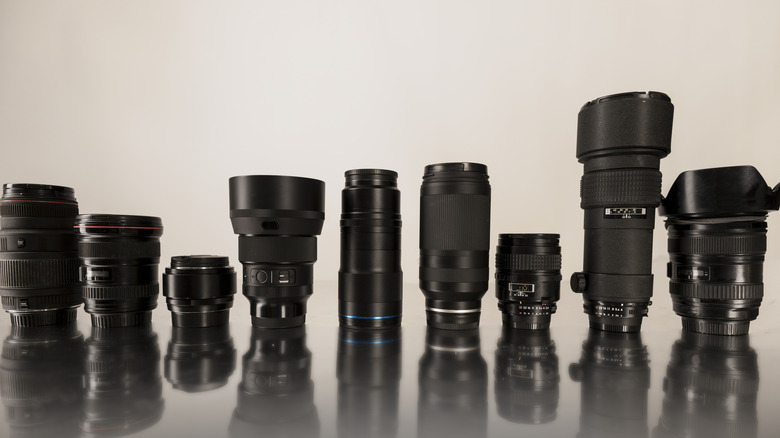
If you are currently shooting with the 18-55mm lens that came in your camera box, the fastest way to see a "professional" difference in your work is to switch to fast primes. These are lenses with a fixed focal length, which allows manufacturers to prioritize optical clarity and wide apertures. For those seeking affordable canon dslr lens upgrades for beginners, the EF 50mm f/1.8 STM (often called the Nifty Fifty) is the gold standard, providing incredible bokeh quality for portraiture at a negligible price.
For Nikon shooters, finding the best nikon prime lenses under 200 dollars is surprisingly easy. The AF-S DX Nikkor 35mm f/1.8G is a legendary performer that offers a natural field of view and excellent low-light capability. Because these lenses have simpler internal mechanics than zooms, they are often more durable and easier to verify when using a secondhand lens buying guide. The wider aperture blades in these primes create that creamy, out-of-focus background that kit lenses simply cannot replicate.
When searching for the best second hand lenses for portrait photography dslr users should also look at 85mm primes. An older Canon EF 85mm f/1.8 USM or a Nikon 85mm f/1.8D can be found for a steal. These lenses offer a flattering compression of facial features and a shallow depth of field that makes subjects pop off the background.
Professional Zooms: Upgrading Your Kit Lens
While primes are fantastic for artistic control, many of us need the flexibility of a zoom. This is where upgrading dslr kit lens with used professional glass becomes a game-changer. In the world of Canon, the L-series lenses—distinguishable by their iconic red ring—represent the pinnacle of build and optical quality. Similarly, Nikon’s Gold Ring lenses offer professional-grade image stabilization and weather sealing.
One of the best values right now is the "Mark I" versions of professional zooms. While the Mark II or Mark III versions offer marginal improvements in autofocus speed or coating, the original versions are often available at a massive discount while still delivering professional results.
| Lens Category | Professional Legacy Option | Typical Used Price (USD) | Primary Benefit |
|---|---|---|---|
| Standard Zoom | Canon EF 24-105mm f/4L IS USM | $350 - $450 | Constant aperture, weather sealed |
| Telephoto Zoom | Nikon AF-S 70-200mm f/2.8G ED VR | $550 - $700 | Incredible subject separation |
| Wide Angle | Canon EF 17-40mm f/4L USM | $250 - $350 | Ultra-wide perspective for landscapes |
We recommend considering full-frame glass even if you shoot on an APS-C (crop sensor) body. Using a full-frame lens on a smaller sensor often utilizes the "sweet spot" of the glass—the center portion where optical clarity is highest and vignetting is non-existent. Plus, if you ever decide to upgrade your camera body to full-frame, your lens kit is already prepared.
The Aesthetic Edge: Vintage Camera Lenses
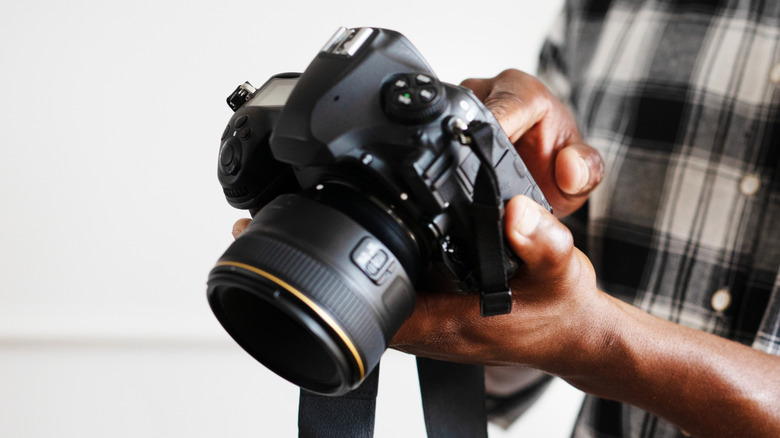
There is a growing movement in the photography world toward a more "organic" look, moving away from the clinical, ultra-sharp perfection of modern digital systems. This is where vintage camera lenses shine. By using simple lens adapters, you can mount 40 or 50-year-old glass from manufacturers like Pentax, Olympus, or even Leica onto your modern DSLR.
Using vintage manual focus lenses on modern dslr bodies requires a bit more patience, as you'll often be focusing by hand and shooting in aperture priority or manual mode. However, the creative payoff is immense. These older designs often feature subtle optical imperfections like chromatic aberration or unique lens flares that add a "film-like" character to your images.
The tactile feel of a well-damped manual focus ring is something many modern photographers find deeply satisfying. It slows down the process, making each shot more intentional. Whether you are hunting for a specific aesthetic or just want to experiment with glass that costs less than a dinner out, the world of vintage optics is a playground for creative exploration.
Secondhand Lens Buying Guide: The Inspection Checklist
Buying used doesn't have to be a gamble if you know what to look for. Whether you are buying from an online specialist or a local marketplace, follow this checklist to ensure you are getting a quality piece of equipment.
- Check the Glass Elements: Shine a bright light (like your phone's flashlight) through the lens from both ends. You are looking for fungus (which looks like tiny spiderwebs), haze (a cloudy film), or deep scratches. Small dust motes are normal and rarely affect image quality, but heavy internal debris should be avoided.
- Inspect the Aperture Blades: Look into the front of the lens and toggle the aperture lever (if applicable) or change the aperture setting on the camera. The blades should be clean and dry. Any oil residue can cause the blades to become "sticky," leading to overexposed images.
- Test the Manual Focus Ring: Rotate the ring through its entire range. It should feel smooth and consistent. If you feel any "grittiness" or hear a grinding sound, there may be sand or internal damage.
- Verify Autofocus and Image Stabilization: Mount the lens on a compatible body. Focus on objects at different distances to ensure the motor is quick and quiet. If the lens features image stabilization, listen for a faint hum and check if the viewfinder image "settles" when you half-press the shutter.
- Check the Mount: Ensure the metal or plastic mount isn't warped or excessively worn, as this can lead to poor communication between the lens and the camera.
When possible, we recommend buying from reputable specialized retailers that offer a 3-to-6-month warranty. While you might pay a 10% premium over a private eBay sale, the peace of mind is worth it for more expensive professional glass.
FAQ
Is it safe to buy used DSLR lenses?
Yes, it is very safe as long as you buy from reputable sellers or perform a thorough inspection. Lenses are mechanical objects that are built to last decades; unlike camera sensors, they do not "wear out" easily with normal use. Professional-grade lenses, in particular, are built like tanks to withstand heavy daily use.
What should I check when buying a used lens?
Focus on the three "optical enemies": fungus, haze, and scratches. Beyond that, verify that the aperture blades are free of oil and that the autofocus motor operates smoothly without excessive noise. Checking the filter threads for dents is also a good idea to ensure you can still use lens caps and filters.
Are used DSLR lenses worth the investment?
Absolutely. Because used DSLR lenses have already gone through their most significant period of depreciation, they hold their value remarkably well. In many cases, you can buy a used lens, use it for two years, and sell it for nearly what you paid for it—effectively "renting" high-end gear for almost nothing.
How can I tell if a used lens is in good condition?
A well-maintained lens will have clean glass, a responsive zoom/focus ring, and a clean mount. If the exterior barrel shows signs of heavy impact (dents or deep gouges), it may indicate that the internal elements have been knocked out of alignment, which can lead to "soft" images on one side of the frame.
Can I use old DSLR lenses on a mirrorless camera?
Yes, this is one of the best ways to transition between systems. Simple adapters allow you to use EF-mount or F-mount glass on almost any mirrorless body. In many cases, the autofocus performance of these older lenses actually improves when used on a mirrorless body due to the more advanced on-sensor phase-detection systems.
The Final Word
Your "old" DSLR isn't obsolete; it's simply waiting for better glass to show you what it can really do. By taking advantage of the shifting market and exploring used DSLR lenses, you can build a professional-grade kit that would have been financially impossible just a few years ago. Whether you choose the surgical sharpness of a fast prime or the versatile power of a professional zoom, the world of secondhand optics is the ultimate shortcut to better photography. Go ahead, give your camera that second life it deserves.