Quick Facts
- Resolution Winner: The InfiRay P2 Pro features a native resolution of 256x192, offering significantly more detail than the FLIR One series.
- Refresh Rate: Enjoy smooth video with the 25Hz frame rate on the InfiRay P2 Pro, compared to the stuttery 8.7Hz on the FLIR One Pro.
- Smart Processing: The FLIR ONE Edge Pro uses proprietary MSX technology to blend visible light edges with thermal data for easier object identification.
- Size and Weight: At just 9 grams, the InfiRay P2 Pro is an ultra-portable metal attachment, while the FLIR ONE Pro is bulkier at 36.5 grams.
- Temperature Range: The InfiRay P2 Pro can measure up to 600 degrees Celsius, outperforming the 400 degrees Celsius limit of the FLIR ONE series.
- Specialized Use: The InfiRay P2 Pro includes an optional magnetic macro lens specifically designed for microscopic thermal imaging on circuit boards.
Choosing the best smartphone thermal camera in 2026 comes down to whether you prioritize raw sensor power or software-driven clarity. The InfiRay P2 Pro offers a higher native resolution of 256x192 and a smooth 25Hz refresh rate, making it a powerful tool for detailed thermal analysis. In contrast, the FLIR ONE Edge Pro utilizes a 160x120 sensor enhanced by proprietary MSX technology, which overlays visible light edges onto thermal data to help users identify specific objects and structures more easily during inspections.
The Hardware Reality: Why Software Apps Aren't Enough
If you browse the App Store or Google Play Store, you will find dozens of apps claiming to turn your phone into a thermal vision device. As a mobile editor who has tested nearly every sensor on the market, I have to be clear: these apps are purely filters. They use your standard phone camera and apply a color gradient based on light levels, which is physically incapable of detecting heat. True thermal imaging requires a specialized component called a microbolometer.
These mobile infrared camera attachments contain sensors that detect long-wave infrared radiation. Unlike visible light, which bounces off surfaces, infrared radiation is emitted by objects based on their temperature. To process this data, you need hardware that can translate those invisible wavelengths into a visual map. This is why devices like the InfiRay P2 Pro and the FLIR One series are essential for anyone serious about heat detection. They represent a significant leap in miniaturization, allowing professional-grade sensors to draw power directly from your smartphone via USB-C or Lightning ports.
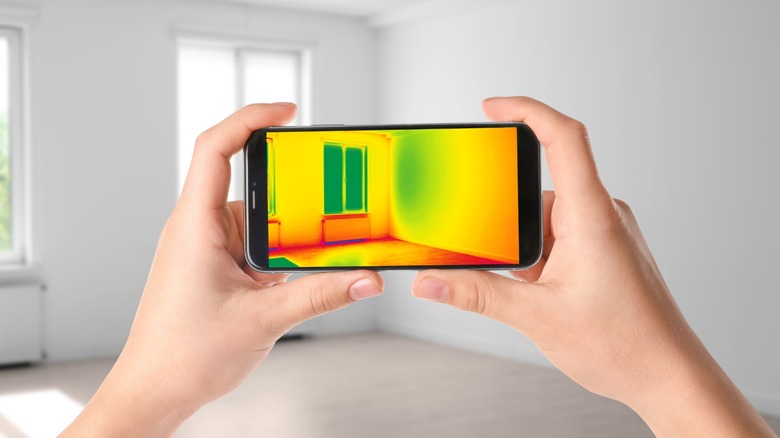
Technical Comparison: Resolution and Refresh Rate
When we dive into the specifications, the gap between the two industry leaders becomes apparent. The InfiRay P2 Pro offers a thermal resolution of 256 x 192 pixels and a frame rate of 25 Hz, compared to the FLIR ONE Pro which features a lower native resolution of 160 x 120 pixels and an 8.7 Hz frame rate. In real-world usage, this means the InfiRay unit provides nearly twice the pixel density.
The refresh rate (Hz) is arguably just as important as the resolution. If you are scanning a wall for a water leak or moving the camera across a running engine, an 8.7Hz frame rate will look "choppy" or laggy. The 25Hz refresh rate of the InfiRay P2 Pro ensures that the thermal video stays fluid, much like a standard video recording.
However, resolution isn't everything. We also have to look at thermal sensitivity (NETD), which measures how small a temperature difference the camera can detect. Both brands perform well here, but their approach to non-uniformity correction (NUC) differs. InfiRay uses an internal shutter to recalibrate the sensor frequently, ensuring that the image remains crisp and free from "ghost" artifacts during long sessions.
| Feature | InfiRay P2 Pro | FLIR ONE Pro | FLIR ONE Edge Pro |
|---|---|---|---|
| Native Resolution | 256 x 192 | 160 x 120 | 160 x 120 |
| Refresh Rate | 25 Hz | 8.7 Hz | 8.7 Hz |
| Max Temperature | 600°C | 400°C | 400°C |
| Connection | USB-C / Lightning | USB-C / Lightning | Wireless / Bluetooth |
| Feature Highlight | Magnetic Macro Lens | MSX Technology | Form-factor flexibility |
| Weight | 9g | 36.5g | 54g |
Best for Electronics Troubleshooting: InfiRay P2 Pro
For electronics and circuit board troubleshooting, the InfiRay P2 Pro is highly effective due to its optional magnetic macro lens. This attachment allows for microscopic thermal imaging, enabling technicians to pinpoint individual failing components and heat stress patterns on a PCB. Its compact 9-gram metal build provides professional-grade performance in a portable format for precision hardware diagnostics.
When you are looking for a smartphone thermal camera for electronics troubleshooting, you need to be able to see tiny 0201 SMD components. Without a macro lens, most thermal cameras have a minimum focus distance that is too far away to see heat signatures on a circuit board clearly. The InfiRay macro lens snaps onto the front of the device magnetically, shifting the focus to just a few centimeters away. This makes the process of how to troubleshoot circuit boards with smartphone thermal cameras significantly more accurate. You can literally watch a capacitor begin to heat up before it fails, or identify a shorted IC that is drawing too much current.
Furthermore, the InfiRay P2 Pro has a maximum temperature measurement range of 550°C and a weight of approximately 9 grams, though updated models can reach 600°C. This wider range is critical for automotive mechanics checking exhaust manifolds or industrial technicians monitoring high-heat machinery. The InfiRay P2 Pro vs Flir One Gen 3 temperature limits comparison clearly shows that InfiRay provides more headroom for extreme heat environments.
Best for Home & Professional Inspections: FLIR One Series
While InfiRay wins on raw hardware specs, Teledyne FLIR brings decades of industry experience to the table. Teledyne FLIR, the parent company of the FLIR ONE series, is the global leader in the thermal imaging market with an estimated revenue of $2.2 billion in 2024. This market dominance is built on their software and ease of use.
The standout feature for the FLIR series is MSX technology. Because thermal sensors have relatively low resolution compared to visual cameras, it can be hard to tell exactly what you are looking at in a pure thermal image. MSX technology takes the high-contrast edges from your phone's standard camera and overlays them onto the thermal map. This allows you to see text, the outlines of doors, and even the edges of studs behind a wall.
The FLIR One Edge Pro for professional home inspections is particularly useful because of its wireless design. Unlike other mobile infrared camera attachments that must be plugged into the charging port, the Edge Pro connects via Wi-Fi and Bluetooth. This allows you to clip the camera to a pole to inspect a high HVAC vent or hold it in one hand while viewing the screen on your phone in the other. When choosing a smartphone thermal camera, consider temperature range and connectivity requirements. The FLIR ONE Edge Pro features a wireless design compatible with both iOS and Android, supporting temperatures up to 400 degrees Celsius.
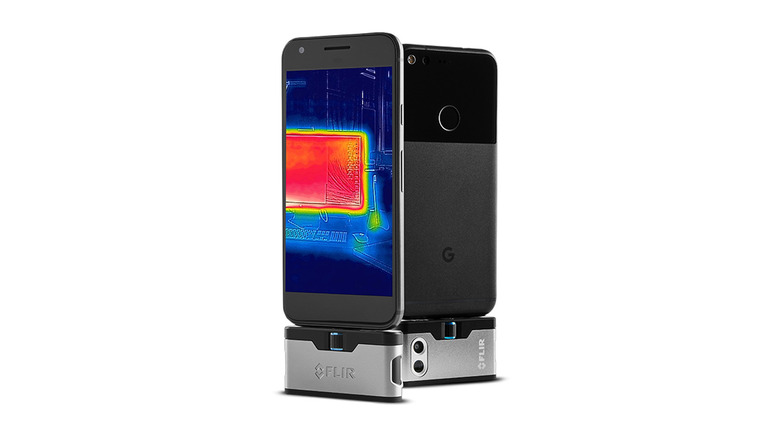
For HVAC inspection and detecting insulation defects, the FLIR app ecosystem is more polished than InfiRay's. It offers better emissivity settings for different materials like wood, glass, or polished metal, ensuring that the temperature readings you get are accurate. While the InfiRay P2 Pro vs Flir One Edge Pro comparison shows FLIR has lower resolution, the visual clarity provided by MSX often makes up for it in a construction or home inspection context.
Conclusion: Making the Choice
If you are a hardware geek, an engineer, or an automotive enthusiast, the InfiRay P2 Pro is the undisputed champion. Its 25Hz refresh rate and superior native resolution make it the better technical instrument. The addition of the macro lens makes it the definitive smartphone thermal camera for electronics troubleshooting.
However, if you are a home inspector, an electrician, or a DIY homeowner who needs to identify objects quickly in a cluttered environment, the FLIR ONE Edge Pro is the more user-friendly choice. Its MSX technology ensures you never have to guess what you are looking at, and its wireless flexibility is a major plus for reaching tight spaces.
Ultimately, both devices turn your mobile phone into a powerful diagnostic tool that would have cost thousands of dollars just a decade ago. Whether you choose the raw power of InfiRay or the smart processing of FLIR, you are getting a professional-grade sensor that fits in your pocket.
FAQ
What is the best thermal camera for a smartphone?
The best choice depends on your specific use case. For high-resolution tasks and electronics repair, the InfiRay P2 Pro is currently the top performer due to its 256x192 resolution and 25Hz refresh rate. For general home inspections and ease of use, the FLIR ONE Edge Pro is often preferred because of its MSX image blending technology and wireless connectivity.
Can any smartphone be used as a thermal camera?
No, a standard smartphone cannot be used as a thermal camera with software alone. You must use mobile infrared camera attachments that contain a microbolometer sensor. These attachments connect to your phone via USB-C, Lightning, or wirelessly via Wi-Fi to provide actual thermal data.
How accurate are smartphone thermal camera attachments?
Most reputable smartphone thermal camera attachments are accurate within plus or minus 2 to 3 degrees Celsius. Professional units like the InfiRay P2 Pro and FLIR ONE Pro offer adjustable emissivity settings, which are crucial for getting accurate readings on different types of surfaces like shiny metal or matte plastic.
Is a smartphone thermal camera worth it for home inspections?
Yes, a smartphone thermal camera is an invaluable tool for home inspections. It can quickly reveal hidden issues such as water leaks behind walls, missing insulation, electrical hot spots in breaker panels, and air leaks around windows or doors that are invisible to the naked eye.
What should I look for when buying a mobile thermal camera?
Key factors to consider include the native IR resolution (higher is better), the refresh rate (at least 15-25Hz for smooth video), the temperature measurement range, and software features like MSX. You should also check for compatibility with your phone's port and whether you need specialized accessories like a macro lens for PCB work.