Quick Facts
- Top Premium Card: The Platinum Card from American Express offers up to $800 per claim with a $50 deductible.
- Best Low Deductible: The Wells Fargo Autograph Journey features a market-leading $25 deductible for claims.
- Best for Business: Ink Business Preferred provides one of the highest limits at $1,000 per claim.
- Best No-Fee Option: Chase Freedom Flex provides $800 in coverage despite having no annual fee.
- Activation Requirement: You must pay your entire monthly wireless bill using the eligible card to maintain coverage.
- Claim Frequency: Most cards limit users to two or three claims within a rolling 12-month period.
Credit card phone insurance provides coverage for accidental damage, including cracked screens and liquid spills, as well as theft of the device. To activate this benefit, cardholders must pay their monthly cellular wireless bill in full using the eligible credit card. Most policies are secondary to other insurance and require a deductible, typically ranging from $25 to $100 per claim, with reimbursement limits often reaching $800 per incident.
| Card Name | Annual Fee | Deductible | Max Claim Limit |
|---|---|---|---|
| Amex Platinum | $695 | $50 | $800 |
| Capital One Venture X | $395 | $50 | $800 |
| Ink Business Preferred | $95 | $100 | $1,000 |
| Wells Fargo Autograph | $0 | $25 | $600 |
| Chase Freedom Flex | $0 | $50 | $800 |
The Bill Payment Mandate: How Coverage Works
One of the most common mistakes smartphone owners make is assuming the insurance is active simply because they own the card. In reality, credit card phone insurance is a benefit tied directly to your monthly spending habits. To remain eligible, you must pay your total monthly wireless bill with the specific credit card providing the benefit. If you miss a payment or use a different card for just one month, you could find your coverage voided during that window.
This protection is almost always classified as supplementary coverage. This means the benefit administrator expects you to file a claim with any primary insurance first, such as a homeowner’s policy or a plan through your wireless service provider. However, since most people do not carry specialized phone insurance or want to avoid high deductibles on home insurance, the credit card benefit often ends up covering the entire repair cost minus its own deductible.
Before you rely on this, you should check your specific Guide to Benefits. This document outlines the exact terms provided by the card issuer and the underlying insurance company, such as AIG or New Hampshire Insurance Co. You will need to keep a digital copy of your proof of payment—specifically the billing statement showing the phone bill was charged to the card—to ensure a smooth claims process later.
Pro Tip: Set your cellular bill to autopay on your insurance-providing card. This ensures you never accidentally lose your coverage because you forgot to switch your payment method.
Premium Travel Cards: Amex Platinum vs. Capital One Venture X
When comparing high-end credit card phone insurance, two names consistently top the list for mobile enthusiasts: The Platinum Card from American Express and the Capital One Venture X Rewards Credit Card. Both are designed for frequent travelers, but their smartphone protection adds significant value that helps offset their annual fees.
The Platinum Card from American Express provides cell phone protection that specifically includes coverage for cracked screens, offering up to $800 in reimbursement per claim with a limit of two approved claims per 12-month period and a $50 deductible. This makes it a reliable choice for users who carry flagship devices like the latest iPhone Pro or Samsung Ultra models, where screen repairs can easily exceed $300. Because the card is a Visa Signature or Mastercard World Elite equivalent in terms of luxury perks, the inclusion of accidental damage coverage is a natural fit for its demographic.
The Capital One Venture X Rewards Credit Card offers up to $800 in coverage per claim for cell phone theft or accidental damage, allowing cardholders to file up to two claims per rolling 12-month period for a maximum annual benefit of $1,600. While the claim limit is identical to the Amex Platinum, the Venture X has a lower annual fee, making the insurance feel like a more substantial "free" perk. Both cards handle the claims through third-party administrators who look for specific documentation of the incident.
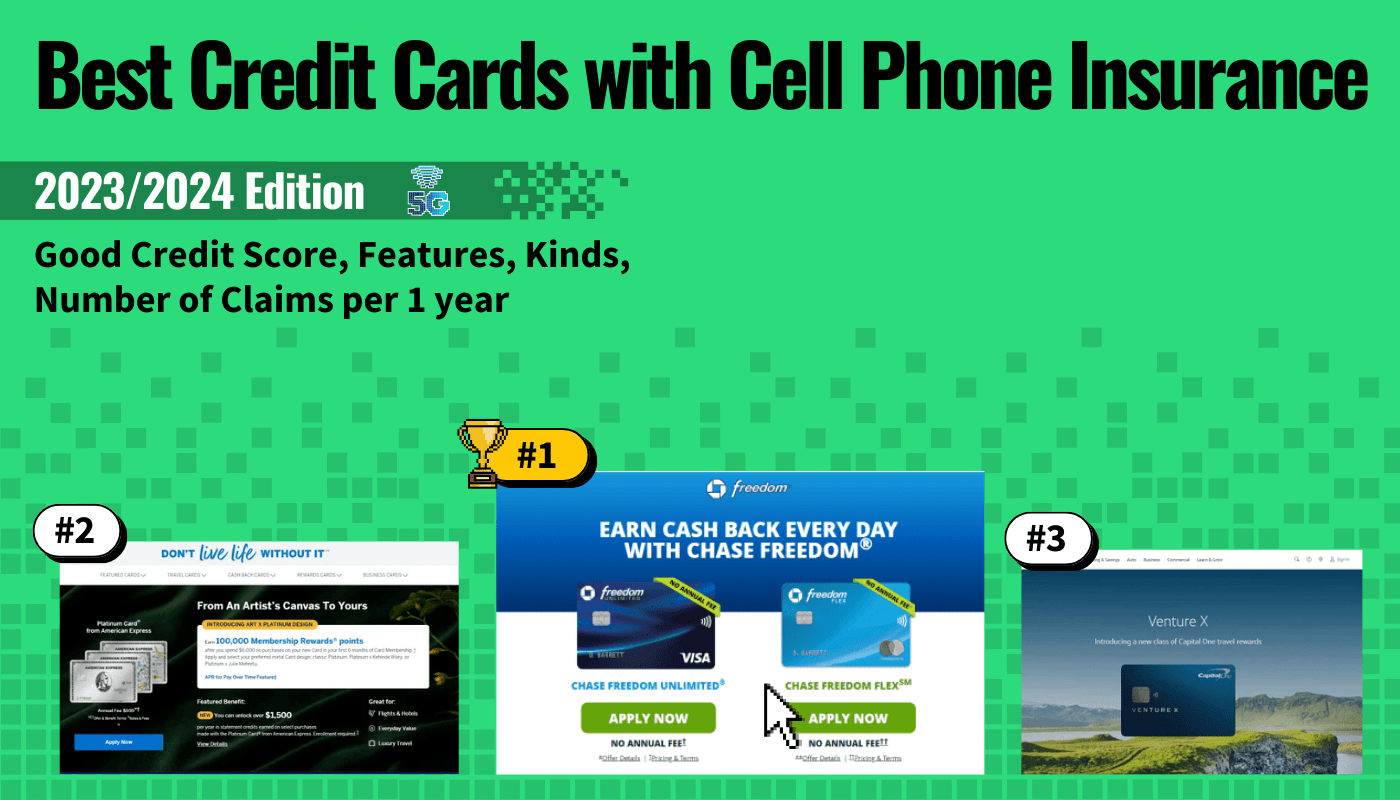
When deciding between these two for your cracked screen credit card coverage, look at the overall ecosystem. Amex Platinum is ideal if you value luxury lounge access and concierge services, while the Venture X is the go-to for those who want a simpler, high-value rewards structure alongside robust best credit cards for cracked screen repair coverage 2026.
Best High-Limit and No-Fee Alternatives
If you are a business owner or a freelancer, the Ink Business Preferred Credit Card provides one of the highest cell phone protection limits among premium cards, offering up to $1,000 per claim and a maximum of three claims per year, subject to a $100 deductible per claim. This is particularly useful for those managing multiple lines, as the policy typically covers all phones listed on the monthly wireless bill. While the $100 deductible is higher than the $50 found on travel cards, the $1,000 limit provides much more breathing room for expensive foldable phones or high-capacity tablets with cellular data.
For those who want protection without a hefty annual fee, the Chase Freedom Flex is a standout. It offers up to $800 per claim with a $50 deductible. It is rare to see such a high limit on a no-annual-fee card, making it a favorite for budget-conscious tech users. Similarly, some Wells Fargo cards offer a credit card cell phone protection deductible as low as $25, which significantly reduces your out-of-pocket expenses when a minor accident occurs.
When looking at a credit card cell phone protection deductible comparison, it is clear that you do not always have to pay a $695 annual fee to get quality coverage. The key is to match the claim limit with the actual replacement or repair cost of your specific device. If you use a mid-range phone, a $600 limit is plenty. If you are using a $1,800 foldable, you should prioritize the $1,000 limit offered by business-tier cards.
How to File a Claim for a Cracked Screen
Filing a claim might seem daunting, but it is a structured process that rewards the organized. If you wake up to a shattered display, your first step is not to run to the repair shop, but to document everything. To file a credit card cell phone insurance claim successfully, you must act within the timeframe specified in your card’s terms—usually 60 to 90 days from the date of the incident.
Start by obtaining a formal repair estimate from an authorized service provider. If you have an iPhone, this would ideally be an Apple Store or an Authorized Service Provider. The claims administrator needs to see a professional breakdown of the costs. Do not repair the phone yet; wait for the administrator to give you the green light or be prepared to pay upfront and wait for a statement credit reimbursement.
You will need to gather several documents:
- A copy of your card statement showing the most recent monthly wireless bill payment.
- A copy of the wireless service provider bill that corresponds to that payment.
- The original purchase receipt for the phone (to prove you own the device).
- A photo of the damage (in the case of a cracked screen).
- A police report if the claim is for theft rather than accidental damage.
Once you submit these through the online portal provided by the benefit administrator, the review process usually takes two to four weeks. If approved, you will receive a check or a statement credit for the repair amount minus your deductible.
What is Not Covered: Cosmetic vs. Functional Damage
It is crucial to understand the fine print regarding what constitutes a valid claim. Credit card phone insurance is designed to fix devices that are broken, not devices that are just ugly. This is where the distinction between cosmetic and functional damage becomes important.
Most policies explicitly exclude cosmetic damage. If your phone has a few deep scratches on the glass or a dent in the aluminum frame, but the screen still lights up and responds to touch, your claim will likely be denied. For a cracked screen credit card coverage claim to be successful, the crack usually needs to interfere with the safe operation of the device or the visibility of the display.
Is credit card phone insurance better than carrier insurance? Not always. Carrier plans like AppleCare+ with Theft and Loss or Verizon Mobile Protect often include perks that credit cards do not, such as same-day screen repairs for a $29 fee or battery replacements. Credit card insurance is a "reimbursement" model, meaning you often have to deal with the logistics and upfront costs yourself. However, for most users, the "free" nature of card-based insurance—provided you are already paying the bill—makes it a superior value compared to the $15-$20 monthly fees charged by carriers.
FAQ
How does credit card cell phone protection work?
This benefit acts as a form of insurance that covers your smartphone against theft or accidental damage. To make it work, you must pay your entire monthly wireless bill with the eligible credit card. If your phone breaks, you file a claim with the card’s insurance provider, pay a small deductible, and receive reimbursement for the repair or replacement cost up to a certain limit.
Does credit card phone insurance cover accidental damage like cracked screens?
Yes, most premium cards that offer this benefit specifically include accidental damage. A cracked screen is the most common reason for a claim. However, the damage must usually affect the phone's functionality; purely cosmetic scratches that do not hinder the use of the screen might not be covered.
What is the typical deductible for credit card phone insurance?
The deductible typically ranges from $25 to $100 per claim. High-end cards like the Amex Platinum and Capital One Venture X usually have a $50 deductible, while some Wells Fargo cards offer a very low $25 deductible. Business cards like the Ink Business Preferred may have a higher $100 deductible but offer higher total coverage limits.
Is credit card cell phone protection better than carrier insurance?
It depends on your needs. Credit card insurance is essentially free if you already have the card, saving you $150–$240 per year in premiums compared to carrier plans. However, carrier insurance often provides faster service, lower deductibles for screen repairs, and extra perks like technical support or battery coverage.
How do I file a claim for cell phone protection through my credit card?
You must contact the claims administrator (often via an online portal) within 60 to 90 days of the incident. You will need to provide a repair estimate, your credit card statement showing the bill payment, the cellular bill itself, and proof that the damaged phone is linked to that account. Once the claim is reviewed and approved, you are reimbursed for the costs.
Picking the Right Protection
Choosing the right card for your mobile lifestyle comes down to balancing the annual fee against the potential savings. If you are already paying for a premium travel card like the Amex Platinum, you are essentially sitting on a $1,600 annual safety net for your family’s devices. For those who want the best credit cards for cracked screen repair coverage 2026 without the high fee, the Chase Freedom Flex or a Wells Fargo option is the smarter financial move.
Before your next upgrade, take a moment to look at your wallet. Transitioning your monthly wireless bill to a card with built-in protection is one of the easiest ways to safeguard your tech investment without adding a single penny to your monthly budget. In an era where a single drop can cost $400 in repairs, having a card that has your back is more than just a perk—it is a necessity.