Quick Facts
- Top Specialty Tool: DeWalt 20V Max Grabo Lifter featuring a 265 lbs lifting capacity for porous materials.
- Fastening Efficiency: Impact Connect Nut Runner performs up to 3x faster than manual installation for threaded rods.
- Core Advantage: Specialized tools designed for solo operation, turning two-person tasks into one-person jobs.
- Market Position: DeWalt holds the highest trust rating among contractors for trade-specific innovations and job site durability.
- Battery Ecosystem: FlexVolt technology allows 60V power for heavy equipment while remaining backward compatible with 20V tools.
- Trade Specificity: Offers industrial fastening solutions for sheet metal, HVAC, and mechanical trades that are absent in consumer lineups.
DeWalt focuses on professional contractors by offering specialty DeWalt tools that address job site durability and repetitive motion strain, whereas Ryobi targets the DIY and home maintenance market. Specialty DeWalt tools, such as the 20V Max XR Cordless Rivet Tool and the Impact Connect Nut Runner, provide industrial fastening solutions for mechanical and HVAC trades that Ryobi's consumer-focused lineup does not currently cover.
The Professional Gap: Why Upgrading from Ryobi to DeWalt Matters
Every weekend warrior knows the bright green glow of the Ryobi aisle. It is a fantastic ecosystem for homeowners, offering everything from leaf blowers to glue guns. However, as a project scales from a simple kitchen backsplash to a full-scale commercial renovation, the limitations of consumer-grade equipment become apparent. The shift from hobbyist projects to commercial job sites requires a fundamental change in how we view our toolkit. This is where the gap between DIY-centric brands and professional-grade performance becomes a chasm.
When looking at the numbers, the preference for professional-grade gear is clear. As of September 2023, DeWalt led the power tool market with a 16% share of units sold and a 17% share of total dollar sales. This isn't just about brand recognition; it is about the internal engineering required for daily job site use. While Ryobi excels in "lifestyle" tools, DeWalt invests heavily in thermal management and high-torque Brushless XR technology. In the 2024 America’s Most Trusted study, DeWalt was ranked as the most trusted power tool brand for the third consecutive year, achieving a Net Trust Quotient Score of 121.2.
The difference in DeWalt vs Ryobi durability for daily job site use often comes down to the components you can’t see. Professional-grade tools utilize all-metal chucks and reinforced gear housings, whereas consumer models frequently rely on plastic internals to keep costs down. For a contractor, a tool that overheats at 2:00 PM isn't just an inconvenience; it is a loss of billable hours. Upgrading from Ryobi to DeWalt is less about leaving a brand and more about entering an industrial ecosystem designed to withstand the rigors of commercial job sites.
| Feature | Ryobi (DIY Focus) | DeWalt (Professional Focus) |
|---|---|---|
| Primary Build Material | High-impact plastic | Magnesium and all-metal components |
| Motor Efficiency | Standard Brushless | Brushless XR with advanced cooling |
| Ecosystem Depth | Wide variety of lifestyle/home tools | Deep trade-specific professional tools |
| Power Scaling | Static 18V platform | FlexVolt 20V/60V auto-sensing |
| Ergonomic Design | General comfort | Focused on reducing repetitive motion strain |
Solo Efficiency: Material Handling Solutions
One of the greatest bottlenecks on any job site is the "two-person task." Traditionally, moving large panes of glass, heavy stone slabs, or even positioning drywall required a helper. This doubles the labor cost for a single installation. Specialty DeWalt tools are increasingly focused on labor efficiency by enabling solo operation for these heavy-duty tasks.
The DeWalt 20V Max Grabo Lifter is a prime example of a tool that simply doesn't exist in the Ryobi world. Unlike traditional manual suction cups that only work on glass, this tool uses an electric vacuum pump to maintain a seal even on porous surfaces like concrete, wood, and textured stone.
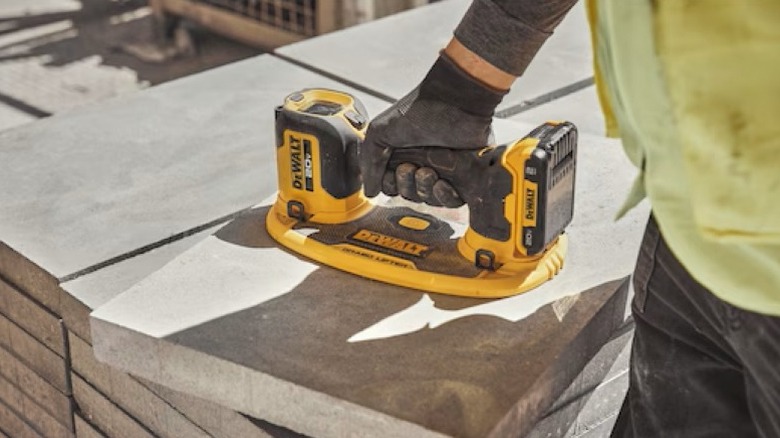
With a lifting capacity of up to 265 lbs, the Grabo allows a single worker to pick up and place heavy pavers or glass panels with one hand, leaving the other free to guide the material or apply adhesive. This level of pro-grade performance transforms how a solo contractor manages material handling solutions on-site.
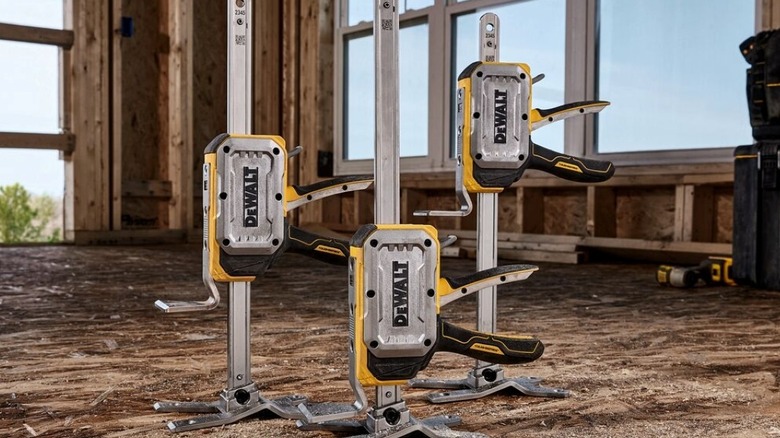
Similarly, the Toughseries Construction Jack is a game-changer for those involved in cabinetry or door installation. This isn't just a clamp; it is a heavy-duty lifting tool with a capacity of up to 340 lbs. When you are trying to hang a heavy fire-rated door or secure the first row of upper cabinets, the Toughseries construction jack for solo drywall installation or cabinetry provides the precision lift needed without needing an extra set of hands to hold the weight.
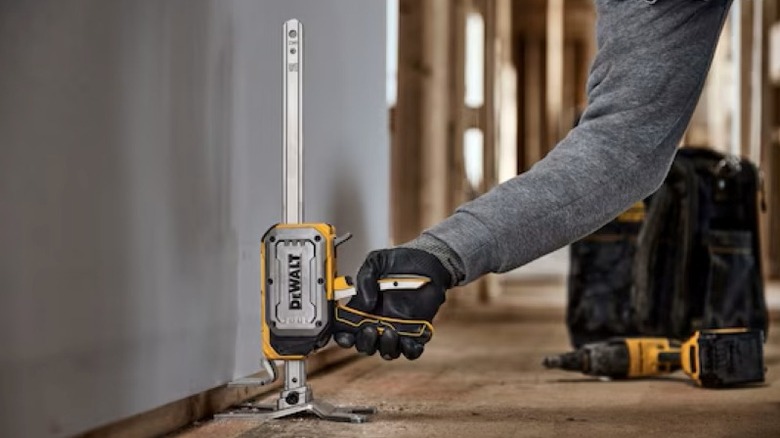
These specialty DeWalt tools for professional contractors solve the "manpower problem" that DIY tools ignore. By investing in tools that provide high lifting capacity and hands-free support, professionals can significantly reduce their overhead while maintaining a safer, more controlled working environment.
Industrial Fastening: The Mechanical Advantage
For those in the mechanical trades, speed and consistency are the metrics that matter most. If you are installing hundreds of feet of ductwork or threaded rod for electrical trays, the physical toll on your hands and wrists is immense. This is where industrial fastening solutions move beyond the capabilities of a standard drill or impact driver.
The DeWalt 20V cordless rivet tool for industrial sheet metal is a tool designed specifically for the heavy-duty demands of commercial HVAC and assembly. Manual riveting is slow and physically taxing. This specialty tool delivers 2,100 lbs of pulling force, allowing it to pop stainless steel, aluminum, and steel rivets with a single trigger pull.
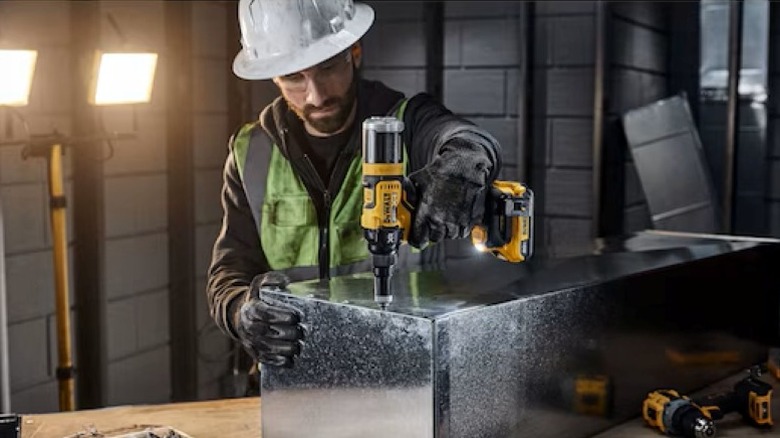
For HVAC and plumbing professionals, the Impact Connect Nut Runner represents an even more specific innovation. Threaded rod installation is traditionally a manual process involving endless spinning of nuts by hand. This attachment connects to your existing impact driver and can run nuts up to 3x faster than manual methods.
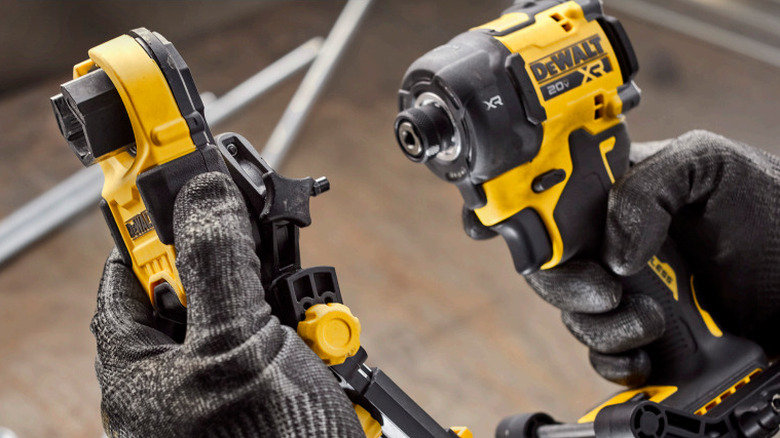
By focusing on reducing repetitive motion strain, these tools keep workers on the job longer with fewer injuries. In the context of DeWalt vs Ryobi for professional use, this trade-specific engineering is the deciding factor. Ryobi makes a great impact driver for building a deck, but DeWalt makes the specialty DeWalt tools that keep a mechanical contractor profitable during a massive commercial build-out.
Precision and Access: The Atomic Multi-Head Driver
Not every job site challenge involves brute force; many require surgical precision in cramped environments. In the world of high-end cabinetry and electrical work, the standard drill often proves too bulky to reach the necessary fasteners. This is where the best DeWalt tools to start upgrading from Ryobi usually include the Atomic series.
The Atomic 20V Max Multi-Head Drill/Driver is a masterclass in trade-specific innovations. It features four different attachment heads: a traditional chuck, a hex right-angle, an offset, and a 1/4 inch hex quick-release. While DIY platforms might offer a basic right-angle drill, the DeWalt system allows for tight-space maneuverability that feels like an extension of the hand.
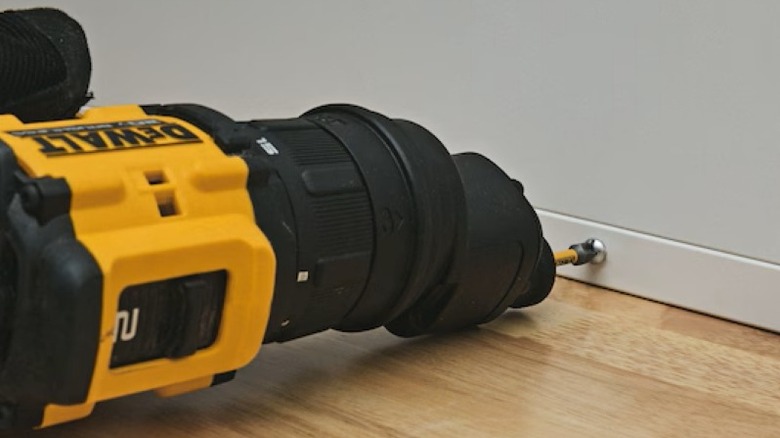
This tool is essential for installing hardware inside finished cabinets or working behind existing plumbing fixtures. The ergonomic tool design ensures that even when you are reaching into an awkward corner, you have the control and torque necessary to drive a screw without stripping it or damaging the surrounding material. For professionals, this level of access isn't just a luxury—it is the difference between a clean install and a frustrated afternoon of removing a damaged cabinet.
Future-Proofing with the FlexVolt Ecosystem
The final reason to consider upgrading from Ryobi to DeWalt is the long-term scalability of the battery platform. While Ryobi’s 18V One+ system is legendary for its backwards compatibility, it lacks a high-voltage ceiling. DeWalt solved this with FlexVolt technology.
FlexVolt batteries are dual-voltage; they automatically switch between 20V and 60V depending on the tool they are plugged into. This allows a contractor to use the same battery for a small Atomic driver and a massive 12-inch miter saw or a concrete breaker. As we look toward 2026, the introduction of tabless cell technology (often marketed as POWERPACK) is set to further increase the power density and thermal efficiency of these batteries.
For professional contractors, this means the specialty DeWalt tools you buy today will have the power overhead to handle the more demanding equipment you might add to your fleet tomorrow. The ecosystem longevity offered by DeWalt ensures that as your business grows from residential repairs to industrial contracts, your battery investment stays relevant.
FAQ
What are some examples of specialty DeWalt tools?
Specialty DeWalt tools include the 20V Max Grabo Lifter for vacuum-sealing and lifting heavy materials, the Impact Connect Nut Runner for threaded rods, and the 20V Cordless Rivet Tool. Other examples include the Toughseries Construction Jack for solo lifting and the Atomic Multi-Head Driver for maneuvering in extremely tight spaces.
Does DeWalt make trade-specific tools for plumbers and electricians?
Yes, DeWalt has an extensive lineup for mechanical trades. For plumbers, they offer cordless pipe threaders and press tools for copper and PEX. For electricians, they provide cordless cable cutters, crimpers, and knock-out tools specifically designed to reduce labor time and physical strain on commercial job sites.
Are specialty DeWalt tools compatible with 20V MAX batteries?
Most specialty DeWalt tools are designed to work within the 20V MAX ecosystem, meaning they are compatible with standard 20V batteries as well as the higher-capacity FlexVolt 20V/60V batteries. This allows for seamless integration with your existing DeWalt tool kit.
Are DeWalt specialty tools available in cordless versions?
Nearly all of DeWalt’s modern specialty tools are cordless. The brand has prioritized the 20V MAX and 60V FlexVolt platforms to eliminate the need for cords on-site, providing the mobility required for high-rise construction and large-scale industrial projects.
How do specialty DeWalt tools compare to standard models for home use?
While standard models focus on general tasks like drilling holes or driving screws, specialty tools solve specific technical bottlenecks. For example, a standard drill can drive a screw, but the Atomic Multi-Head Driver provides the offset access needed for cabinetry that a home-use drill simply cannot reach. They are built with higher-grade materials to handle the daily, repetitive use typical of professional environments.
Investing in Professional ROI
Choosing the right tool is ultimately a business decision. While Ryobi remains a dominant force in the consumer market, the specialty DeWalt tools discussed here represent a strategic investment in efficiency and worker longevity. Whether it is turning a two-person glass installation into a solo task with the Grabo Lifter or speeding up HVAC assembly with a cordless rivet tool, the ROI is measured in hours saved and physical fatigue avoided.
If your projects are moving beyond the realm of DIY and into the world of professional contracting, evaluate your current workflow. If you find yourself waiting for a second person to help lift a door, or struggling with hand cramps after a day of manual fastening, it is likely time to look at what the DeWalt professional ecosystem can offer. The leap from consumer to pro-grade is an investment in the most valuable asset any contractor has: their own time and health.