Quick Facts
- Primary Platform: ICE strike teams and federal agents utilize the Zello walkie talkie app on standard iOS and Android devices to bypass traditional radio limitations.
- Network Versatility: The software functions over 2G, 3G, 4G, and Wi-Fi, making it a critical tool for field agent communication in diverse environments.
- Operational Scale: As of early 2020, the ICE Enforcement and Removal Operations division maintained 20 Special Response Teams comprised of 34 full-time and 269 collateral duty officers trained for high-risk operations.
- Enhanced Features: Features like message replay, live location tracking, and invisible private channels offer superior tactical coordination compared to analog systems.
- Low Bandwidth Utility: The app is optimized for low-speed networks, maintaining voice clarity on weak signals that would typically fail during standard cellular calls.
- Cost-Efficiency: Leveraging Zello Work for field coordination allows agencies to use consumer-grade hardware instead of proprietary radios costing thousands of dollars per unit.
- Encryption Standards: Private groups and enterprise tiers offer end-to-end encryption, ensuring operational security during sensitive Homeland Security Investigations.
ICE strike teams and federal agents are increasingly bypassing proprietary radio hardware in favor of the Zello walkie talkie app. This mobile-first solution provides critical push to talk capabilities over standard iPhone and Android devices, ensuring seamless communication during arrests and surveillance. By leveraging existing cellular networks, Zello offers a resilient, low-bandwidth alternative to traditional radio systems that often fail in dense urban or remote rural environments.
Low Bandwidth Resilience: The 2G Advantage
In the world of tactical operations, the difference between a successful mission and a dangerous failure often comes down to the reliability of a signal. For agents working with Customs and Border Protection or Homeland Security Investigations, operations frequently take place in remote border regions or congested urban centers where high-speed LTE or 5G coverage is spotty at best. This is where Zello low bandwidth performance becomes a deciding factor for field teams.
Unlike standard Voice over IP (VoIP) services that require a consistent, high-speed data stream, Zello is engineered to operate on the thinnest of margins. By using highly compressed digital voice packets, the app can maintain clear audio even on 2G networks. This capability is vital for field agent communication when a team is operating in a basement, a dense forest, or an area where the local network is overwhelmed by civilian traffic.
Pro Tip: Optimizing Zello low bandwidth performance in remote areas For teams operating in fringe coverage areas, navigating to the app settings and adjusting the audio quality to a lower bitrate can further reduce data consumption. This ensures that voice transmissions priority over other background data, keeping the PTT connection active even when the signal indicator shows only one bar.
Traditional radio systems often suffer from "dead zones" caused by geographical obstructions or distance from a repeater tower. Because Zello relies on PTT over Cellular technology, it effectively uses the entire global infrastructure of cellular towers and satellites. If an iPhone can send a simple text message, the Zello walkie talkie app can usually transmit a voice command. This resilience ensures that tactical teams remain connected during network congestion where traditional high-speed data services might fail.
Secure Tactical Coordination: Invisible Channels and Encryption
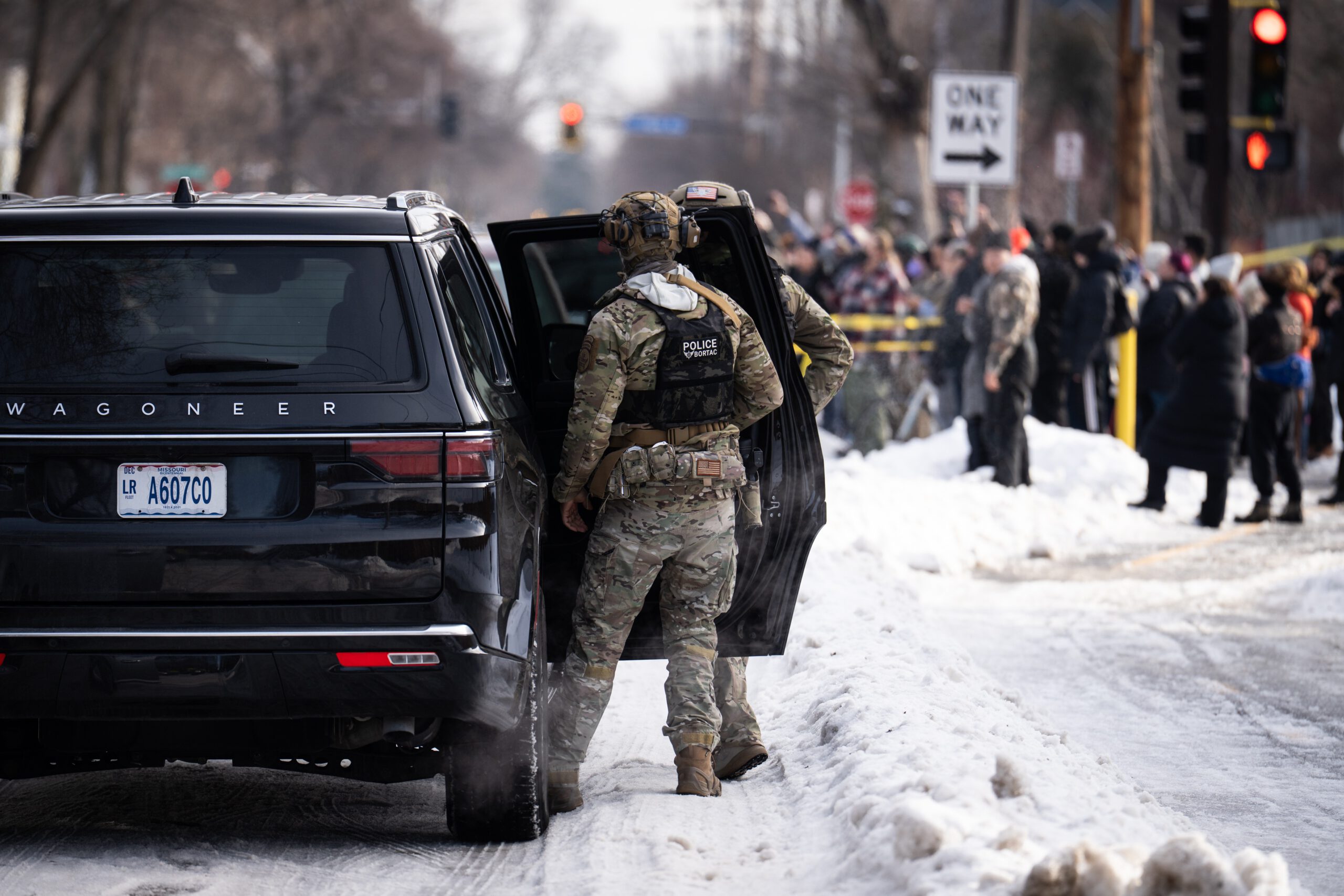
When coordinating a high-stakes arrest or a surveillance detail, operational security is paramount. One of the primary reasons federal agencies are moving toward digital solutions is the ability to manage private, secure communication channels that are invisible to the public. While traditional police scanners can tune into analog radio frequencies, Zello group channel coordination allows for a much higher level of secrecy.
Federal teams utilize the "Invisible" channel feature within the app. These channels do not appear in any public search results, and users must be manually invited by an administrator. This setup prevents unauthorized listeners or counter-surveillance efforts from monitoring team movements. Furthermore, for those managing Zello group channels for large scale operations, the enterprise version provides end-to-end encryption. This means that even if data packets were intercepted, the tactical communication would remain unreadable.
Managing Zello group channels for large scale operations is handled through a centralized web console. A dispatch officer can create specific channels for different strike teams, monitor active users, and even broadcast emergency alerts to all agents simultaneously. This digital management of law enforcement coordination eliminates the risk of frequency interference that often plagues traditional radio bands when multiple agencies are operating in the same vicinity.
App vs. Radio: Why Federal Agencies are Switching
The shift from Land Mobile Radio (LMR) to smartphone-based apps is driven by both functionality and economics. A single tactical radio used by agencies like the Department of Homeland Security can cost upwards of $5,000, not including the maintenance of expensive repeater networks. In contrast, the Zello walkie talkie app vs traditional radio for coordination offers a much more flexible and cost-effective model.
Law enforcement organizations utilize the Zello push-to-talk app to augment traditional radio systems, as it allows personal smartphones to communicate over any cellular or Wi-Fi network with digital audio quality that avoids the range limitations of proprietary towers. Beyond the cost of hardware, the feature set of a smartphone app far exceeds what an analog radio can offer.
| Feature | Traditional LMR Radio | Zello Walkie Talkie App |
|---|---|---|
| Range | Limited to tower proximity | Worldwide via Cellular/Wi-Fi |
| Audio Quality | Subject to static/interference | Digital, clear audio |
| Message History | Not available | Full replay and history logs |
| Tracking | Requires expensive GPS modules | Real-time live location tracking |
| Hardware Cost | $2,000 - $7,000 per unit | Consumer iPhone/Android |
| Security | Frequency hopping (expensive) | End-to-end encryption |
The Zello message history and replay features for incident reporting are particularly valuable for federal agents. If an officer misses a transmission during a high-stress moment, they can simply tap the history button to replay the last message. This is impossible on standard radios, where a missed transmission is gone forever. Additionally, Zello Work vs free version for field coordination provides a dispatch console that allows commanders to see the exact GPS location of every agent on a map, providing a layer of safety and disaster response utility that traditional systems lack.
Real-World Evidence: The Chicago CBP Incident
The practical application of this technology isn't just theoretical; it has been documented in active field operations. A notable case involved a shooting incident in Chicago where an agent with Customs and Border Protection, Charles Exum, was involved in a tactical situation. Bodycam footage from the incident clearly showed agents utilizing the Zello interface on their iPhones to coordinate their response.
This real-world evidence highlights the effectiveness of Zello push to talk setup for professional teams. Investigative reports have confirmed that several federal agents have Zello accounts linked directly to their @ice.dhs.gov or @cbp.dhs.gov email addresses. This confirms that the app is not just a backup tool but a primary platform for real-time coordination during active surveillance and arrests.
When looking at the best Zello app settings for iPhone tactical use, agents often rely on external PTT buttons that connect via Bluetooth. This allows them to trigger a transmission without ever touching their phone screen, mimicking the ergonomics of a traditional radio while keeping the phone secured in a pocket or tactical vest. For Homeland Security Investigations, this blend of consumer-grade mobile data reliability and tactical-grade hardware accessories represents the future of field communication.
FAQ
How does the Zello walkie talkie app work?
The app functions as a Voice over IP (VoIP) service that mimics a traditional walkie talkie. It uses your smartphone's data connection (Wi-Fi or cellular) to transmit voice packets instantly to other users on the same channel. Instead of a continuous stream like a phone call, it uses a push to talk interface, meaning audio is only sent when the user holds down the talk button.
Is the Zello app safe and secure?
Zello is considered highly secure for professional use when using the Zello Work or enterprise tiers. These versions offer end-to-end encryption for all voice transmissions. For tactical teams, the ability to create invisible, password-protected channels ensures that communication remains private and inaccessible to the general public or hobbyist scanners.
Does Zello work without cellular data or Wi-Fi?
No, Zello requires an internet connection to function. However, its main strength is its ability to operate on extremely low-speed connections. It can maintain reliable communication on 2G or GPRS networks that are too slow for web browsing or standard video calls. It does not use traditional radio frequencies, so it cannot work in a completely signal-free environment without a satellite or Wi-Fi link.
What is the maximum range of the Zello app?
The range is effectively unlimited as long as both the sender and receiver have access to the internet. An agent in Los Angeles can communicate with a dispatch center in Washington D.C. with the same latency and clarity as if they were standing next to each other. This overcomes the major geographic limitations of traditional radio towers.
Can I use Zello as a police scanner?
While there are public channels on Zello that are used by various groups, it is not a police scanner in the traditional sense. It does not tune into analog or digital radio frequencies used by local police departments. Most law enforcement agencies using Zello for tactical communication utilize private, invisible channels that are not accessible to the public.