Quick Facts
- The Bias Gap: NIST data indicates that many facial recognition algorithms exhibited false positive rates for Asian and African American faces that were 10 to 100 times higher than for Caucasian faces.
- The Legal Cliff: The EU AI Act introduces strict enforcement beginning August 2, 2026, classifying remote biometric identification as a high-risk activity with stringent transparency requirements.
- The Liability: Violations of the Biometric Information Privacy Act (BIPA) can trigger statutory damages of $1,000 to $5,000 per unauthorized scan, posing a massive financial risk to non-compliant organizations.
- Human Failure: Research shows that human operators tasked with reviewing candidate lists generated by algorithms make errors approximately 50% of the time, even with very short lists.
- The Outcome: Widespread facial recognition failures occur when investigative leads are treated as definitive proof, ignoring the high false match rate and demographic disparity inherent in current biometric templates.
Facial recognition technology was promised as a foolproof digital witness, but real-world facial recognition failures tell a different story. In 2026, the gap between AI capability and legal reality is wider than ever. Facial recognition failures often stem from algorithmic bias and poor image quality, which disproportionately affect women, older adults, and people of color. These technical errors are frequently exacerbated by confirmation bias, where investigators treat an AI match as definitive proof rather than a preliminary lead, ignoring physical discrepancies that a manual human review would identify.
The Socio-Technical Gap: Why AI Fails as a Witness
The myth of the infallible digital witness relies on a misunderstanding of how biometric templates are created and compared. In a cooperative environment—such as using FaceID to unlock a smartphone—the lighting is controlled, the angle is direct, and the user is an active participant. However, in the realm of law enforcement and public surveillance, we deal with non-cooperative conditions. Grainy CCTV footage, harsh shadows, and extreme angles create a volatile environment where facial recognition failures are not just possible, but statistically likely.
A critical component of this failure is the demographic disparity found in the data used to train these systems. When algorithms are trained on datasets that lack diversity, they struggle to distinguish features in minority populations. The National Institute of Standards and Technology (NIST) has documented that the false match rate for certain demographics can be staggering. This is not merely a technical glitch; it is a systemic flaw that turns facial recognition bias against women and people of color into a weapon of misidentification.
| Feature | Cooperative FRT (e.g., FaceID) | Non-Cooperative FRT (Surveillance) |
|---|---|---|
| Image Quality | High-resolution, infrared sensors | Low-resolution, motion-blurred CCTV |
| Subject Angle | Direct, front-facing | Varying, often profile or overhead |
| Lighting | Controlled/Adaptive | Unpredictable, high-contrast |
| Error Rate | Low (estimated 1 in 1,000,000) | High (up to 100x higher for specific races) |
| Legal Status | Explicitly consented | Often non-consensual |
The reliance on internet-scraped training data further complicates the landscape. Many commercial algorithms were built using images pulled from social media or public web galleries without verification of accuracy or diversity. This results in biometric templates that lack the nuance required for high-stakes criminal profiling, leading to a higher frequency of false positives when applied to real-world investigations.
The Human-in-the-Loop Fallacy and Confirmation Bias
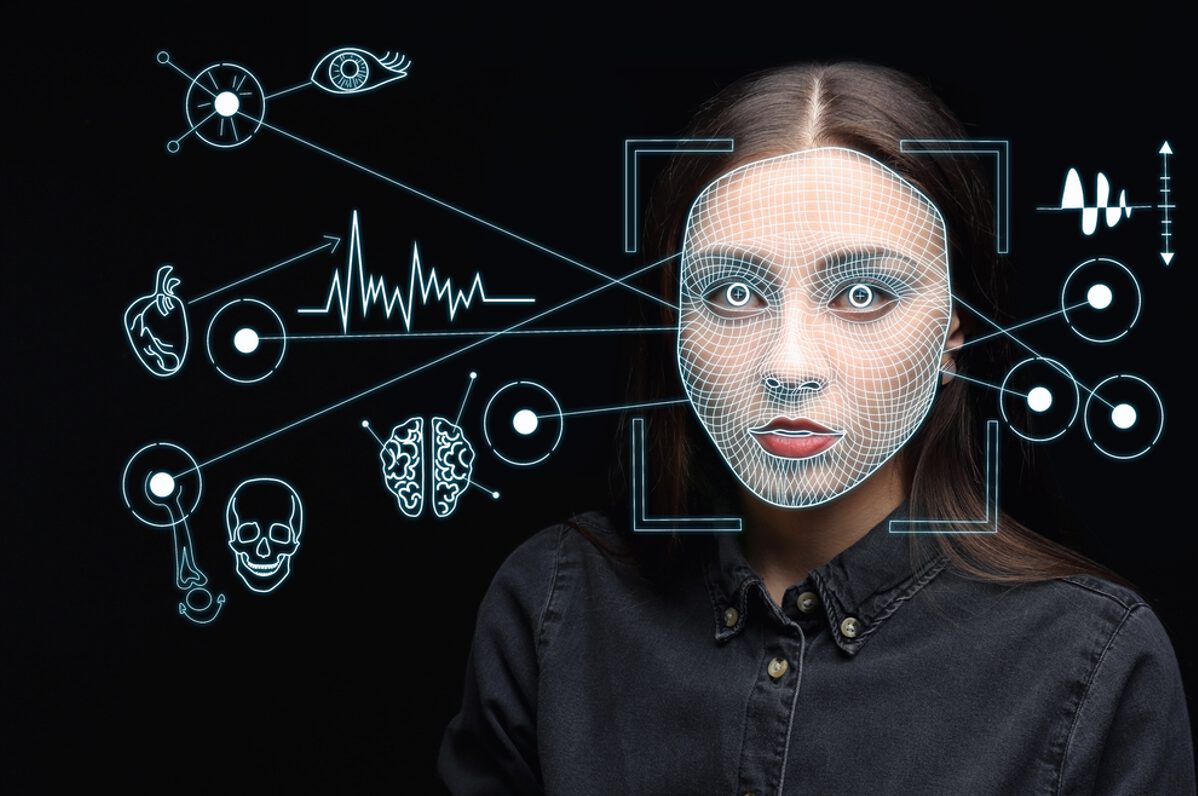
Many proponents of biometric surveillance argue that the technology is safe because there is always a human-in-the-loop to verify the results. However, cognitive science suggests this safeguard is often an illusion. When a police officer is presented with a candidate list generated by an advanced AI system, they are susceptible to automation bias—the tendency to favor suggestions from automated systems even when they contradict human reasoning.
This leads to a dangerous cycle of confirmation bias. Instead of objectively verifying facial recognition leads, investigators may find themselves looking for reasons why the match is correct, rather than why it might be wrong. They may overlook obvious physical discrepancies, such as a different nose shape or the presence of a mole, because the machine has already "spoken."
Documenting manual human review of ai matches is no longer just a best practice; it is becoming a legal necessity. Without a rigorous and transparent process to challenge the AI's findings, the system essentially replaces the eyewitness with a flawed mathematical approximation. This is particularly concerning given that mistaken eyewitness identification contributed to approximately 69% of the more than 375 wrongful convictions in the United States that were later overturned by DNA evidence. When we add the weight of "infallible" AI to this existing human frailty, the risk of wrongful arrests skyrockets.
2026 Legal Minefield: BIPA and the EU AI Act
As we move through 2026, the legal landscape for biometrics is shifting from a "wild west" toward a regime of strict accountability. Organizations must navigate the legal risks of biometric misidentification with extreme caution. In the United States, the Biometric Information Privacy Act (BIPA) remains one of the most potent tools for individual recourse. With biometric privacy statutory damages risk assessment reaching up to $5,000 per intentional violation, a single faulty implementation can result in catastrophic financial penalties.
Under the individual rights under biometric privacy act 2026, subjects have a greater say in how their data is captured, stored, and utilized. The focus has moved toward algorithmic transparency—requiring companies to prove that their systems do not harbor demographic bias before they can be deployed in high-risk scenarios. Furthermore, the EU AI Act, which enters its full enforcement phase in August 2026, effectively bans certain uses of biometrics, such as emotion recognition in the workplace and real-time biometric identification in public spaces, unless strictly authorized under narrow exceptions.
Enterprise Audit Checklist: Biometric Compliance 2026
- Algorithmic Transparency: Do you have a certified report from the vendor detailing the false match rate across various demographic groups?
- Explicit Consent: Is there a documented process for obtaining informed, explicit consent before capturing biometric data?
- Data Disposal Schedule: Are you adhering to a strict schedule for the disposal of biometric templates once the primary purpose of collection is fulfilled?
- Multi-Layer Human Review: Is there a requirement for at least two independent human reviewers to verify any AI match before action is taken?
- Statutory Damages Risk Assessment: Have you calculated the potential liability for a data breach or unauthorized scan under current BIPA and state-level privacy laws?
The Investigative Cover-up: Protecting Your Individual Rights
A concerning trend in modern law enforcement is the practice of omitting facial recognition data from search warrants and arrest affidavits. By describing a suspect identification as the result of "investigative leads" or "routine police work," agencies often attempt to bypass the Fourth Amendment scrutiny that would be applied to an unproven and potentially biased technology.
This lack of transparency makes it difficult for a legal defense for wrongful facial recognition arrest to challenge the evidence. If the defense doesn't know that an algorithm was used to pick their client out of a crowd of millions, they cannot question the reliability of that specific software or the conditions of the match. Protecting your individual rights in facial recognition arrests requires full disclosure of the tools used in the identification process.
Courts are beginning to push back, with more judges supporting the act of suppressing facial recognition evidence in court if the software used hasn't been properly vetted or if the manual review process was flawed. For a defendant, the ability to challenge the due process of a biometric match is the difference between freedom and a wrongful conviction.
The Case of Kimberlee Williams: In a harrowing example of technology gone wrong, Kimberlee Williams spent six months in jail after an AI match identified her as a suspect in a retail theft. Despite having a clear alibi and physical features that did not match the grainy surveillance footage, investigators relied solely on the "high-confidence" match provided by the software. Her case became a catalyst for 2026 legislative reforms, highlighting the catastrophic human cost of automation bias and the failure of forensic accountability.
FAQ
Why does facial recognition technology fail?
Technical failures usually result from a combination of poor image quality and algorithmic limitations. If the source image is grainy, low-light, or taken at an extreme angle, the algorithm may struggle to map facial landmarks accurately, leading to a false match.
What are the common causes of facial recognition errors?
Common causes include demographic bias in training datasets, environmental factors like shadows or obstructions (hats/masks), and human error during the verification phase. Confirmation bias among operators who trust the machine too implicitly is also a major contributing factor.
How accurate is facial recognition for different ethnicities?
Accuracy varies significantly across demographics. NIST studies have shown that algorithms often have much higher error rates for Asian and African American faces compared to Caucasian faces. This demographic disparity remains a primary concern for civil rights advocates.
What happens when facial recognition makes a mistake?
A mistake can lead to wrongful stops, invasive searches, and even months of incarceration for innocent individuals. Legally, it can lead to civil rights litigation, suppression of evidence, and significant statutory damages for the agencies or companies involved.
How can facial recognition bias be prevented?
Bias can be mitigated by using diverse training data, implementing rigorous human-in-the-loop protocols, and requiring third-party audits for algorithmic transparency. Adhering to strict biometric privacy standards and 2026 regulatory frameworks like the EU AI Act is also essential.