Quick Facts
- Legal Status: Replacing employees with AI is categorized as a voluntary business operational decision, not an unforeseeable external event or force majeure.
- Precedent: The 2026 Hangzhou Intermediate People's Court ruling established that technological transformation does not automatically justify contract termination.
- Compensation: Companies found guilty of unlawful dismissal due to AI automation may be required to pay double severance or specific damages, which exceeded 311,000 yuan in recent QA sector cases.
- Mandatory Steps: Employers are legally obligated to prioritize workforce retention through mandatory retraining or reassignment before pursuing layoffs.
- Judicial Role: The Supreme People's Court mandates that AI must only serve a supporting role, ensuring that human judges retain final decision-making authority.
- Economic Scale: While China's core AI industry reached a value of over 1.2 trillion yuan in 2025, the judiciary prioritizes social stability over rapid, unchecked automation.
As AI agents penetrate 90% of industries, Chinese courts have set a massive precedent: replacing workers with robots is no longer a legal shortcut for termination. Under recent judicial precedents and evolving AI labor laws in Hangzhou and Beijing, companies cannot legally fire employees solely because of automation, as courts view the adoption of technology as a manageable business risk rather than an unavoidable change in circumstances.
The Landmark Ruling: Why AI Is Not a Legal Excuse to Fire
The digital transformation of the workplace has reached a tipping point where the gavel is finally meeting the algorithm. For years, companies argued that the sudden efficiency of artificial intelligence constituted a major change in objective circumstances, a specific legal loophole in the China Labor Contract Law AI interpretation that allows for contract termination when the original job no longer exists. However, the tide has turned.
In a pivotal case decided in early 2026, the Hangzhou Intermediate People's Court ruled that a tech company's decision to automate its quality assurance department was a voluntary choice. The court found that while the company had every right to innovate, the financial and social risk of that innovation must be carried by the employer, not the employee. This ruling effectively closed the door on using technological transformation as a get-out-of-jail-free card for mass layoffs.
The financial stakes are significant. In one specific dispute involving a senior QA engineer, the court ordered a total compensation package of 311,695 yuan after finding the company had skipped the necessary steps of negotiation and reassignment. This judicial precedents approach signals to the 6,200 enterprises in China's burgeoning AI sector that human capital remains protected even as the core industry value exceeds 1.2 trillion yuan.
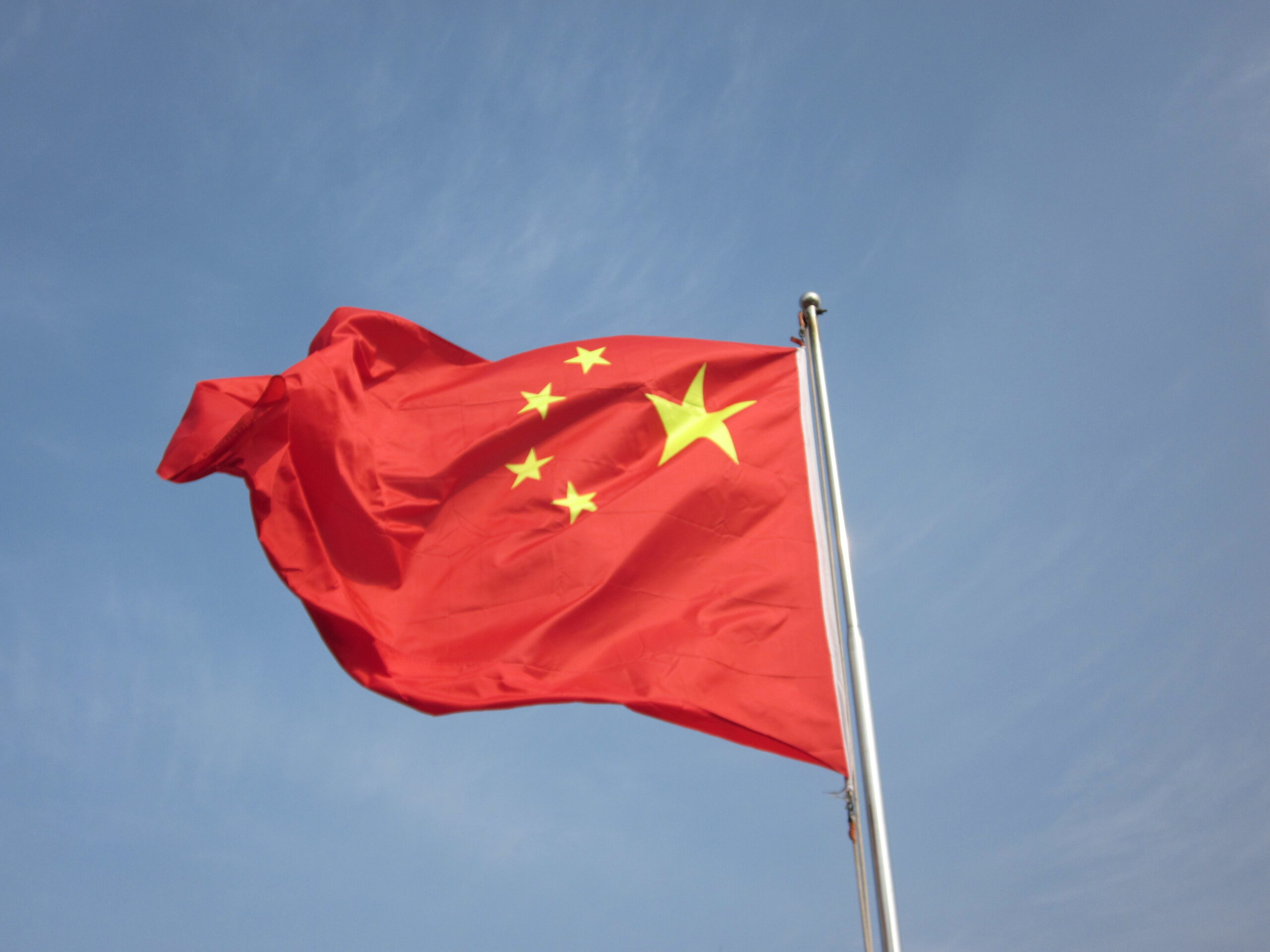
This shift isn't just happening in Hangzhou. Beijing courts have echoed these sentiments, emphasizing that employment contract termination requires a much higher threshold than simply finding a cheaper software solution. If the role's core functions still exist but are being performed by an AI agent, the human worker still has a legal claim to that position or an equivalent one within the firm.
Case Study: The 10,000 Yuan Salary Cut That Failed in Court
To understand how these AI labor laws function in the real world, we only need to look at the case of Supervisor Zhou. Zhou was a seasoned logistics manager earning a monthly salary of 25,000 yuan. When his company implemented a proprietary AI routing system, they claimed his role had become redundant. Instead of firing him outright, they offered him a reassignment: a frontline warehouse role with a salary of 15,000 yuan.
When Zhou refused the 10,000 yuan pay cut, the company terminated his contract, citing a breakdown in negotiations. However, the court saw through this corporate automation legal strategy. The ruling stated that the reassignment was not a good-faith effort but rather an attempt to force a resignation. The court highlighted several key points that offer AI job replacement protections for workers today:
- Reasonableness of Reassignment: A shift from a management role to manual labor, accompanied by a 40% pay cut, is considered an unreasonable change to the labor contract.
- Negotiation Records: Companies must provide evidence of genuine, bilateral negotiations. A "take it or leave it" offer does not meet the legal standard for negotiating labor contract changes during AI adoption.
- The Shift of Risk: Since the company chose to implement AI to increase its own profits, it cannot use that same AI to justify stripping an employee of their livelihood without proper transition support.
For those wondering how to challenge AI job replacement in China, the Zhou case provides a clear roadmap. Employees should document all reassignment offers and maintain records of their performance reviews prior to the AI rollout. If a company fails to provide adequate training for the new AI-augmented roles, it often constitutes a case of unlawful dismissal compensation for AI automation cases.
Corporate Compliance: How to Integrate AI Without Legal Risk
For business leaders, the message from the courts is not "don't use AI," but rather "use AI responsibly." Navigating legal compliance for AI automation in Chinese companies requires a proactive approach that treats workforce displacement as a business cost to be managed.
The first step in any corporate automation legal strategy must be a comprehensive internal audit. Before any "bot" takes over a desk, HR departments must identify which skills can be transitioned. The law now effectively mandates mandatory employee retraining for AI implementation China. This means if a graphic designer's role is replaced by generative AI, the company should first offer training on how to prompt and manage those AI tools rather than handing out pink slips.
Mandatory Compliance Checklist for AI Integration
- Feasibility Study: Document why the AI is being introduced and how it alters specific job descriptions.
- Internal Transition Plan: Create a formal program for retraining affected staff to work alongside AI, fostering human-AI collaboration.
- Transparency in Communication: Inform the labor union or employee representatives at least 30 days before significant technological shifts occur.
- Severance Calculation: If termination is truly the only option after retraining fails, ensure severance pay is calculated correctly, often involving a "N+1" or "2N" formula depending on the circumstances of the dismissal.
The judiciary is increasingly viewing industrial automation through the lens of corporate social responsibility. In an economy where the AI sector has seen such rapid growth, the courts expect companies to share the dividends of that growth with their workforce. By classifying AI adoption as a manageable business operational decision, the legal system ensures that the transition to a high-tech economy does not come at the cost of social stability.
Global Context: Comparing China’s Approach with US AI Regulations
While China is using its existing labor contract framework to rein in AI-driven layoffs, other global jurisdictions are moving toward specialized statutes. This geographic segmentation creates a complex landscape for multinational corporations trying to balance innovation with local labor laws.
In the United States, for instance, the approach is less about preventing layoffs and more about preventing bias. The Colorado Consumer Protections for Artificial Intelligence Act (CAIA) introduces penalties of up to $20,000 for high-risk AI systems that result in algorithmic discrimination. Similarly, New York City’s Local Law 144-21 requires companies to conduct independent bias audits on AI hiring and promotion tools.
| Feature | China | United States (State Level) |
|---|---|---|
| Primary Legal Framework | China Labor Contract Law | State-specific AI Acts (e.g., CO, CA) |
| Focus of Protection | Job Security & Continuity | Anti-Discrimination & Privacy |
| Key Requirement | Mandatory Retraining/Reassignment | Independent Bias Audits |
| Standard for Layoffs | High threshold; AI is "voluntary risk" | Employment at-will (mostly) |
| Notable Penalty | Reinstatement or Double Severance | Fines up to $20,000 per violation |
The Chinese approach is arguably more protective of the individual’s current position, viewing the technological transformation as something the company must manage internally. In contrast, the US system allows for more workforce flexibility but imposes strict transparency and civil rights guardrails. For a global HR director, this means a strategy that works in Silicon Valley—where "disruption" is the goal—could lead to a massive legal headache and significant arbitration rulings in Shanghai or Hangzhou.
FAQ
What are the current AI labor laws in the US?
In the US, there is no single federal law governing AI in the workplace. Instead, a patchwork of state laws and federal agency guidance exists. The EEOC has issued warnings that using AI for hiring or performance monitoring must comply with the Civil Rights Act. States like Colorado have passed comprehensive AI acts that require companies to disclose the use of high-risk AI and conduct impact assessments to prevent discrimination.
How does AI impact employee privacy rights?
AI often requires massive amounts of data to function, which can lead to intrusive workplace monitoring. Under many jurisdictions, including China's PIPL and the EU's GDPR, employees must be informed about what data is being collected and how the AI uses it to make decisions. Automated tracking of keystrokes or facial expressions often requires explicit consent and must be justified as necessary for the business.
What regulations exist for AI in the workplace?
Regulations vary by region but generally fall into three categories: transparency requirements, bias prevention, and labor protection. In the EU, the AI Act classifies certain workplace AI (like recruitment software) as "high-risk," requiring strict documentation. In China, judicial interpretations now require that AI implementation does not violate the fundamental rights established in the Labor Contract Law.
Will AI replace traditional labor protection laws?
No, AI is actually making traditional labor protection laws more relevant. Courts are finding that existing concepts—like the "major change in objective circumstances"—must be strictly interpreted to prevent companies from using tech as a loophole. Rather than being replaced, labor laws are being updated through judicial precedents to cover new scenarios like algorithmic management and platform labor.
Who is responsible for AI errors in the workplace?
Legally, the employer remains responsible for the actions and "decisions" of the AI tools they deploy. If an AI system incorrectly flags an employee for termination or causes a safety violation, the company cannot blame the software provider to escape liability. This is why the Supreme People's Court of China insists that humans must remain the final decision-makers in high-stakes environments.
The message from the courtrooms of Hangzhou and Beijing is clear: the future of work is a partnership, not a replacement. While the 1.2 trillion yuan AI industry continues to expand, the legal framework ensures that the people who built these companies are not left behind in the rush toward automation. For employees, this provides a vital safety net. For employers, it serves as a reminder that true innovation must be both technically sound and socially responsible.