Quick Facts
- Total Neurons Mapped: 139,255 individual neurons within a brain the size of a poppy seed.
- Synaptic Connections: 54.5 million identified synapses forming the most complex neural map to date.
- Energy Efficiency: Biological brains operate on roughly 20 watts, while current LLM data centers consume gigawatts.
- Behavioral Programming: Structural wiring accounts for approximately 95% of the organism's natural behaviors.
- Labor Reduction: AI-assisted mapping reduced human labor from 50,000 person-years to just 33 person-years.
- Primary Platform: NeuroMechFly v2 serves as the sensory-motor environment for virtual testing.
- Core Shift: Moving from statistical prediction to whole brain emulation based on inherited biological circuitry.
Whole brain emulation involves mapping the entire connectome—every neuron and synapse—of a biological organism to create a digital replica. Unlike Large Language Models that rely on statistical patterns, this method uses actual biological wiring to drive behavior. By emulating the fruit fly's 139,255 neurons, researchers enable virtual bodies to perform natural tasks like walking and grooming based purely on inherited biological programming.
Beyond LLMs: The Shift to Connectome-Based AI Architecture
As large language models hit the limits of energy efficiency and interpretability, researchers are looking toward the 139,255 neurons of the fruit fly. Whole brain emulation represents a shift from statistical prediction to biological neural pathway emulation, promising a more efficient path to artificial general intelligence. While current systems like Llama 4 Scout rely on massive, brute-force computational power, the future of AI may lie in replicating the structural intelligence inherent in biological organisms.
The core problem with contemporary AI is its reliance on token-based prediction. An LLM does not "know" how to navigate a physical environment; it predicts the next most likely word in a sequence based on a massive training set. In contrast, connectome-based AI architecture utilizes the physical layout of neurons to generate behavior. This transition is becoming increasingly attractive as we realize that the human brain operates on a mere 20 watts of power compared to the massive electrical demand of modern data centers.
One of the most compelling reasons for transitioning from llms to connectome-based models is the "white-box" advantage. Current neural networks are essentially black boxes; we see the input and the output, but the internal reasoning is opaque. Biological neural pathway emulation vs reinforcement learning offers a clearer path toward safety. In a connectome-based system, every synaptic connection is mapped and traceable, allowing for a level of auditing and transparency that is simply impossible with current transformer architectures. This move toward Neuromorphic computing allows us to see how sensory inputs are processed through specific Neural circuitry to produce motor outputs.
| Feature | Large Language Models (LLMs) | Connectome-Based AI (WBE) |
|---|---|---|
| Foundation | Statistical probability / Tokens | Biological wiring / Connectomics |
| Power Consumption | Gigawatts (Data centers) | ~20 Watts (Biological baseline) |
| Interpretability | Black Box (Opaque) | White Box (Traceable circuitry) |
| Learning Method | Reinforcement Learning / Backprop | Inherited structural intelligence |
| Primary Goal | Pattern recognition and generation | Sensory-motor integration |
| Hardware Requirement | Thousands of H100 GPUs | Potential for Neuromorphic hardware |
By focusing on how connectome-based ai architecture improves efficiency, developers are beginning to look past the "scaling laws" of LLMs toward a more sustainable form of Synthetic intelligence.
Lessons from the Fruit Fly: 139,255 Neurons in Motion
The most significant breakthrough in recent years is the FlyWire project, which produced the first complete map of an adult fruit fly brain. This effort identified 139,255 neurons and 54.5 million synaptic connections within the brain of Drosophila melanogaster. This was not a small feat; utilizing artificial intelligence to trace the fruit fly connectome reduced the required human labor from an estimated 50,000 person-years to 33 person-years of manual proofreading.
The fruit fly brain simulation benefits go beyond mere mapping. Researchers discovered that the specific structure of the brain is what dictates behavior. In a landmark experiment, scientists compared the original connectome to a "scrambled wiring" version. While the scrambled version yielded only 1% behavioral accuracy, the original connectome model achieved 95% accuracy in predicting how a fly would walk or groom itself. This proves that biological neural pathway emulation is the key to creating realistic synthetic behavior without the need for intensive reinforcement learning.
For the virtual fly to function, it needs a body and an environment. This is where NeuroMechFly v2 comes in. This platform provides a sophisticated sensory-motor loop, allowing the digital brain to interact with a physics-based world. This has massive practical benefits of fruit fly brain simulation in robotics. Instead of training a robot leg to walk through millions of trial-and-error cycles, we can simply copy the "wiring diagram" of an insect that has already perfected the art of locomotion through millions of years of evolution.
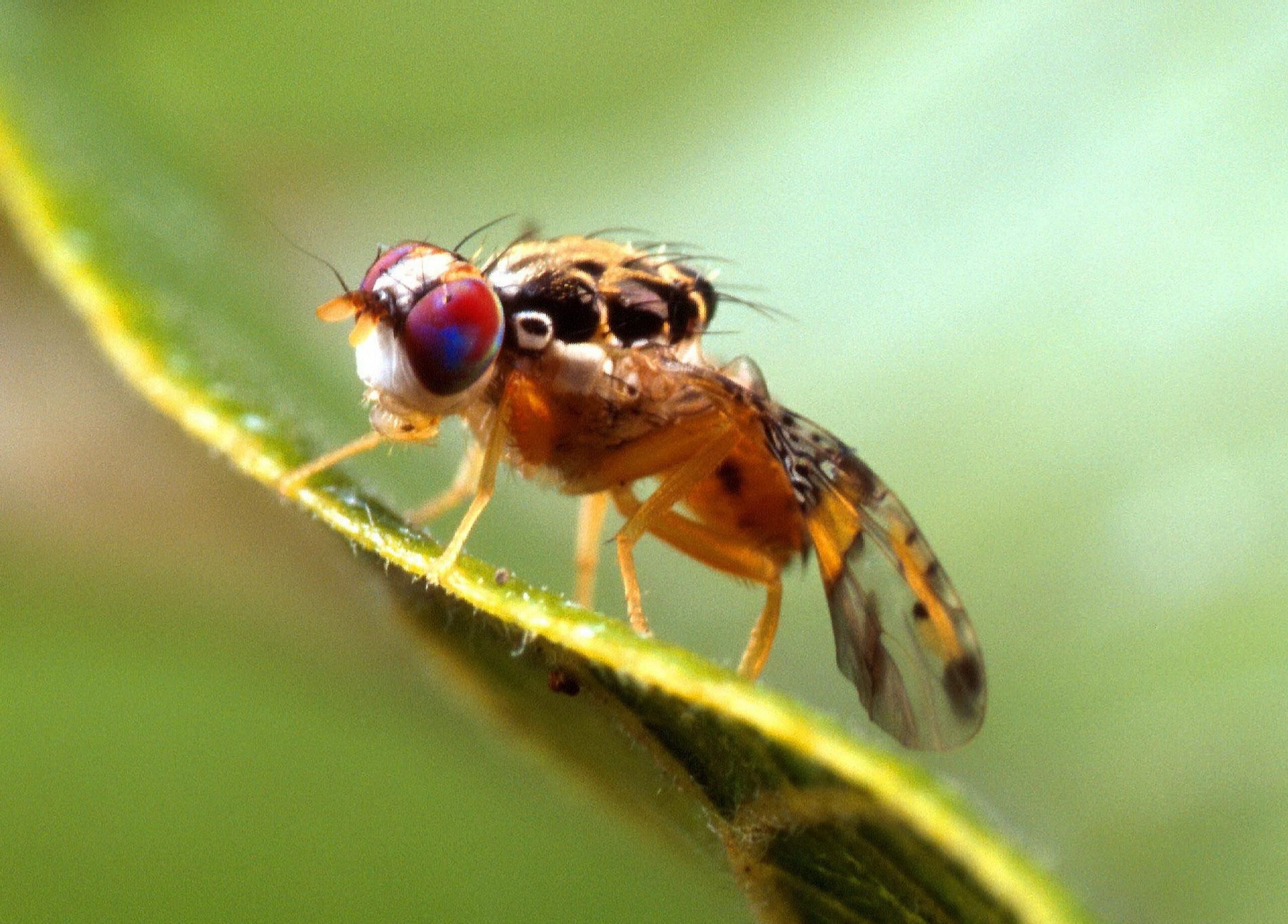
The fruit fly brain emulation for ai developers serves as a technical proof of concept. It demonstrates that we can take a complex biological entity, map its Synaptic mapping, and run it as a simulation that produces authentic life-like behavior. This moves Computational neuroscience from a purely observational field to an engineering discipline.
The Economics of Intelligence: Scaling to Mammals and Humans
While the success with the fruit fly is monumental, the journey toward whole brain emulation in larger mammals presents a different set of challenges. We are currently facing "hard floors" in terms of physical scanning technology. The sheer volume of data required to map a mouse brain, which contains roughly 70 million neurons, is several orders of magnitude higher than that of the fly.
Scaling whole brain emulation from insects to mammals is a long-term roadmap. Current estimates suggest that scanning a human brain with the resolution required to see every synapse could cost upwards of $100 billion. Furthermore, the operating costs of running such a simulation are equally daunting. Simulations today can cost as much as $40,000 per hour in cloud compute time to mimic just a fraction of a brain's real-time activity. However, as hardware evolves toward neuromorphic designs, these costs are expected to plummet.
Biologically inspired AI research aims to replicate the extreme energy efficiency of the brain, which operates on approximately 20 watts of power compared to the gigawatts of electricity consumed by modern data centers. This economic necessity will drive the industry toward biological principles.
The Roadmap to Human-Scale Emulation
- 2024: Completion of the Drosophila melanogaster (fruit fly) connectome.
- 2030: Projected completion of the first full mouse brain connectome.
- 2045: Development of high-throughput Electron microscopy capable of scanning human-sized tissue samples.
- 2055: Achievement of real-time simulation for mammalian brain sectors.
- 2063: Theoretical milestone for the first human whole brain emulation.
This timeline relies on our ability to account for Neural plasticity—the brain's ability to change its connections over time. A static map is a great start, but a truly functional digital consciousness would need to simulate the chemical and physical changes that occur during learning.
Ethics and Safety: The Interpretability Advantage
One of the most profound benefits of whole brain emulation is the potential for superior AI safety. Because these models are based on actual biological structures, they are easier to audit than the opaque matrices of an LLM. We can identify exactly which circuits are responsible for specific behaviors, making it possible to "debug" or refine the model with surgical precision.
However, this technology also introduces the risk of "digital suffering." If we create a perfect digital replica of a sentient being's brain, does that replica have rights? We must also consider the risk of "value lock-in," where the biases or limitations of a single scanned individual could be replicated indefinitely across thousands of AI instances.
Beyond the ethical debates, the medical utility of connectomics is staggering. By simulating the brains of patients with neurological disorders, we can test drug reactions and surgical interventions in a risk-free virtual environment. This could lead to breakthroughs in treating Alzheimer’s and Parkinson’s, as we gain the ability to visualize the breakdown of specific neural pathways in real-time. Biomimetic algorithms derived from these studies could also enhance Brain-machine interface technology, allowing for seamless communication between human thought and external devices. Ultimately, the quest for Substrate-independent minds may change our fundamental definition of what it means to be alive.
FAQ
What is whole brain emulation?
Whole brain emulation is the process of creating a functional digital model of a biological brain. This involves mapping every neuron and synapse—the connectome—and simulating the electrical and chemical signals that allow the brain to process information and drive behavior. It differs from traditional AI because it replicates biological structures rather than using statistical algorithms.
Is whole brain emulation currently possible?
We have successfully emulated the brains of small organisms like C. elegans (a roundworm) and, most recently, the adult fruit fly. However, human whole brain emulation is not yet possible due to the massive scale of the human brain, which contains approximately 86 billion neurons compared to the fly's 139,255.
What are the main technical challenges of whole brain emulation?
The primary hurdles include the physical scanning of brain tissue at the nanometer scale, the massive data storage required (petabytes for a single small brain), and the computational power needed to run the simulation in real-time. Additionally, capturing the dynamic nature of a living brain, such as how it learns and changes, remains a significant challenge.
How is a brain mapped for whole brain emulation?
The most common method is serial section electron microscopy. This involves slicing a brain into thousands of incredibly thin sections, imaging each slice with an electron microscope, and then using AI to "stitch" those images back together into a 3D map. This allows researchers to trace individual neural fibers and identify synaptic connections.
What are the ethical implications of whole brain emulation?
Ethical concerns range from the potential for digital beings to experience pain or distress to questions about identity and the definition of life. There are also concerns regarding who would own the data of a scanned brain and the potential for creating powerful, biased AI systems based on a single human's neural architecture.