Quick Facts
- Minimum RAM: 6GB is required for 1B-3B models; 8GB-12GB is recommended for 7B-8B versions.
- Recommended Chipsets: Snapdragon 8 Gen 3 / Elite, Dimensity 9400, and Tensor G4 provide the best NPU acceleration.
- Top Apps: Maid AI offers the best user interface, while MLC LLM and Google AI Edge Gallery provide high-performance backends.
- Best Model for Logic: Phi-3 Mini (3.8B) excels in reasoning and basic coding tasks despite its small size.
- Best General Model: Llama 3.2 (3B) is the current gold standard for creative writing and general conversation on mobile.
- Key Benefit: On-device AI ensures 100% offline privacy, zero subscription fees, and data sovereignty.
To run Large Language Models locally on Android, you need to use specialized local AI Android apps like Maid or MLC LLM and download quantized GGUF models. These tools allow your device to perform on-device inference entirely offline, ensuring that your personal data never leaves the hardware. As the global on-device large language model market is projected to grow to 16.8 billion USD by 2033, learning how to run LLM locally on Android offline is the best way to future-proof your mobile experience while maintaining total privacy.
Android Hardware Requirements for Local AI
One of the most common questions I get as an editor is whether a mid-range phone can handle the same AI tasks as a flagship. The short answer is: it depends on your RAM. When we talk about local AI Android performance, the primary hardware bottleneck isn't usually your storage space—it is your volatile memory (RAM).
The Rule of Thumb for mobile LLMs is 2GB of RAM for every 1 billion parameters in a 4-bit quantized model. For example, a 3B parameter model like Llama 3.2 requires roughly 6GB of available RAM to run smoothly alongside your operating system. If you try to run an 8B model on a device with only 6GB of total RAM, the system will likely kill the process to prevent a crash.
Beyond RAM management, the chipset determines your tokens per second (the speed at which text is generated). While older chips can run these models using the CPU, modern flagship processors like the Snapdragon 8 Gen 3 feature dedicated NPU acceleration. This hardware helps the phone process AI tasks more efficiently, significantly reducing battery consumption and heat.
Hardware Compatibility Matrix
| Phone Tier | Typical RAM | Recommended Model Size | Best Experience |
|---|---|---|---|
| Budget / Entry | 4GB - 6GB | 1B - 2B Parameters | Gemma 2B (Light tasks) |
| Mid-Range | 8GB - 10GB | 3B - 4B Parameters | Llama 3.2 (3B) / Phi-3 Mini |
| Flagship | 12GB - 24GB | 7B - 8B+ Parameters | Llama 3 (8B) / Mistral 7B |
Expert Tip: If you are shopping for a new device specifically for local AI, look for phones marketed with "AI on-device" capabilities. These usually have better thermal management and specific optimizations for high-memory workloads.
Best Local AI Apps for Android: Maid and MLC LLM
Finding the right software is just as important as having the right hardware. Currently, the landscape for local AI Android enthusiasts is dominated by open-source projects that bridge the gap between complex AI weights and the Android user interface.
Maid is my top recommendation for most users. It acts as a clean, chat-style interface that simplifies the process of downloading and organizing models. It uses the llama.cpp backend, which is highly optimized for mobile ARM processors. Setting up Maid AI on Android phones is a straightforward process:
- Download the Maid APK from its official GitHub repository.
- Open the app and navigate to the "Models" section.
- Use the built-in search to find quantized GGUF models from Hugging Face.
- Download a small model like Llama 3.2 (3B) to start.
- Once downloaded, select the model and start chatting.
For users who want even more performance, MLC LLM is a powerhouse. It uses a different compilation technique to squeeze every drop of power out of your GPU. While the setup is slightly more technical, it often results in higher tokens per second on compatible devices. Additionally, Google's own AI Edge Gallery is an excellent resource for those using Pixel devices, as it showcases models specifically tuned for the Tensor G4 chipset.
Both apps prioritize data sovereignty. By keeping the entire conversation on the device, you eliminate the need for a data connection and ensure that sensitive information—like coding snippets or personal journals—is never uploaded to a cloud server.
Phi-3 vs Llama 3 Mobile: Choosing the Right Model
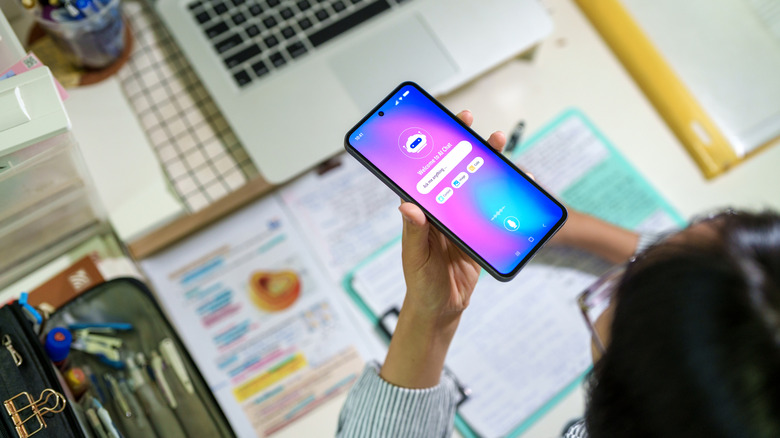
Not all models are created equal. When running an offline LLM for Android, you must choose between general-purpose models and those specialized for logic. The two heavyweights in the mobile space right now are Phi-3 Mini and Llama 3.2.
Phi-3 Mini, developed by Microsoft, is a 3.8B parameter model that punches significantly above its weight class. In my testing, it excels at reasoning and logical deduction. If you need a pocket assistant to help debug code or solve math problems, Phi-3 is the superior choice. Its compact size means it fits comfortably on mid-range devices while maintaining a high level of intelligence.
On the other hand, Llama 3.2 (specifically the 3B version) is the king of "vibe." It is much better at creative writing, roleplay, and maintaining a natural conversational flow. If your goal is to have an AI companion or a creative brainstorming partner, Llama 3.2 is usually more satisfying to talk to.
Comparison: Phi-3 Mini vs Llama 3.2
| Feature | Phi-3 Mini (3.8B) | Llama 3.2 (3B) |
|---|---|---|
| Download Size | ~2.2 GB (Q4_K_M) | ~2.0 GB (Q4_K_M) |
| Strongest Suit | Logic, Coding, Science | Creative Writing, Summarization |
| Context Window | 128K tokens | 128K tokens |
| Speed | Fast on most 8GB+ phones | Very fast on mid-range phones |
For users looking for something even smaller, Gemma 2B from Google is a fantastic alternative for entry-level devices. While it lacks the deep reasoning of the larger models, it is incredibly snappy and perfect for simple text transformations or summarizing short notes.
Optimizing Performance: Quantization and Thermal Throttling
To make these massive models run on a handheld device, we use a process called quantization. Think of it as high-fidelity compression for AI. Most models come in different "bits"—the most common being 4-bit (often labeled as Q4_K_M in the GGUF format).
This 4-bit quantization is the sweet spot for mobile. It reduces the model size by more than 50% with almost no noticeable loss in "intelligence" for everyday tasks. Running an unquantized model on a phone would not only be impossibly slow but would also consume your entire storage and RAM in seconds.
However, even with quantization, local AI is a resource-intensive task. You will notice that your phone gets warm during long chat sessions. This leads to thermal throttling, where the system slows down the processor to protect the hardware from heat damage. This is why battery consumption of local AI on Android is much higher than browsing the web or watching videos.
To get the most out of your session, I recommend:
- Closing all background apps to free up every megabyte of RAM.
- Using a phone case that dissipates heat well, or removing the case during long sessions.
- Lowering your screen brightness, as the NPU and CPU will already be drawing significant power.
- Checking the local LLM data privacy benefits for Android by keeping your Airplane Mode on during the session—proving that no data is leaving the device.
By understanding these constraints, you can transform your smartphone into a private, powerful workstation that functions anywhere in the world, from a remote hiking trail to a long-haul flight without Wi-Fi.

FAQ
What is local AI on Android?
Local AI on Android refers to running Large Language Models directly on your smartphone's processor instead of sending your prompts to a cloud server like ChatGPT. This allows for offline use, better privacy, and no monthly subscription fees.
How do I run AI models locally on my Android phone?
You can run models locally by installing an app like Maid or MLC LLM and downloading model weights in the GGUF format. Once the model is downloaded to your internal storage, the app uses your phone's RAM and CPU/NPU to generate responses.
What are the benefits of using on-device AI for Android?
The primary benefits include 100% privacy, as your data never leaves the device, and the ability to use the AI without an internet connection. It also saves money by eliminating the need for AI cloud subscriptions.
How much RAM is needed for local AI on Android?
For the best results, you need at least 6GB of RAM to run 1B-3B parameter models. If you want to run larger 7B or 8B models, a device with 12GB of RAM is highly recommended to ensure system stability and speed.
What are the best apps for running local LLMs on Android?
Maid AI is the best all-around app for ease of use and interface. MLC LLM is excellent for users who want maximum performance and hardware acceleration. Google AI Edge Gallery is also a great choice for Pixel users looking for optimized models.