Quick Facts
- Performance: Delivers a 400% faster visual analysis compared to traditional AI systems.
- Hardware: Achieves a 100-microsecond (μs) response time using advanced synaptic transistors.
- Efficiency: Leading chips like Intel Loihi 3 operate at a minimal 1.2 Watts.
- Safety: Provides a 27-meter reaction distance improvement at highway speeds for vehicles.
- Cost: Market pricing for these chips is projected to drop to $9 by 2031.
- Architecture: Utilizes retina-inspired visual processing to focus only on motion cues.
Neuromorphic vision AI is a brain-inspired computing approach that mimics the human retina to process visual information focusing on temporal motion cues rather than static frames. By using synaptic transistors for AI, these systems bypass the limitations of traditional frame-based cameras, allowing for near-instantaneous object recognition and significantly reduced computational overhead in real-time environments.
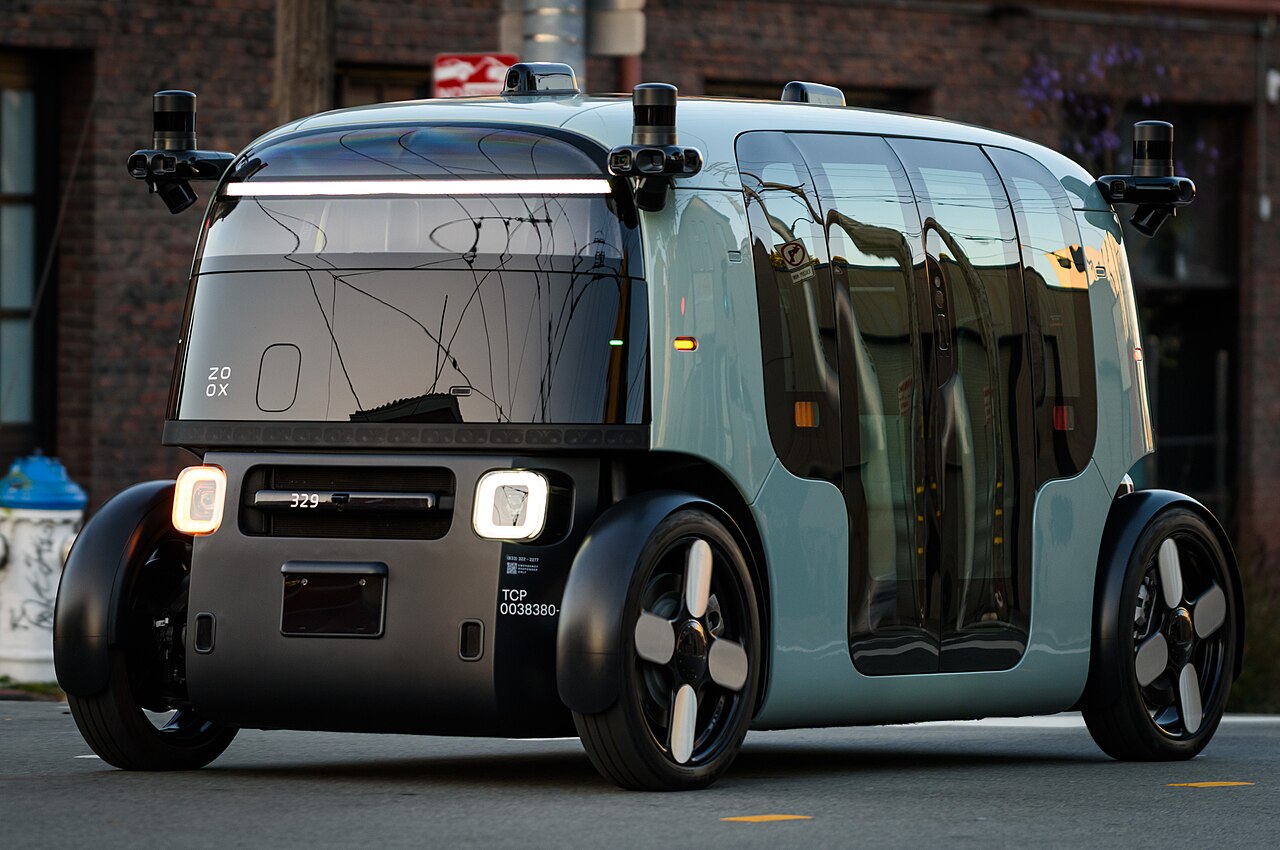
The Safety Metric: Why 400% Speed Matters
In the world of computing hardware, we often talk about raw horsepower—more teraflops, more cores, more heat. But for autonomous vehicle safety sensors, the metric that actually saves lives isn't brute force; it is latency. Traditional computer vision operates like a Netflix binge-watcher, processing every single frame of video even if nothing in the background has changed. This frame-based approach creates a digital bottleneck that can be fatal on the road.
Researchers at Northeastern University have recently pivoted away from this "brute force" model, developing brain-inspired synaptic transistors that process visual motion 400% faster than traditional systems. By mimicking the human retina's ability to ignore the static sky or a stationary building and focus exclusively on temporal motion cues, these sensors can detect a distracted pedestrian or a sudden lane change long before a standard GPU finishes rendering the scene.
At highway speeds, every millisecond of processing time translates into physical distance. A 400% increase in processing speed isn't just a benchmark on a spreadsheet; it represents a 27-meter safety margin. That is the difference between a controlled stop and a high-speed collision. Neuromorphic vision sensors for autonomous vehicle obstacle detection provide a level of collision avoidance reliability that frame-based systems simply cannot match because they do not waste cycles on redundant pixels.
Under the Hood: Synaptic Transistors and Bio-mimetic Computing
The secret to this performance leap lies in the physical architecture of the hardware. Traditional chips separate memory and processing, leading to the "von Neumann bottleneck" where data constantly shuffles back and forth, wasting time and energy. Bio-mimetic computing solves this by using synaptic transistors for AI that function similarly to biological neurons and synapses.
These components are often built using 2D van der Waals heterostructures—ultrathin layers of materials that can modulate electrical signals in a way that mimics synaptic weight. This enables event-driven processing. Instead of a camera capturing 60 frames per second, a neuromorphic vision AI sensor only sends a signal when a specific pixel detects a change in light intensity. This is known as sparse communication.
Implementing neuromorphic vision AI in robotic systems allows for real-time motion detection using synaptic transistors without the need for massive cooling fans or high-wattage power supplies. Because the hardware only "fires" when something moves, the background noise is naturally filtered out. This silicon-based neural pathways approach allows the sensor to prioritize significant visual changes, leading to a low-latency response that mirrors the reflexive speed of a human athlete.
Hardware Benchmarks: Intel Loihi 3 vs. Traditional GPUs
When we look at the power-to-performance ratio, the gap between traditional edge modules and neuromorphic hardware is staggering. Standard GPUs, like those used in modern AI data centers, are power-hungry monsters. In contrast, the Intel Loihi 3 architecture is designed for edge module inference where battery life is a critical constraint.
The sustainability of AI is a growing concern, with some projections suggesting AI could consume 134 TWh of energy annually. Transitioning to low-power vision AI solutions for smart wearable tech is no longer just a luxury; it is a necessity for hardware longevity. The following table illustrates the dramatic efficiency gains seen in the latest benchmarks.
| Metric | Traditional GPU (Edge) | Intel Loihi 3 (Neuromorphic) | Tsinghua ACCEL Chip |
|---|---|---|---|
| Power Consumption | 75W - 150W | 1.2 Watts | ~1 Watt |
| Response Time | 10ms - 50ms | 100 microseconds (μs) | < 1 millisecond |
| Processing Style | Frame-based | Event-driven | Photo-electronic |
| Efficiency Goal | High Throughput | Low Latency / Green AI | Extreme Performance |
The Tsinghua University ACCEL chip, a photo-electronic integrated processor, has shown even more radical potential, achieving a 3.7-fold performance advantage over the Nvidia A100 GPU. By integrating light-based computing with electronic logic, it reaches 4,600 tera-operations per second in vision tasks. This type of computational efficiency is the key to reducing vision AI energy costs with brain-inspired chips.
2026 Commercial Landscape: From Labs to Mainstream
As we move toward 2026, the shift from academic research to commercial deployment is accelerating. The market for retina-inspired visual processing is splitting into two primary tracks: high-stakes autonomous systems and high-volume IoT devices.
Currently, about 45% of the neuromorphic market is focused on industrial automation sensors and smart home devices, where low energy consumption is the primary selling point. The remaining share is dominated by autonomous vehicle safety sensors. Regulatory drivers, such as the EU AI Act and new safety mandates in North America, are pushing manufacturers to adopt technologies that offer better collision avoidance reliability.
We are also seeing a shift in how companies like Intel and IBM approach the market. Rather than trying to compete for data center dominance against massive GPU clusters, they are moving toward the "Edge." By putting neuromorphic vision AI directly into the camera module of a drone or a robotic arm, they eliminate the need to send data to the cloud for processing. This not only improves speed but also enhances privacy and security.
As manufacturing scales, the average selling price for these specialized chips is expected to drop significantly. Projections suggest that by 2031, a basic neuromorphic sensor could cost as little as $9, making it viable for everything from smart glasses to basic home security cameras that can distinguish between a swaying tree branch and a genuine intruder.
FAQ
What is neuromorphic vision AI?
Neuromorphic vision AI is a type of computing that mimics the biological structure of the human eye and brain. Instead of recording video as a series of still frames, it uses sensors that only respond to changes in light or motion. This allows for much faster processing and drastically lower power consumption compared to traditional computer vision.
How does neuromorphic vision differ from traditional computer vision?
Traditional computer vision uses frame-based cameras that capture entire images at set intervals, regardless of whether anything is moving. Neuromorphic vision is event-driven, meaning it only processes the specific pixels that detect a change. This reduces the amount of data the system has to handle, allowing it to focus on relevant motion and ignore static backgrounds.
Is neuromorphic vision more energy-efficient than standard AI?
Yes, it is significantly more efficient. Because neuromorphic chips like Intel Loihi 3 only activate neurons when they receive an input signal, they use a fraction of the power required by traditional GPUs. In many cases, neuromorphic hardware can operate at 1.2 Watts or less, whereas standard edge AI modules may require 75 Watts or more.
What are the primary applications of neuromorphic vision AI?
The most critical applications are in autonomous vehicle safety sensors and collision avoidance systems where speed is vital. It is also highly effective for industrial automation sensors, low-power smart wearable tech, and robotic systems that need to navigate complex environments in real-time without draining their batteries.
Is neuromorphic vision faster than conventional frame-based cameras?
Neuromorphic vision is much faster in terms of latency. While a high-speed conventional camera might take several milliseconds to capture and process a frame, neuromorphic sensors can react to motion cues in as little as 100 microseconds. This makes them roughly 400% faster at identifying obstacles and potential collisions in dynamic environments.