
Quick Facts
- Survival Impact: Median survival rates can skyrocket from 1.5 years to 9.8 years when the disease is caught early.
- Technology: PANDA AI utilizes deep learning models to analyze standard non-contrast CT scans, turning routine imaging into a powerful diagnostic tool.
- Clinical Accuracy: In large-scale testing, the system demonstrated a 92.9% sensitivity and a 99.9% specificity for detecting abnormalities.
- Subtype Classification: The AI does more than just find shadows; it classifies 8 different subtypes of lesions, including pancreatic ductal adenocarcinoma and neuroendocrine tumors.
- Scalability: By using non-contrast imaging, this technology enables population-level screening without the high costs or risks of invasive contrast dyes.
PANDA AI is a sophisticated deep learning system designed for early AI pancreatic cancer detection using standard non-contrast CT scans. By executing a specialized three-stage process—locating the organ, searching for abnormalities, and performing voxel-level analysis—it identifies potentially life-threatening lesions that are frequently missed by radiologists, providing a scalable and cost-effective solution for early intervention.
The Critical Survival Gap: Why Early Detection Matters
Pancreatic cancer has long been whispered about in medical circles as the silent killer. The tragedy of this disease often lies in its timing. Because the pancreas is tucked deep behind other organs, tumors can grow for years without causing noticeable pain or jaundice. By the time a patient feels something is wrong, the cancer has often reached an advanced stage, leaving clinicians with few options.
However, the medical community is witnessing a shift in perspective. Research indicates that the curability window is much wider than we once thought. When a tumor is identified while still small—specifically ≤2cm—the 5-year survival rate can jump from less than 15% to a range of 30% to 60%. This shift represents more than just data; it represents years of life returned to families. The challenge has always been finding these small, asymptomatic symptoms during routine check-ups before they become untreatable.
This is where the early pancreatic cancer diagnosis benefits become undeniable. Traditional screening programs for pancreatic cancer are often limited to high-risk individuals because the cost and physical toll of contrast-enhanced CT scans are too high for the general public. PANDA AI pancreatic screening changes this equation. By looking at images that are already being taken for other reasons—such as lower back pain or kidney stones—the AI can flag hidden dangers, acting as a safety net for patients who wouldn't otherwise know they are at risk. For those wondering who should get AI-assisted pancreatic cancer screening, the answer is expanding toward anyone undergoing routine abdominal imaging, particularly those in high-risk demographics like new-onset diabetics over the age of 50.
Breaking the Barrier: How PANDA AI Uses Non-Contrast CT Scans
For decades, the gold standard for imaging the pancreas has been the contrast-enhanced CT scan. This involves injecting a radiopaque dye into the patient's bloodstream to make the organs and blood vessels stand out. Without this dye, the pancreas often appears as a blurry, uniform mass on a screen, making it nearly impossible for the human eye to distinguish a small tumor from healthy tissue.
The breakthrough of PANDA AI lies in its ability to find what was once considered invisible. Developed through a collaboration between institutions like the Alibaba DAMO Academy and researchers at Johns Hopkins, the AI was trained on massive datasets to recognize the subtle textures and densities that indicate a lesion on a non-contrast CT scan for pancreatic lesions. This is a game-changer for accessibility.
Standard non-contrast scans are ubiquitous, cheaper, and safer for patients with kidney issues who cannot tolerate contrast dyes. Using this technology for population-level screening means that hospitals don't need to purchase new, expensive equipment. Instead, they can upgrade their diagnostic capabilities through software. The benefits of non-contrast CT for pancreatic cancer detection include reduced patient wait times and a significant decrease in the overall cost of screening programs.
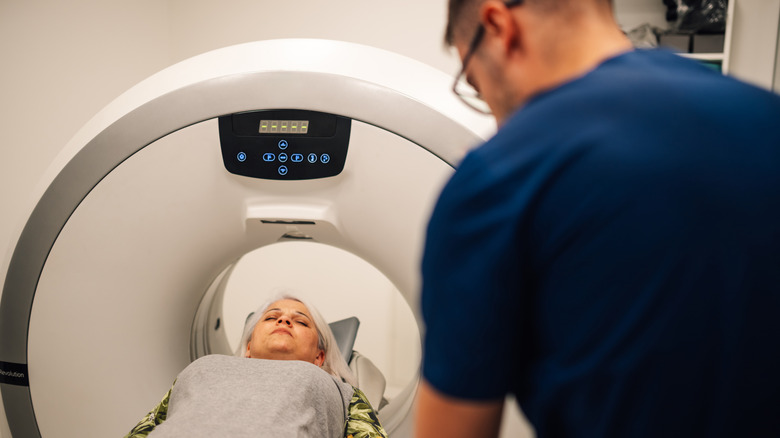
The Three-Stage Process: How PANDA Identifies and Classifies Lesions
To understand how PANDA AI identifies pancreatic lesions, one must look at it as a three-part journey of digital discovery. It doesn't just look at a picture and guess; it follows a rigorous mathematical workflow that mimics and then exceeds the investigative process of a human specialist.
- Pancreas Localization: The first challenge for any AI is knowing where to look. The abdomen is crowded with the liver, stomach, and intestines. PANDA AI uses deep learning models to isolate the pancreas from surrounding tissues, creating a digital "crop" of the area of interest to ensure the analysis is focused and accurate.
- Lesion Searching: Once the organ is isolated, the AI scans every millimeter of the tissue. It looks for irregularities in shape, density, and texture. Unlike a human who might be distracted by a more obvious issue in another organ, the AI maintains a singular focus on detecting even the most minute abnormalities.
- Type Classification: Finding a spot is only half the battle. The AI then performs voxel-level analysis. A voxel is essentially a 3D pixel, and by analyzing these, the AI can determine the internal structure of the lesion. This allows for cystic lesion classification and the ability to distinguish between eight different subtypes of pancreatic masses, helping doctors decide if a lesion is a benign cyst or an aggressive malignancy.
This technical workflow ensures that the system doesn't just provide a "yes or no" answer but offers a detailed map that clinicians can use to plan biopsies or surgeries with unprecedented precision.
Human vs. Machine: Benchmarking Diagnostic Accuracy
When we talk about AI in medicine, the most frequent question is: "Is it better than a doctor?" The reality is that PANDA AI is designed to be a partner, though its performance in head-to-head trials is nothing short of remarkable. In research published in the Nature Medicine journal, the PANDA system showed a 34.1% sensitivity advantage over the average radiologist for identifying pancreatic ductal adenocarcinoma.
The metric often used to measure the accuracy of these systems is the Area Under the Curve (AUC). In a multicenter validation study involving over 6,000 patients, the AUC for PANDA ranged between 0.986 and 0.996, where 1.0 represents a perfect test. These numbers highlight the system's incredible diagnostic sensitivity and its potential for preventing pancreatic cancer missed by radiologists with AI.
| Performance Metric | Average Radiologist | PANDA AI System |
|---|---|---|
| Sensitivity | ~58.8% | 92.9% |
| Specificity | ~93.6% | 99.9% |
| AUC (Detection) | N/A | 0.986 - 0.996 |
The AI vs radiologist accuracy in pancreatic screening is particularly evident when looking at small lesions. A human radiologist might overlook a 1cm shadow on a non-contrast scan because it blends into the background. PANDA AI, however, identifies the indirect signs—such as subtle ductal dilation—that signal something is wrong long before the tumor becomes obvious. In a real-world multi-scenario validation involving 20,530 consecutive patients, the PANDA AI model achieved a sensitivity of 92.9% and a specificity of 99.9% for detecting pancreatic lesions using non-contrast computed tomography (CT) scans.

Future of Routine Clinical Screening: Integrating PANDA AI
The true value of any medical AI is its ability to work within the existing healthcare infrastructure. Integrating AI pancreatic detection into routine medical exams does not require a total overhaul of the hospital. Instead, these models are designed to sit within the Radiology Information Systems (RIS) and Picture Archiving and Communication Systems (PACS) that doctors already use every day.
Imagine a patient arrives at the emergency room with suspected gallstones. They receive a standard abdominal CT. While the radiologist looks for the gallstones, PANDA AI runs in the background, scanning the pancreas. If it finds something, it alerts the physician immediately. This incidental screening turns every routine scan into a potential life-saving event.
Furthermore, medical AI validation is ongoing to ensure these tools work across different types of CT machines and diverse patient populations. As we move forward, the goal is to make AI-assisted screening a standard part of physical exams for those at higher risk, ensuring that no one has to wait for symptoms to appear before getting the help they need.
FAQ
How accurate is AI in detecting pancreatic cancer?
The PANDA AI model has shown a sensitivity of 92.9% and a specificity of 99.9% in large-scale, real-world studies. This level of accuracy is significantly higher than traditional human interpretation of non-contrast scans, where many small lesions go unnoticed.
Can AI detect pancreatic cancer on a routine CT scan?
Yes, one of the major breakthroughs of PANDA AI is its ability to use standard non-contrast CT scans. Previously, these routine scans were not considered detailed enough for reliable pancreatic screening, but AI can now identify subtle patterns in the data that the human eye cannot see.
What are the latest AI technologies for pancreatic cancer screening?
The most advanced technology currently is the PANDA system, which uses deep learning and voxel-level analysis. Other emerging tools focus on blood-based biomarkers (liquid biopsies) combined with AI to create a multi-modal approach to early detection.
Can AI identify pancreatic cancer before symptoms appear?
Absolutely. AI excels at finding small lesions, often under 2cm, which typically do not cause any symptoms. This ability to detect cancer in its asymptomatic stage is the key to increasing survival rates from 1.5 years to nearly 10 years.
How does artificial intelligence improve pancreatic cancer diagnosis?
AI improves diagnosis by acting as a "second set of eyes" that never gets tired and can process thousands of images in seconds. It reduces false positives, helps classify different types of tumors, and allows for effective screening using cheaper, more accessible imaging methods.