Quick Facts
- The Benchmark: PlayStation 5 Pro features approximately 16.7 TFLOPS of standard gaming GPU processing power, though its dual-issue architecture is marketed higher.
- Top Value Pick: NVIDIA RTX 5060 Ti (Estimated 20% faster than PS5 Pro in real-world rendering).
- Best Ray Tracing: NVIDIA RTX 5070 (Built on Blackwell architecture with dedicated ray tracing units).
- Best Raw Power: AMD Radeon RX 9070 (Offers superior rasterization and 16GB of dedicated memory).
- Upscaling Tech: NVIDIA DLSS 4.0 and AMD FSR 4.0 provide more flexibility than the console-exclusive PSSR upscaling.
- Release Window: Most Blackwell and RDNA 4 mid-range cards are expected by early 2025, aligning with the PS5 Pro mid-cycle peak.
The NVIDIA RTX 5060 Ti and AMD Radeon RX 9060 XT are the primary mid-range GPUs that outperform the PS5 Pro. In performance testing, the RTX 5060 Ti delivers approximately 20% higher frame rates than the console in demanding titles like Black Myth: Wukong. While the PS5 Pro excels in optimization, these PC components provide superior raw rendering power and higher native frame rates for 4K gaming, making them the superior choice for users who prioritize graphics cards vs PS5 Pro performance metrics.
The PS5 Pro Power Ceiling: Understanding the Competition
When Sony announced the PlayStation 5 Pro, the marketing focused heavily on a "67% increase in Compute Units" and advanced ray tracing. However, as a PC builder, you have to look past the marketing fluff and focus on the hardware reality. The console operates within a strict power envelope, usually capped around 200-250W for the entire system. This creates a thermal and electrical ceiling that discrete desktop graphics cards simply do not have to contend with.
A major factor in this comparison is the optimization tax. Consoles use low-level APIs that allow developers to squeeze every drop of performance out of fixed hardware. Because of this, a PC generally needs about 20% to 30% more raw compute power to deliver a comparable visual experience. While the PlayStation 5 Pro is a formidable machine for $699, it is still utilizing an RDNA 3-based custom chip. In the PC space, we are already looking toward Blackwell architecture and RDNA 4 technology, which offer architectural efficiencies that leave the console in the rearview mirror.
One of the most significant advantages for PC gamers is the choice of upscaling technology. While Sony has introduced PSSR upscaling to compete with the big players, it is still a first-generation AI upscaler. In contrast, NVIDIA has refined DLSS 4.0 to a point where it can reconstruct entire frames with minimal artifacts. If you are looking for the PS5 Pro equivalent GPU for custom PC builds, you are actually looking for something that exceeds the console's specs to account for that optimization gap.
1. NVIDIA GeForce RTX 5060 Ti: The Efficiency Leader
The NVIDIA RTX 5060 Ti is positioned to be the "sweet spot" for gamers who want to beat the console experience without spending four figures. Based on the upcoming Blackwell architecture, this card focuses on high-frequency cores and the transition to GDDR7 VRAM. This memory upgrade is crucial because it provides the bandwidth necessary to handle high-resolution textures that the PS5 Pro might struggle with due to its shared memory architecture.
In heavy-hitting titles like Black Myth: Wukong, the RTX 5060 Ti vs PS5 Pro performance comparison shows a clear lead for the PC side. The discrete GPU can maintain higher average frame rates at 1440p and 4K because it doesn't have to share its power budget with a CPU. Furthermore, the inclusion of Frame Generation allows this card to push high-refresh-rate monitors in a way that the PS5 Pro, usually targeting a stable 60 FPS, simply cannot match.
- Pros: Exceptional energy efficiency, access to DLSS 4.0, and superior 1440p high-refresh performance.
- Cons: Likely limited to 8GB or 12GB VRAM at the base tier, higher initial MSRP for a full system build.
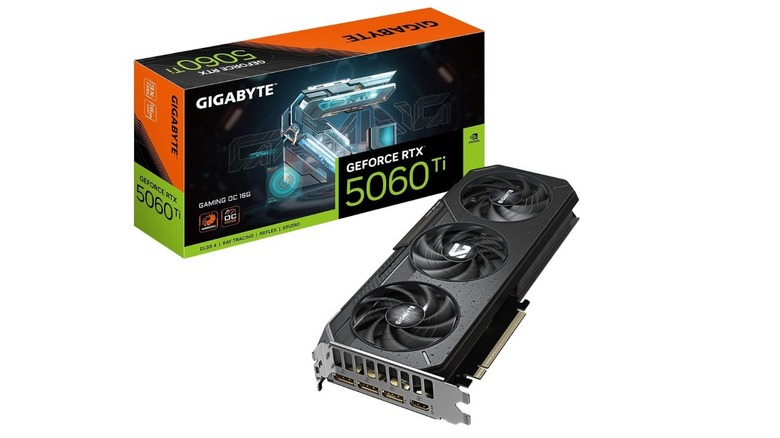
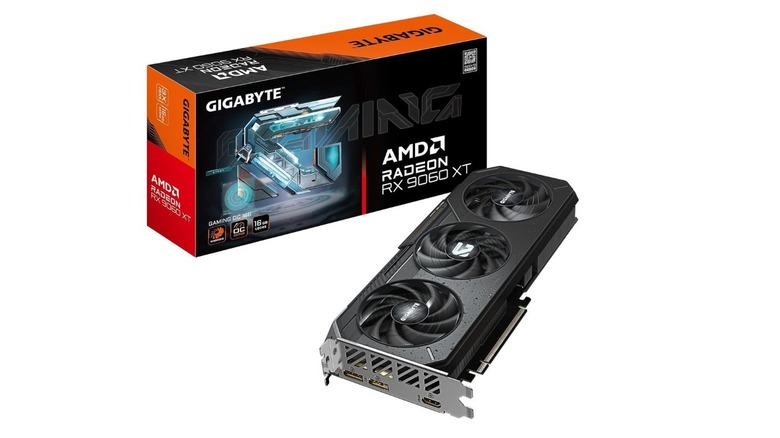
2. AMD Radeon RX 9060 XT: The Rasterization Powerhouse
If you are a gamer who prefers native resolution over AI upscaling, the AMD RX 9000 series vs PS5 Pro debate usually ends with the RX 9060 XT. AMD has historically offered better value in raw rasterization—the traditional way games are rendered without ray tracing. The RX 9060 XT utilizes RDNA 4 technology, which brings massive improvements to clock speeds and Thermal Design Power efficiency.
This card is particularly effective for those looking for budget-friendly GPUs that outperform the PS5 Pro. While the PS5 Pro uses an older RDNA 3 foundation, the RX 9060 XT benefits from newer instruction sets that improve performance in DX12 Ultimate titles. For competitive shooters or open-world RPGs where ray tracing isn't the primary focus, the raw FPS output here will consistently edge out the console's "Quality" mode.
- Pros: Higher native rasterization performance, excellent value-per-dollar, and more VRAM than entry-level NVIDIA cards.
- Cons: Ray tracing performance still lags slightly behind NVIDIA's latest offerings.
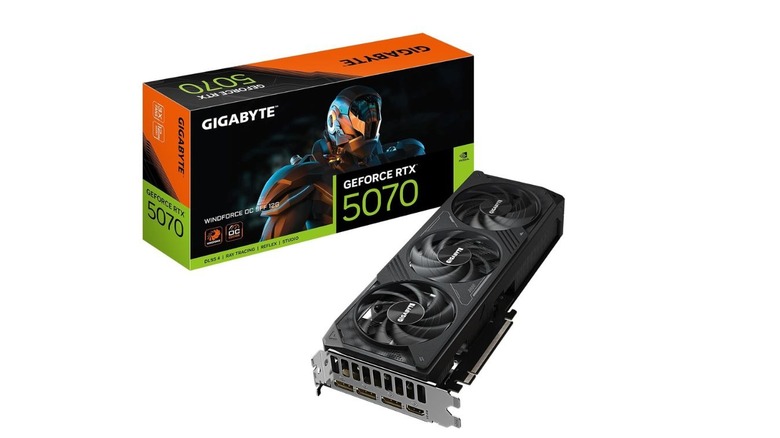
3. NVIDIA GeForce RTX 5070: The Ray Tracing King
For users seeking better ray tracing than the PS5 Pro, the NVIDIA GeForce RTX 5070 is the leading option. This card is built to handle path tracing—a more intensive form of ray tracing that calculates light for every pixel. The RTX 5070 vs PS5 Pro ray tracing performance gap is wide; while the console uses specialized hardware to "boost" ray tracing, the RTX 5070 features dedicated third-generation Ray Tracing Units that are significantly more capable.
When you pair this hardware with DLSS 4.0, you get a visual experience that the PS5 Pro's PSSR simply cannot replicate. The RTX 5070 offers between 30% and 40% more graphics processing power than the console, allowing you to turn on settings like "Ray Reconstructed Reflections" while maintaining a stable 60 FPS at 4K. It is the definitive choice for the graphics cards vs PS5 Pro enthusiast who wants their games to look like a CGI movie.
- Pros: Best-in-class ray tracing, massive performance jump over previous generations, and support for path tracing.
- Cons: Premium pricing makes it a more expensive path than just buying a console.
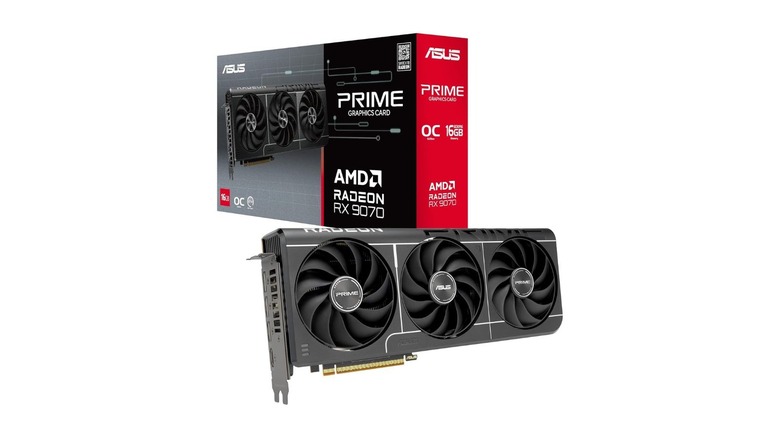
4. AMD Radeon RX 9070: High VRAM and 4K Stability
One of the biggest bottlenecks for modern consoles is the shared memory pool. The PS5 Pro shares its memory between the system and the GPU, which can lead to texture pop-in or reduced LOD (Level of Detail) in complex scenes. The AMD Radeon RX 9070 solves this by offering 16GB of dedicated VRAM. This is a crucial metric when looking at the AMD RX 9000 series vs PS5 Pro specs comparison.
The RX 9070 specifically offers a 20% increase in power over the console, making it one of the best graphics cards for 4K 60fps to beat PS5 Pro in a stable manner. With 16GB of memory, you can load high-resolution texture packs and maintain ultra settings in AAA games without hitting a memory wall. It’s a workhorse card that prioritizes consistency and longevity over flashy AI gimmicks.
- Pros: 16GB VRAM prevents memory bottlenecking, superior 4K stability, and great RDNA 4 technology features.
- Cons: Lacks the sophisticated frame reconstruction found in NVIDIA's ecosystem.
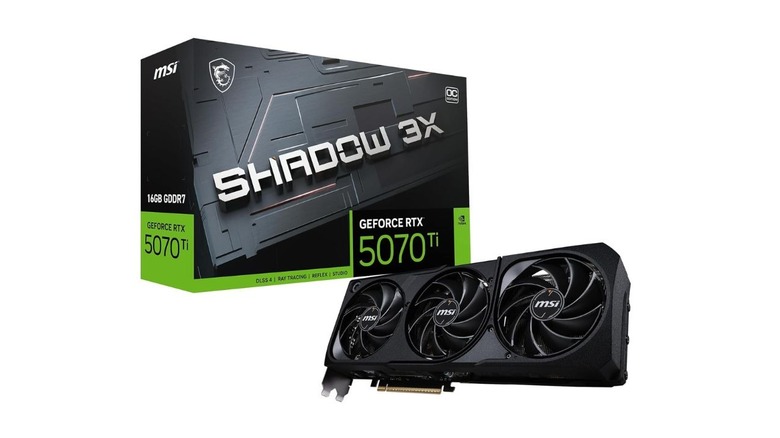
5. NVIDIA GeForce RTX 5070 Ti: Total Performance Dominance
If you want to absolutely crush the console experience, the NVIDIA GeForce RTX 5070 Ti is the nuclear option. This card is roughly 40% stronger than the PS5 Pro GPU. While the console is designed to play games "well," the 5070 Ti is designed to play them "perfectly." It bridges the gap between mid-range and high-end enthusiast performance.
The NVIDIA GeForce RTX 4070 Super delivers 33.5 TFLOPS of compute performance, which is double the 16.7 TFLOPS of gaming GPU processing power featured in the PlayStation 5 Pro. The 5070 Ti, built on the newer Blackwell architecture, pushes this even further. For the PC enthusiast who refuses to compromise, this card ensures that every game runs at ultra settings with every bell and whistle turned on.
- Pros: Unmatched performance in the mid-high segment, future-proof for years, and dominates 4K rendering.
- Cons: High MSRP value and requires a high-quality power supply.
PC vs. PS5 Pro: Beyond Raw Specs
Choosing between a console and a PC isn't just about Teraflops. You have to consider the Total Cost of Ownership (TCO). While the PS5 Pro costs $699, you have to add the cost of a vertical stand, a disc drive (if needed), and the recurring cost of PS Plus for online play. Over five years, a PS5 Pro can easily cost over $1,100.
Building a PC with a PS5 Pro equivalent GPU for custom PC builds might have a higher upfront MSRP value, but the lack of subscription fees and the ability to use the machine for work, video editing, and modding provides a much higher utility. For example, the modding community can often fix bugs or improve graphics in games long after a developer has stopped supporting the console version. If you are a professional or a student, the "PC premium" pays for itself in productivity.
FAQ
Which graphics card is equivalent to the PS5 Pro GPU?
The PS5 Pro GPU is roughly equivalent to a mid-range PC card like the NVIDIA RTX 4070 or the AMD Radeon RX 7700 XT in terms of raw compute. However, because of console optimization, it can sometimes punch up toward an RTX 4070 Super in specific first-party titles. For a true "beat the console" experience, you should look toward the RTX 5060 Ti or RX 9060 XT.
How does the PS5 Pro compare to the RTX 4070?
The RTX 4070 generally has the edge in ray tracing and upscaling thanks to DLSS. While the PS5 Pro has a high TFLOPS count, the RTX 4070 provides better stability at 1440p ultra settings. The PS5 Pro is closer to the RTX 4070 than the base PS5 was to any 30-series card, but it still falls short of the RTX 4070's flexibility.
Can a PC with a 30-series GPU outperform the PS5 Pro?
Yes, high-end 30-series cards like the RTX 3080 or 3090 still outperform the PS5 Pro in raw rendering and 4K performance. However, entry-level 30-series cards like the 3060 will struggle to keep up with the Pro's new PSSR upscaling and improved RDNA 3 architecture.
Is the PS5 Pro worth the upgrade for PC gamers?
For most PC gamers with a modern GPU (RTX 3070 or better), the PS5 Pro is not a necessary upgrade. The main draw for PC gamers is usually Sony's exclusive titles, but since most of those eventually come to PC with better graphics and frame rates, sticking with a high-end GPU upgrade is often the better investment.
Is it cheaper to buy a PS5 Pro or build a gaming PC?
Upfront, the PS5 Pro is cheaper at $699. However, when you factor in the cost of games (which are often cheaper on Steam), the lack of online subscription fees on PC, and the multi-purpose nature of a computer, a $1,000 PC often becomes more cost-effective over a three-to-five-year period.