Our Top Picks
- Onkyo TX-NR6100: Best Overall – A versatile powerhouse with THX certification that handles 8K video and immersive audio with equal finesse.
- Denon AVR-S970H: Best for 8K – The ideal choice for high-performance gaming and future-proofed home cinema setups requiring multiple 8K inputs.
- Marantz NR1510: Best Slim – A space-saving marvel that delivers signature warm audiophile sound without crowding your media console.
- Yamaha RX-V385: Best Value – The perfect entry-point for beginners who want reliable 5.1 surround sound without the premium price tag.
- Sony STR-DH790: Best Budget Atmos – An affordable way to experience object-based audio in a compact, easy-to-use package.
The top-rated AV receivers for 2026 include the Onkyo TX-NR6100 for overall versatility and the Denon AVR-S970H for superior sound quality and 8K gaming support. For smaller spaces, the slim Marantz NR1510 is a leading choice, while the Yamaha RX-V385 and Sony STR-DH790 provide excellent value for budget-conscious buyers seeking entry-level 5.1 or Dolby Atmos configurations.
| Model | Channels | Power Output | Best For |
|---|---|---|---|
| Onkyo TX-NR6100 | 7.2 | 100W | All-around performance |
| Denon AVR-S970H | 7.2 | 90W | 8K Gaming & Movies |
| Marantz NR1510 | 5.2 | 50W | Compact setup / Hi-Fi |
| Yamaha RX-V385 | 5.1 | 70W | Simple 5.1 Surround |
| Sony STR-DH790 | 7.2 | 145W | Budget Dolby Atmos |
Why Your Home Theater Needs a 2026 Upgrade
As an editor who has spent decades listening to everything from vintage tube amps to modern digital processors, I’ve seen the home theater landscape shift dramatically. We are currently seeing the global audio and video receiver (AVR) market move toward a valuation of approximately $1.31 billion in 2026. This growth isn't just about sales volume; it is about the technical leap that occurred recently.
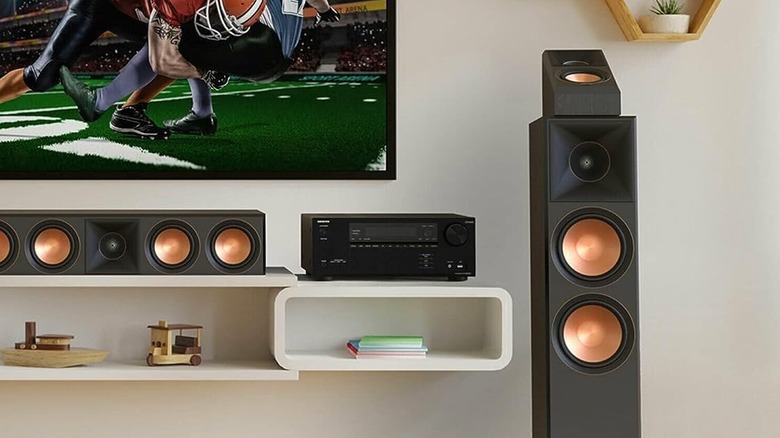
We’ve reached a point where the 7.1 and 7.2 channel segment holds a significant market share of roughly 25%. This tells us that standard surround sound is no longer enough for the modern enthusiast. People want immersion, which means height channels and dual subwoofers for better bass management. Furthermore, over 50% of units shipped feature HDMI 2.1 and 4K/120Hz passthrough capabilities. If you are using a high-performance gaming console or a new 8K display, an older receiver is likely acting as a bottleneck, stripping away the visual fidelity you paid for.
Upgrading in 2026 also means better smart home connectivity and dynamic headroom. Modern units are designed to handle the sudden, explosive shifts in soundtracks—from a whisper to a jet engine—without distorting. While elite flagships like the Marantz Cinema 30 and the Denon AVR-A1H set the high-end benchmark with massive channel counts, you don't need to spend five figures to get future proof av receivers with hdmi 2.1 and earc support. The sweet spot has moved down in price, making audiophile av receiver recommendations more accessible than ever.
Detailed Reviews: The 5 Best AV Receivers for 2026
Onkyo TX-NR6100: Best Overall
The Onkyo TX-NR6100 has earned its spot at the top because it offers the most balanced package for the average enthusiast. It is a 7.2 channel receiver that carries the THX Select certification. This isn't just a badge; it means the unit has passed rigorous tests to ensure it can deliver theater-reference volume in medium-sized rooms.
What I appreciate most about the TX-NR6100 is its versatility. It handles Dolby Atmos and DTS:X beautifully, creating a seamless dome of sound. For the vinyl lovers, it includes a built-in phono preamp that is surprisingly quiet for a mid-range receiver. It supports 8K/60Hz and 4K/120Hz on multiple inputs, making it a reliable hub for all your media. The discrete circuitry in the amplification stage ensures that the sound remains punchy and clear, even when you’re pushing it during an action-heavy film sequence.
Denon AVR-S970H: Best for 8K
If you are a gamer or a cinephile who demands the absolute latest in video standards, the Denon AVR-S970H is a top-rated home theater receiver that should be on your radar. Denon has long been a leader in digital processing, and the S970H continues that legacy. It features three dedicated 8K inputs, supporting the full 40Gbps bandwidth required for high-refresh-rate gaming and HDR10+.
The sound signature is classic Denon—refined, detailed, and accurate. It uses Audyssey MultEQ room calibration, which I find to be one of the most user-friendly tools for fixing acoustic issues in a typical living room. By measuring your room with the included microphone, it adjusts the output to compensate for furniture or odd wall angles, resulting in a much tighter bass response and clearer dialogue.
Marantz NR1510: Best Slim Profile
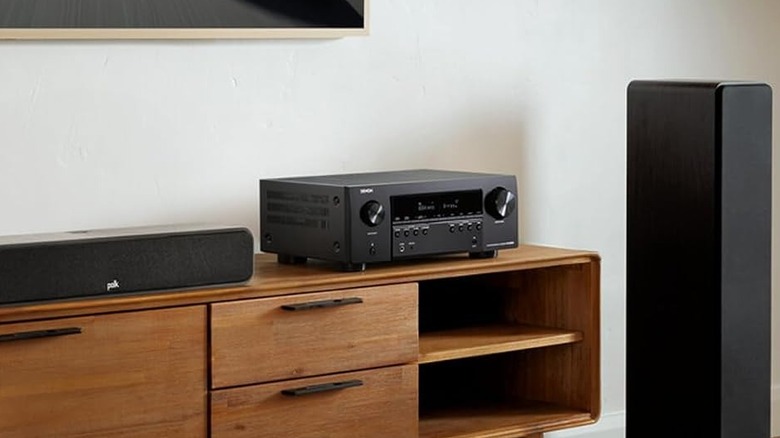
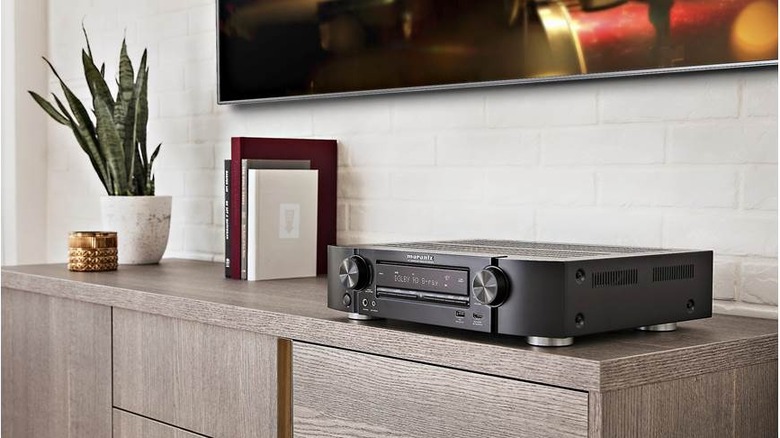
Not everyone has a massive ventilated rack to store their gear. This is where slim profile av receivers for compact entertainment centers become essential. The Marantz NR1510 is about half the height of a traditional receiver, yet it manages to pack in a full 5.2 channel amplifier and high-resolution streaming capabilities.
Marantz is known for its musicality, and despite its smaller footprint, the NR1510 delivers a warm, inviting sound that is excellent for both movies and two-channel music listening. It includes built-in HEOS, allowing you to stream music from Spotify, Tidal, or your own local library with ease. It’s an audiophile av receiver recommendation for those who value aesthetics and sound quality over sheer channel count.
Yamaha RX-V385: Best Entry-Level
For those looking for budget friendly 5.1 surround sound receivers for first time buyers, the Yamaha RX-V385 remains a stalwart. It doesn’t have the bells and whistles of the 8K models, but it does the basics exceptionally well. It is a 5.1 channel unit, which is perfect for a standard living room setup with a left, right, center, and two rear speakers.
The RX-V385 features Yamaha's YPAO room calibration and supports 4K passthrough with HDR. Its bi-amp capability for the front speakers is a rare find at this price point, allowing you to drive your main speakers with more precision if you aren't using the surround channels. It’s a "set it and forget it" device that provides a massive upgrade over TV speakers or a cheap soundbar.
Sony STR-DH790: Best Affordable Atmos
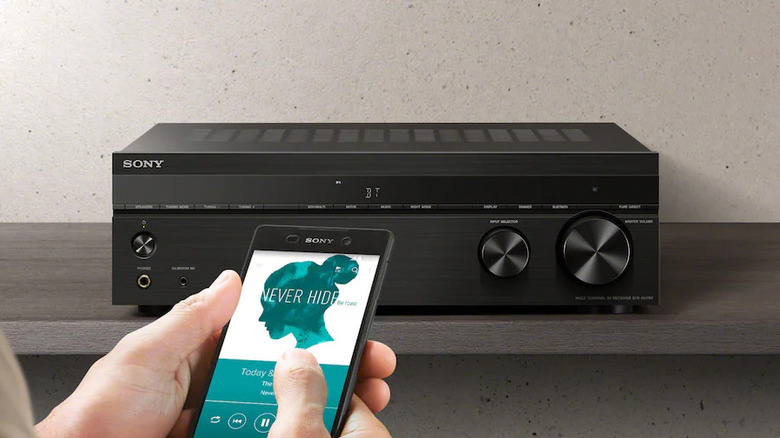
The Sony STR-DH790 is one of the most 8k home theater receivers under 1000 dollars that successfully brings Dolby Atmos to the masses. It is a 7.2 channel receiver, but most users will configure it as a 5.1.2 setup, using two channels for overhead "height" effects.
Sony’s processing is unique; they use a technology called Advanced D.C.A.C. (Digital Cinema Auto Calibration) that is very effective at aligning the timing of your speakers. This creates a very coherent soundstage where you can clearly track objects moving across the room. While it lacks some of the premium metal construction of the Marantz or Onkyo, the STR-DH790 provides a cinematic experience that punches well above its weight class.
Buyer’s Guide: Matching Your Receiver to Your Room
Choosing a receiver is about more than just reading surround sound receiver reviews; it’s about understanding the "Half-Cost Rule." As a general guideline, I recommend spending about 50% of your total speaker budget on your receiver. If you have a $2,000 speaker system, a $1,000 receiver will likely have the power and processing quality to do those speakers justice.
Understanding Channel Counts
When making av receiver recommendations for small to medium sized rooms, I usually start with the layout.
- 5.1/5.2 Channels: Great for smaller rooms. You get front left, front right, center, and two surrounds. The ".2" indicates support for two subwoofers, which I highly recommend for evening out the bass in the room.
- 7.1/7.2 Channels: Ideal for medium to large rooms. This adds two rear surround speakers or two height speakers for Dolby Atmos.
- Choosing an av receiver with dual subwoofer outputs is one of the best things you can do for your sound quality. Two smaller subwoofers placed in different parts of the room will almost always sound better than one giant subwoofer that creates "dead zones" of bass.
Power and Calibration
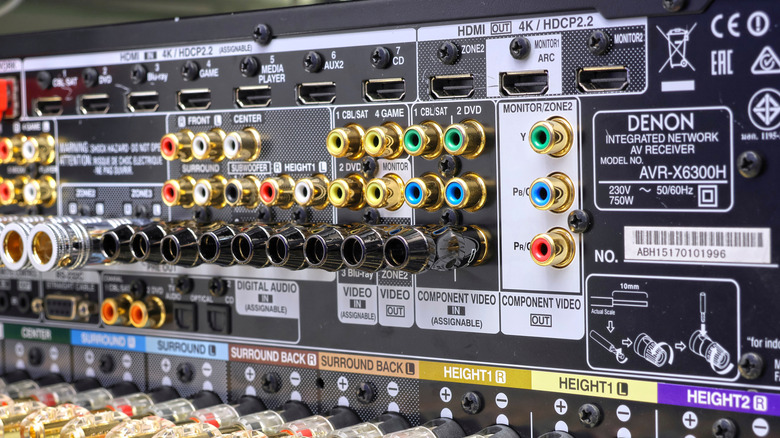
Don't get too caught up in the wattage numbers. A receiver rated at 100 Watts per channel is plenty for most home environments. What matters more is the quality of the Digital-to-Analog Converter and the room calibration software. Tools like Dirac Live or Audyssey are vital because every room has "modes"—frequencies that get boomeranged around or swallowed up by your walls. Calibration flattens these peaks and valleys, making your Hi-Res Audio tracks sound exactly as the artist intended.
FAQ
What should I look for when buying an AV receiver?
You should prioritize the number of channels for your speaker layout, the number of HDMI 2.1 ports for your devices, and the quality of the room calibration software. Additionally, ensure the receiver has enough power to drive your specific speakers and supports the latest HDR formats like Dolby Vision.
How many channels do I need for a home theater?
For a basic immersive experience, a 5.1 setup is the minimum standard. However, if you want to experience object-based audio like Dolby Atmos, you will need at least a 7-channel receiver to accommodate two overhead or up-firing height speakers (a 5.1.2 configuration).
Is a 7.1 receiver better than a 5.1 receiver?
A 7.1 receiver is not inherently "better" in terms of sound quality, but it offers more flexibility. It allows for a more complete surround soundstage in larger rooms or the ability to add height channels for Atmos. If you have a small room, a high-quality 5.1 receiver may outperform a cheap 7.1 model.
Do I need an 8K receiver for a 4K TV?
You do not strictly need an 8K receiver for a 4K TV, as 8K units are backward compatible. However, 8K receivers usually come with the latest HDMI 2.1 features, such as Variable Refresh Rate (VRR) and Auto Low Latency Mode (ALLM), which are highly beneficial for 4K gaming on the latest consoles.
How much power per channel do I need for my speakers?
Most modern speakers with a sensitivity rating above 85dB will run comfortably on 70W to 100W per channel in a standard room. If you have particularly "hungry" speakers with low impedance (4 ohms) or a very large room, you might look for a receiver with discrete circuitry and higher wattage ratings.
Final Verdict: Which One Should You Buy?
In the end, the best value 4k 120hz receivers for home cinema 2026 are those that fit your specific lifestyle. If you want the absolute best AV receivers for a modern, multi-purpose living room, the Onkyo TX-NR6100 is nearly impossible to beat for its price-to-performance ratio. It offers the stability of THX certification with all the modern 8K bells and whistles.
For the dedicated gamer who owns both a PS5 and an Xbox Series X, the Denon AVR-S970H is the clear winner due to its superior HDMI 2.1 implementation and excellent Audyssey calibration. If space is at a premium, don't hesitate to go for the Marantz NR1510—it’s a beautiful piece of engineering that proves you don’t need a massive black box to get top rated home theater receivers performance.
Whichever you choose, remember that the receiver is the heart of your system. Investing in a quality hub today ensures that your home theater remains relevant and breathtaking for years to come.