Our Top Picks
- Top Choice: SYMIK 100W USB-C Power Source ($35.99) — The most versatile third-party option for high-speed device charging.
- Official Alternative: Ryobi FVCH03 ($49.97) — The safest choice for maintaining battery health and factory warranty.
- Performance: Features 100W USB-C Power Delivery (PD) for laptops and high-end smartphones.
- Ports: Equipped with 1x 100W USB-C, 1x 45W USB-C, and 1x 18W USB-A for simultaneous charging.
- Compatibility: Fully compatible with the Ryobi 18V ONE+ system.
- Risk: Using this third-party device may void the official Ryobi battery warranty.
The SYMIK 100W USB-C charger is a popular $36 third-party Ryobi USB-C charger that doubles as a high-speed power bank for laptops and a charger for Ryobi 18V batteries. It offers a versatile, budget-friendly solution for users on the Ryobi One+ platform who need significant off-grid power.
Why Amazon Users Are Obsessed with the $36 SYMIK Charger
In the world of mobile tech and power tools, cross-platform compatibility is usually a dream. However, the SYMIK 100W USB-C charger has managed to bridge the gap between your garage workbench and your digital lifestyle. On Amazon, this device has garnered a dedicated following, often maintaining a near-perfect 4.7-star rating. The appeal is simple: it transforms a standard power tool battery into a sophisticated energy hub capable of reviving a dead MacBook or an iPad Pro at professional speeds.
Most users are drawn to the SYMIK Ryobi battery charger because of its incredible utility-to-price ratio. For $36, you are getting a device that provides 100W USB-C Power Delivery. To put that into perspective, most dedicated high-wattage power banks with that capacity cost twice as much and don't allow you to swap out the internal cells. With the SYMIK, if your power source runs dry, you just slide on another Ryobi 18V battery.
The hardware design is equally impressive for a budget accessory. It features a maximum combined output of 145W across three ports, which includes the primary 100W USB-C port, a secondary 45W USB-C port, and an 18W USB-A port. This makes it an ideal Ryobi battery USB-C power source adapter for families or professionals who need to charge multiple devices simultaneously while away from a wall outlet.
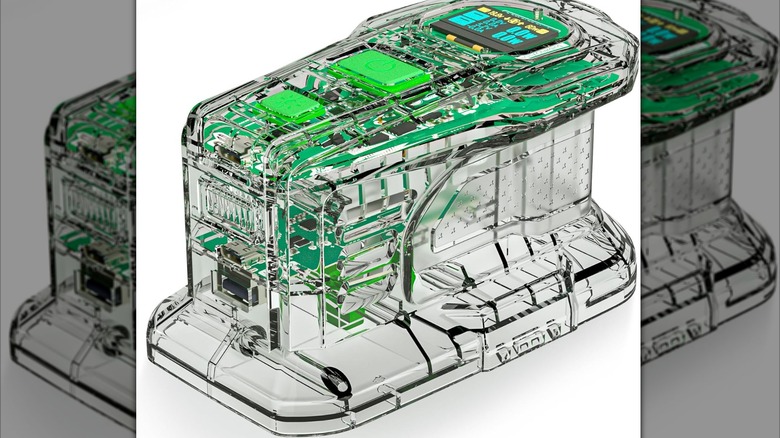
Beyond the raw power, the inclusion of a built-in LED flashlight adds another layer of utility. Whether you are searching for a dropped cable in a dark tent or navigating a power outage at home, having a high-capacity light source attached to a massive battery is incredibly practical. It is this combination of high-speed tech and rugged jobsite utility that makes it arguably the best budget Ryobi battery USB-C power source on the market today.
The Technical Catch: Third-Party Ryobi Charger Risks
As a tech editor, I always tell readers that if a deal looks too good to be true, you need to look at the communication protocols. Power tool batteries are not just dumb plastic boxes full of energy; they contain a sophisticated Battery Management System (BMS). This system is responsible for monitoring individual cell voltages, managing heat, and preventing the battery from discharging too low, which can permanently damage the lithium-ion cells.
The primary concern with any third-party Ryobi charger risks is the "communication gap." Official Ryobi equipment is designed with proprietary handshakes that allow the battery and the charger to talk to each other. Aftermarket brands like SYMIK must reverse-engineer these protocols. If the voltage regulation is even slightly off, or if the device fails to recognize the battery's thermal safety protocols, you risk more than just a dead battery—you risk a fire hazard.
Warning on Warranty and Safety
Using a non-Ryobi accessory can lead to third party Ryobi charger warranty risks. Ryobi’s official warranty policy generally states that damage resulting from the use of unauthorized accessories or "counterfeit" chargers is not covered. If the SYMIK adapter causes a cell to fail or creates a thermal event, Ryobi will likely deny any replacement claims. Furthermore, are third-party Ryobi battery chargers safe for long-term use? While many users report years of success, the lack of official certification means you are essentially acting as your own quality control officer.
Another technical detail to watch is over-discharge protection. Lithium batteries hate being drained to zero volts. Official Ryobi tools will cut power before the battery reaches a critical low. Some users of the SYMIK have noted that while the device is excellent at delivering power, it might not always signal the "low battery" shutdown as accurately as OEM gear. Keeping a close eye on the battery fuel gauge is a must when using this Ryobi battery USB-C charger.
Versatility for the Modern Nomad
For those who enjoy the "van life" or frequent camping trips, the SYMIK 100W USB-C charger for Ryobi batteries is a game changer. It solves the problem of needing multiple proprietary chargers for different gadgets. Instead of carrying a laptop brick, a phone charger, and a tablet plug, you just bring this compact adapter.
The two-way functionality of the SYMIK unit is its secret weapon. Most adapters only go one way—draining the Ryobi battery to charge your phone. However, the SYMIK allows you to recharge the Ryobi battery itself via a USB-C PD input. This means if you have a high-wattage USB-C solar panel or a powerful car charger, you can top up your tool batteries without needing a bulky 120V AC inverter.
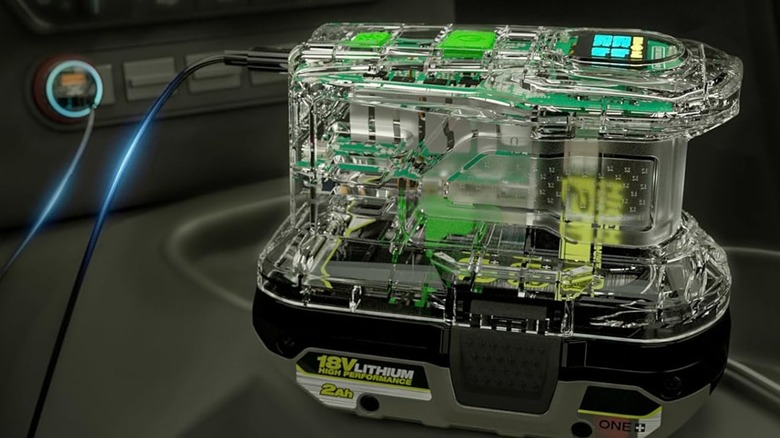
This makes the unit an essential Ryobi battery USB-C adapter for camping. Imagine spending the day hiking, using your phone for GPS and photos, and then returning to camp to find your phone at 5%. You can snap the SYMIK onto a 4Ah Ryobi battery and have your phone back to 100% in under an hour, with plenty of juice left over to power a small USB fan or a set of string lights through the night.
SYMIK vs. Official Ryobi FVCH03: Which Should You Buy?
Choosing between a third-party accessory and official manufacturer gear usually comes down to a trade-off between performance and peace of mind. In this SYMIK vs official Ryobi battery charger review, the differences are stark.
| Feature | SYMIK 100W Power Source | Official Ryobi USB-C (FVCH03) |
|---|---|---|
| Price | ~$35.99 | ~$49.97 |
| Max Output (USB-C) | 100W (Charges Laptops) | 15W - 30W (Varies) |
| Ports | 2x USB-C, 1x USB-A | 1x USB-C |
| Charging Ryobi Battery | Supported (via USB-C) | Supported (via USB-C) |
| Warranty | 1-Year (Third Party) | 3-Year (Official) |
| Safety Certification | Third-party tested | UL Listed / OEM Certified |
The Ryobi FVCH03 is a "safe" device. It is compact and designed specifically to protect the 18V tool ecosystem. However, its power output is relatively meager. While it is excellent at slowly topping off a phone, it struggles with power-hungry devices like a Dell XPS or a MacBook Pro.
On the other hand, the SYMIK is built for the power user. It treats the Ryobi battery like a serious energy reservoir. If your priority is fast-charging a laptop in the field, the SYMIK is the clear winner. If your priority is ensuring your $150 9Ah High-Output battery lasts for the next five years, the official Ryobi path is the smarter investment.
FAQ
Can you charge Ryobi batteries with USB-C?
Yes, but you need a specific adapter that supports two-way power delivery. The SYMIK charger mentioned in this article allows you to both draw power from a Ryobi battery and recharge it using a USB-C cable connected to a wall brick or solar panel.
Is Ryobi USB-C charging safe for long-term use?
Official Ryobi USB-C accessories are designed with long-term battery health in mind. Third-party chargers are generally safe if used correctly, but they carry a higher risk of bypassing the Battery Management System, which could lead to reduced cell life over several years.
Can a Ryobi USB-C power source charge a laptop?
It depends on the wattage. Most official Ryobi USB-C adapters provide lower wattage (around 15-30W), which might only "slow charge" a laptop or simply keep the battery from draining. High-wattage options like the SYMIK provide 100W, which is enough to charge most modern laptops at full speed.
Does the Ryobi USB-C charger work with 18V One+ batteries?
Yes, these adapters are designed to slide onto any standard Ryobi 18V ONE+ battery, ranging from the small 1.5Ah compact packs to the large 9Ah or 12Ah High-Output batteries.
How long does it take to charge a Ryobi battery with USB-C?
Charging time depends on the capacity of the battery and the output of your USB-C wall plug. Using a 65W or 100W PD wall charger with a compatible adapter, a standard 4Ah Ryobi battery can typically be recharged in about 1 to 2 hours.
Final Verdict: Is it Worth the Gamble?
As someone who values both my gear's longevity and the convenience of high-speed charging, my recommendation is nuanced. If you are an occasional camper or a DIYer who needs an emergency power source for your phone and laptop, the SYMIK 100W USB-C charger is a phenomenal value. It provides more features and faster speeds than almost anything in its price bracket.
However, if you are a professional contractor whose livelihood depends on the health of your expensive battery fleet, stick with official Ryobi chargers for your primary needs. The risks to your warranty and the potential for lithium-ion cell health degradation are real, even if they aren't immediate.
For most Amazon users, the $36 price tag is low enough to justify the risk. Just remember to treat it like the high-powered tool it is: don't leave it charging unattended overnight, and always keep an eye on those thermal levels. Whether you choose the SYMIK for its 100W output or the official Ryobi model for its safety, the ability to turn your tool batteries into a mobile power station is one of the best upgrades you can give your mobile kit.