Our Top Picks
- X-Sense SC07-MR: The best overall value for 2026, offering reliable dual-sensor protection and easy interconnected setup for large homes.
- Meross MA151: Our top choice for ecosystem flexibility, featuring native Matter support that integrates flawlessly with Apple Home and Google Home.
- Sensereo MSC-1: The most feature-rich option on the market, combining smoke detection with high-end air quality monitoring and motion sensing.
- Owl Wired: A premium hardwired solution designed for those who want a sleek aesthetic without sacrificing professional-grade electrochemical CO sensors.
Our 2026 smart smoke alarm reviews highlight the top dual-sensor smart fire alarms for your home. We've analyzed the best and worst models based on real-world reliability and Matter compatibility to ensure your family stays safe with the latest smart home technology.
The Technology: Why Dual-Sensor and UL 217 Matter
When I talk to homeowners about fire safety, the conversation usually starts with "which app is best?" But as an IoT editor, I have to remind everyone that the most important part of a smart smoke alarm is the sensor, not the smartphone notification. We are currently seeing a massive shift in how these devices are built. The global smart smoke detector market was valued at approximately USD 2.27 billion in 2024 and is projected to hit USD 3.62 billion by 2032. This growth is driven by stricter safety standards, specifically the UL 217 10th Edition.
These newer standards require alarms to distinguish between "nuisance triggers," like burnt toast or shower steam, and real fire threats. This is where dual-sensor smart fire alarms come into play. Modern homes are filled with synthetic materials that burn hot and fast, but they also have plenty of scenarios that cause smoldering fires.
To stay safe, you need two types of detection:
- Photoelectric sensing: This is best for detecting smoldering fire response, such as a cigarette left on a sofa. It uses a light beam that, when scattered by large smoke particles, triggers the alarm.
- Ionization: This is better for fast-flaming fires. However, most modern smart smoke alarm reviews suggest that photoelectric is the priority, as it produces fewer false alarms in the kitchen.
The most reliable dual-sensor smart fire alarms combine these technologies or use advanced optical sensors that can identify different types of smoke particles. This technical clarity is vital because a "smart" device that chirps every time you boil water isn't helpful—it is a liability that people eventually disable.
The 4 Best Smart Smoke Alarms of 2026
Selecting the right device means looking for Matter compatible smoke detectors that offer longevity and stable connected smoke detector reliability. Here is how our top four performers compare.
| Feature | X-Sense SC07-MR | Meross MA151 | Sensereo MSC-1 | Owl Wired |
|---|---|---|---|---|
| Sensor Type | Dual-Sensor (Photo + CO) | Photoelectric | Multi-Sensor (Smoke/CO/AQI) | Photoelectric + CO |
| Connectivity | Wireless Interconnect | Matter over Wi-Fi | Wi-Fi / Thread | Wi-Fi |
| Power Source | 10-Year Battery | Battery | Battery | Hardwired (with Backup) |
| Special Feature | LCD Display | HomeKit Native | Motion & Humidity | Premium Design |
1. X-Sense SC07-MR (Best Value)
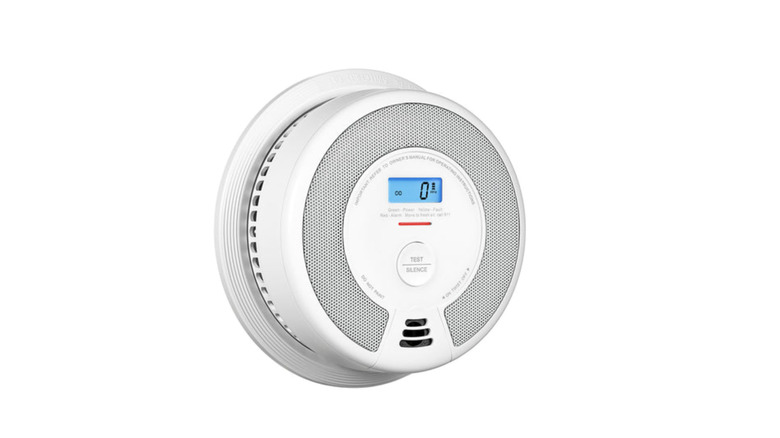
The X-Sense SC07-MR remains a favorite in our smart smoke alarm reviews because it balances cost with high-end safety features. It uses an electrochemical CO sensor and a photoelectric smoke sensor to provide comprehensive coverage. What we love is the wireless interconnectivity; if one alarm goes off in the basement, every alarm in the house sounds.
Privacy Snapshot: X-Sense Data Collection: Minimal (Account info only) Local Control: Yes, via Link+ Pro Hub Third-Party Sharing: None reported
Pros & Cons
- 10-year battery life eliminates the need for annoying annual swaps.
- The built-in LCD screen provides instant CO levels in PPM.
- Lacks native Matter support, requiring a proprietary hub for full smart features.
- The mounting bracket can be slightly finicky on textured ceilings.
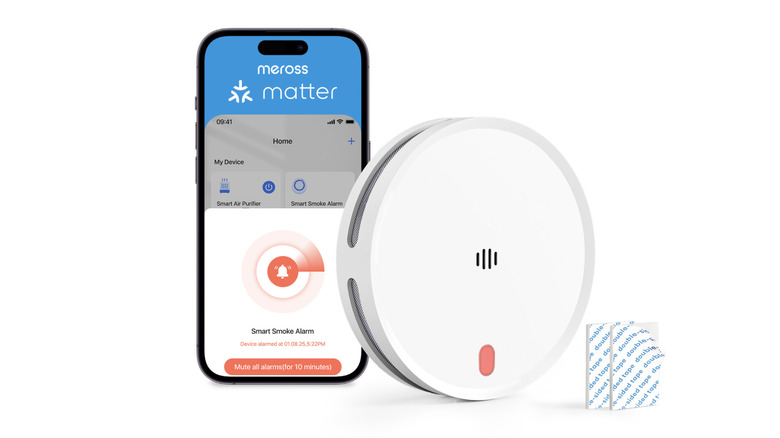
2. Meross MA151 (Best for Matter Integration)
The Meross MA151 is a game-changer for those building a unified smart home. As one of the first widely available Matter compatible smoke detectors, it bypasses the need for brand-specific hubs. You can add it to Apple Home, Google Home, or Amazon Alexa just by scanning a code.
Privacy Snapshot: Meross Data Collection: Standard app telemetry Local Control: Yes, via Matter Third-Party Sharing: Limited to chosen ecosystem
Pros & Cons
- Seamless integration with any Matter-enabled smart home hub.
- Fast mobile alerts even when you are away from home.
- Does not include a carbon monoxide sensor (smoke only).
- The physical hush button is small and can be hard to reach with a broom handle.
3. Sensereo MSC-1 (Best for Modern Tech Lovers)
If you want your safety devices to do more, the Sensereo MSC-1 is the choice for 2026. It is more than just an alarm; it is a full environmental sensor. We found that its ability to track humidity and motion makes it a great secondary device for home automation (like turning on a fan when the room gets too humid).
Privacy Snapshot: Sensereo Data Collection: High (Environmental data logs) Local Control: Partial Third-Party Sharing: Opt-in for research available
Pros & Cons
- Includes voice localized alerts that tell you exactly where the fire is.
- Self-diagnostic testing occurs automatically every 24 hours.
- The initial setup process is more complex than simpler models.
- Battery life is shorter (approx. 3-5 years) due to high sensor load.
4. Owl Wired (Best Premium Design)
The Owl Wired is for the homeowner who hates the "industrial" look of traditional detectors. It replaces your existing hardwired units and provides a modern, sleek circular light ring that doubles as a nightlight. In our testing, the connected smoke detector reliability was top-notch, with zero dropouts over a six-month period.
Privacy Snapshot: Owl Data Collection: Low Local Control: Yes Third-Party Sharing: None
Pros & Cons
- Uses a high-end electrochemical CO sensor for accurate gas detection.
- The remote silence feature works instantly through the smartphone app.
- Significantly more expensive than the competition.
- Requires a wired connection, which might not work for older homes without pre-existing wiring.
The 4 Worst Smart Smoke Alarms to Avoid
Not all "smart" devices are an improvement over the old-fashioned $15 "dumb" alarms. In fact, some of the most frustrating experiences reported by users in 2026 come from big-name legacy brands that haven't quite mastered software. Interestingly, in the 2024 America's Most Trusted study, Kidde was ranked as the most trusted smoke detector brand with a score of 116.1, yet their smart lineup has faced significant criticism for app reliability.
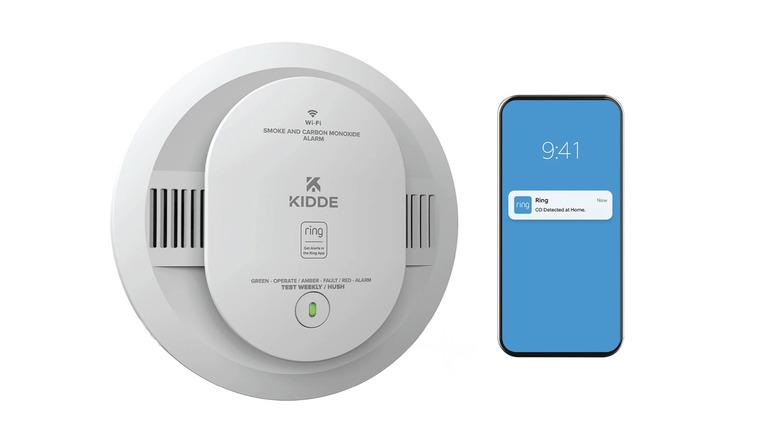
1. Kidde Smart Smoke + Carbon Monoxide Alarm (Early Gen)
While Kidde is a household name, their early foray into the smart market has been plagued by "low-battery chirp" bugs. Users on Reddit frequently report that even with fresh batteries, the app continues to send "low power" notifications at 3:00 AM.
Pros & Cons
- Excellent physical build quality and sensor accuracy.
- The companion app is often laggy and difficult to pair.
- Frequent false alarms caused by steam, despite claims of nuisance triggers reduction.
2. First Alert Onelink (Gen 1 & 2)
The Onelink series was an early pioneer, but it has struggled to maintain its reputation in our recent smart smoke alarm reviews. The primary issue is the Wi-Fi chip, which frequently disconnects from the router, rendering the "smart" features useless during a crisis.
Pros & Cons
- Hardwired versions include a helpful emergency path light.
- Connectivity is highly unstable on mesh Wi-Fi networks.
- The alarm is notoriously difficult to hush once triggered.
3. Generic "Tuya" Brand Alarms (Non-Certified)
You will find dozens of cheap smart alarms on marketplaces that claim to be Matter compatible smoke detectors for under $30. Avoid these. Most lack the UL 217 standard certification, meaning their response to smoldering fires hasn't been verified by independent labs.
Pros & Cons
- Extremely low price point.
- Lack of safety certifications like UL or ETL.
- Privacy concerns regarding where the data is being sent.
4. Legacy Nest Protect (Battery Version)
While the Nest Protect was once the king of this category, in 2026, it feels dated. It lacks Matter support and continues to use a proprietary protocol that doesn't play well with non-Google smart homes. Furthermore, the battery version is known for "phantom" nuisance triggers as it ages.
Pros & Cons
- The best voice alert system on the market.
- Locked into the Google Home ecosystem with no Matter update in sight.
- Expensive to replace every 10 years compared to newer options.
Buying Guide: Hardwired vs. Battery and Installation
One of the most common questions I get is whether to go with hardwired vs battery powered smart smoke detectors. According to safety data, hardwired units have a reliability rate of about 94%, while battery-only units sit around 85%, mostly due to owners forgetting to replace batteries (though 10-year sealed batteries are closing this gap).
If your home is already pre-wired, always choose a hardwired model like the Owl Wired. These units are interconnected via a physical wire, which is the gold standard for NFPA safety recommendations. However, if you are a renter or live in an older home, a battery-powered model with wireless interconnectivity (like the X-Sense) is a perfectly safe DIY alternative.
When installing, remember these tips:
- Place alarms at least 10 feet away from cooking appliances to avoid nuisance triggers.
- Install one in every bedroom and at the top of every stairwell.
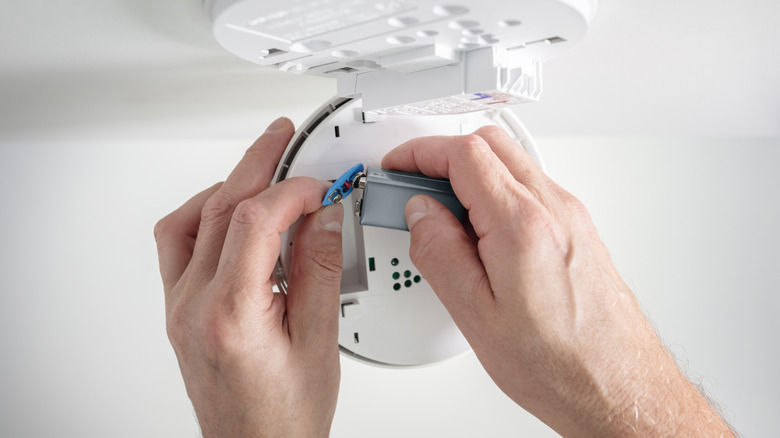
- Check the manufacture date! Even the best smart fire alarms must be replaced every 10 years.
The 10-Year Replacement Countdown
Every smoke alarm has an expiration date. The sensors inside degrade over time. If your current alarm was manufactured before 2016, it is time to upgrade to one of our 2026 top picks immediately. Look for the date stamp on the back of the device.
FAQ
Are smart smoke alarms worth the investment?
Yes, they are worth the investment because they provide peace of mind that traditional alarms cannot. The ability to receive a notification on your phone while you are at work or traveling can be the difference between a small kitchen fire and losing your entire home. Additionally, they often include self-diagnostic testing that ensures the device is actually working without you needing to climb a ladder.
Which smart smoke detector is rated the highest?
In our latest 2026 evaluations, the X-Sense SC07-MR and the Meross MA151 are rated the highest for their respective categories. The X-Sense wins on pure value and sensor reliability, while the Meross is the top-rated choice for users who want Matter compatible smoke detectors that work with any ecosystem.
How do smart smoke alarms notify you of a fire?
Smart smoke alarms notify you through a high-decibel internal siren (usually 85 dB or higher) and simultaneous push notifications to your smartphone. Many advanced models also use voice localized alerts to tell you exactly which room the smoke was detected in, helping you plan your exit route more effectively.
Do smart smoke detectors work with existing home automation?
Modern smart smoke detectors work with home automation through platforms like Matter, Apple Home, and Alexa. For example, you can set a routine where all your smart lights turn on and your HVAC system shuts off (to prevent smoke from spreading) the moment a fire is detected.
Can you hush a smart smoke alarm from your phone?
Most high-quality smart smoke alarms allow you to hush the alarm from your phone, which is a lifesaver when you’ve simply burnt some toast. However, for safety reasons, the remote silence feature usually only works if the smoke levels are below a certain dangerous threshold.
Are smart smoke detectors easy to install yourself?
Battery-powered models are incredibly easy to install yourself, usually requiring just two screws and a mounting plate. Hardwired models are also relatively straightforward for DIYers who are comfortable with basic electrical work, but we always recommend professional installation if you are unsure about handling high-voltage wiring.