Our Top Picks
- The Powerhouse: Razer Blade 16 (2026 Edition) – The ultimate desktop replacement for professionals, featuring the latest RTX 50 series graphics and a stunning dual-mode mini-LED display.
- The Lightweight Choice: LG Gram 16 – Defies the 16-inch laptop weight comparison by coming in under 3 pounds, making it the only large-screen option that won't kill your shoulder.
- The Balanced Performer: ASUS ROG Zephyrus G16 – A masterclass in thermal management and sleek design, perfect for creators who need high-end performance without the aggressive gamer aesthetic.
The 16-inch laptop market has exploded in 2026, capturing 38% of the global market. While the allure of massive screen real estate is strong, these machines aren't for everyone; a 16-inch laptop typically weighs between 3.4 and 4.7 pounds, making it significantly bulkier than 13-inch or 14-inch alternatives. In this review, we break down the costs and benefits to help you decide if the 16-inch laptop size fits your workflow or if it's too much to carry.
The Physical Reality: Weight, Bulk, and Portability
When you are standing in a showroom, a 16-inch laptop looks like a productivity dream. The screen is expansive, and the keyboard feels spacious. However, the honeymoon phase often ends the moment you try to shove that machine into a standard-sized backpack. The transition from a 14-inch to a 16-inch model typically results in a weight increase of approximately 1.4 pounds. While that might not sound like much on paper, it represents a 42% increase over the average 3.3-pound weight of smaller models.
To put this into a relatable context, imagine carrying an extra 2-liter water bottle in your bag every single day. For a daily commuter or a student walking across a large campus, that physical footprint becomes a constant point of friction. I have tested dozens of these units on Amtrak trains and short-haul flights, and the travel ergonomics are often frustrating. On a standard airplane tray table, a 16-inch laptop barely fits; you’ll often find the screen tilted at an awkward angle because there isn't enough clearance from the seat in front of you.
Beyond just the weight, the increased surface area of a larger chassis introduces mechanical risks. A larger lid is naturally more flexible. Unless the manufacturer has used premium materials like CNC-machined aluminum or magnesium alloy, you may notice significant chassis flex when picking the device up with one hand. This flexibility isn't just a matter of feel; it makes the display more susceptible to physical issues like accidental scratches or pressure marks if the lid is pressed against other items in a cramped bag.

| Feature | 14-Inch Laptop (16:10) | 16-Inch Laptop (16:10) | Impact |
|---|---|---|---|
| Viewing Area | ~91.5 sq in | ~119.5 sq in | 30.6% more viewing area |
| Average Weight | 3.0 - 3.4 lbs | 3.8 - 4.8 lbs | Significant shoulder strain |
| Battery Capacity | 55 - 75 Wh | 80 - 99 Wh | Larger cells to power larger screens |
| Desk Footprint | Compact | Large | Requires full-sized workspace |
Performance Advantage: Thermals and Display Density
If you can get past the bulk, there is a technical reason why laptops with screen sizes between 15.0 and 16.9 inches hold an estimated 38% share of industry volume as of 2024. It comes down to the internals. A 16-inch laptop provides more internal volume, which is a godsend for thermal management. In 2026, we are seeing mobile GPUs like the RTX 50 series pushing higher wattages than ever before. A 14-inch chassis simply cannot dissipate that much heat without sounding like a jet engine or thermal throttling within minutes.
For 16 inch laptop for video editing, this extra space allows for sophisticated vapor chambers and larger fans. This means your Panther Lake or Copilot+ PC can maintain peak clock speeds for longer periods during a heavy render. Furthermore, the desktop replacement nature of these devices means you often get more ports, including full-sized SD card slots and HDMI 2.1, which are frequently sacrificed on smaller "thin-and-light" models.
There is also the matter of workflow efficiency. A 16-inch screen with a 16:10 aspect ratio provides approximately 30.6% more viewing area than a similarly proportioned 14-inch screen. This isn't just a vanity metric; it is the difference between seeing five extra rows in an Excel spreadsheet or having enough room for a video timeline and your source monitor side-by-side without squinting. For creative professionals, this extra screen real estate is often worth the cost of a slightly heavier bag.
The Student & Pro Verdict: Is It Too Big?
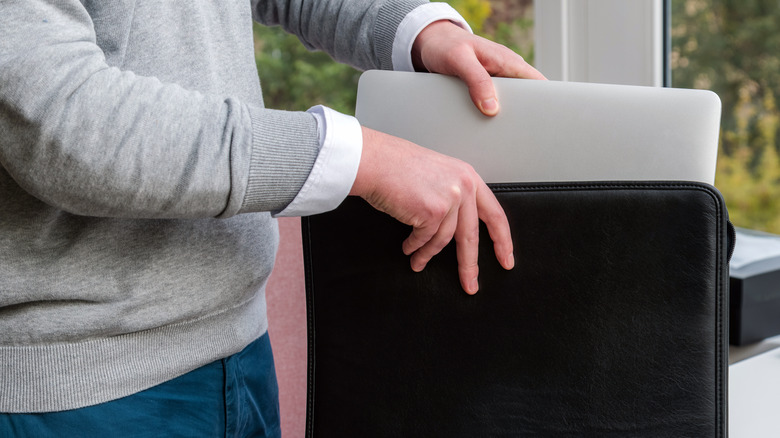
Deciding whether a 16 inch laptop is worth it often depends on your specific environment. I frequently get asked, "is a 16 inch laptop too big for college students?" My honest assessment is usually: yes. Most lecture hall desks are designed with 13-inch tablets or small laptops in mind. Try placing a 16-inch workstation on a swivel-arm desk, and you'll find there’s no room for a notebook, a mouse, or even a cup of coffee. The disadvantages of 16-inch laptops are most apparent in these cramped, nomadic settings.
However, for the creative professional, the 16 inch laptop price reflects a machine that can truly do it all. If your "office" changes from your kitchen table to a coffee shop to a client's site, having a 16:10 OLED panel that is factory-calibrated can save you from needing an external monitor. You are essentially trading 1.4 pounds of weight for the ability to work comfortably anywhere there is a flat surface.
Who this is NOT for:
- Students who spend 8 hours a day walking between classes.
- Frequent flyers who primarily work in Economy class.
- Users who prioritize one-handed carrying and "couch use."
- Anyone on a strict budget where the price-to-portability ratio is the priority.
Battery longevity is another factor to consider. While 16-inch models usually house the largest legally allowed batteries (99.9Wh), they also have more pixels to light up. In our testing of 2026 models, the efficiency of newer chips has narrowed the gap, but a 14-inch model still typically outlasts its larger sibling by 15-20% because the display is the primary power draw.

FAQ
Is a 16-inch laptop worth it?
A 16-inch laptop is worth it if your work requires significant multitasking, video editing, or complex 3D rendering where screen real estate and thermal management are critical. It acts as a genuine desktop replacement that allows you to avoid external monitors, though the trade-off is reduced portability and a higher price tag.
Is a 14 or 16-inch laptop better?
Neither is objectively better; the choice depends on your lifestyle. A 14-inch laptop is superior for portability, travel, and casual use on your lap or in tight spaces. A 16-inch laptop is superior for professional creative work, high-end gaming, and anyone who needs maximum performance from high-wattage hardware component configurations.
Is a 15.6 inch laptop the same as a 16-inch laptop?
No, they are different in both size and shape. Most 15.6-inch laptops use a 16:9 aspect ratio, making them wider and shorter. Modern 16-inch laptops almost exclusively use a 16:10 aspect ratio, providing more vertical space for documents and websites, and they often fit into a similar overall chassis size as older 15.6-inch models thanks to thinner bezels.
Why are 16-inch laptops so popular?
16-inch laptops have surged in popularity because they provide the ideal balance for the modern work-from-home or hybrid workforce. They offer enough screen space to replace a desktop PC while remaining portable enough to move between a home office and a corporate headquarters, fitting the needs of the 38% of users who want a do-it-all machine.
Final thoughts: The best 16 inch laptop for you is one that satisfies your need for power without making you dread your morning commute. If you are a designer or a heavy multitasker, the 30% jump in screen area is transformative. But if you're a student or a traveler, that extra 1.4 pounds will feel heavier with every passing mile. Check out our latest 16 inch laptop price comparison tools to see which models are currently offering the best value for your specific hardware needs.