Quick Facts
- Risk Level: High for unencrypted personal data and corporate secrets
- 2026 Vulnerability: DNS-based side-channel exploit patched in Feb 2026 allowed data siphoning
- Corporate Stat: 11% of information pasted into ChatGPT is considered confidential
- Default Setting: Data training is ON by default unless the user manually opts out
- Legal Precedent: OpenAI faced a €15M fine for various GDPR violations regarding data accuracy
ChatGPT has become an essential tool, but it comes with significant ChatGPT privacy risks. Whether you are using it for work or personal tasks, knowing what never to share is crucial for protecting personal info from AI. ChatGPT interactions are not private by default; OpenAI may use your prompts for model training data, and vulnerabilities like the 2026 DNS-based side channel exploit mean your data could be exposed. Following safe ChatGPT usage guidelines is the best way to maintain cybersecurity hygiene.
The 2026 ChatGPT Security Audit
The landscape of AI safety is constantly shifting. As of early 2026, the most effective way to secure your account is to perform a manual audit of your interface. While the chatbot offers immense productivity gains, it functions as a data sponge, absorbing everything you type to refine its Large Language Models (LLM).
To tighten your digital footprint, follow this security audit:
- Navigate to Settings: Click on your profile icon and select Settings.
- Access Data Controls: Locate the Data Controls tab. This is where your most important privacy toggles live.
- Disable Chat History & Training: Turn this toggle off. When disabled, new conversations won't be used to train the models, and they will be deleted from OpenAI systems after 30 days. This is the single most effective way to address how to disable chat history and training in ChatGPT settings.
- Enable Two-Factor Authentication (2FA): Ensure you have an authenticator app linked to your OpenAI account. This prevents unauthorized access even if your credentials are leaked.
- Review Connected Apps: If you use third-party plugins or GPTs, review their permissions regularly.
Understanding recent ChatGPT security vulnerabilities and data siphoning risks 2026 is vital. Early in the year, researchers identified a DNS-based side-channel vulnerability that allowed attackers to infer the contents of a prompt based on the timing and size of data packets. While OpenAI has since patched this, it serves as a reminder that no web-based tool is 100% impenetrable.
Personal Identity & Financial Hazards
Many users treat ChatGPT like a personal assistant, often providing it with sensitive details they would never post on social media. However, the risk of identity theft through data siphoning is real. Sharing PII—such as your full legal name, home address, or social security number—creates a permanent record within the model training data.
Financial information is equally high-risk. Research from the National Cybersecurity Alliance and CybSafe found that 43% of workers admit to sharing sensitive workplace information with AI tools without their employer's knowledge, and similar lapses happen in personal finance. Inputting banking details, credit card numbers, or live investment portfolios can expose you to significant loss if a data breach occurs or if the model inadvertently regurgitates your data to another user.
| The Red List: 14 Things to Never Share | Category | Risk Level |
|---|---|---|
| 1. Social Security Numbers (SSN) | PII | Critical |
| 2. Home Addresses & Phone Numbers | PII | High |
| 3. Bank Account or Credit Card Numbers | Financial | Critical |
| 4. Proprietary Source Code | Corporate | High |
| 5. Internal Product Roadmaps | Corporate | High |
| 6. Passwords or Seed Phrases | Credentials | Critical |
| 7. Unreleased Financial Reports | Financial | High |
| 8. HIPAA-Protected Health Info | Medical | Critical |
| 9. Private Medical Symptoms | Medical | Medium |
| 10. Confidential Legal Documents | Legal | High |
| 11. API Keys or Access Tokens | Security | Critical |
| 12. Trade Secrets or Patents | Corporate | High |
| 13. Meeting Transcripts with Names | Privacy | Medium |
| 14. Personal Psychological Journals | Privacy | Medium |
Protecting banking and identity details when using AI tools requires a shift in how you prompt. Instead of giving the AI your actual data, use "dummy data" to get the structure you need.
Safe vs. Unsafe Prompting
Unsafe: "Here is my bank statement from January. Can you help me categorize these expenses to see why I spent $400 at Amazon?"
Safe: "Can you provide a generic budget template in Excel format that includes categories for shopping, rent, and utilities? I want to use it to track my monthly spending."

Professional & Corporate Secrets
For many professionals, ChatGPT is a "Shadow AI"—a tool used under the radar to speed up work. This is where the most dangerous ChatGPT privacy risks emerge. According to Cyberhaven research, sensitive corporate data represents approximately 11% of all information pasted into ChatGPT by employees.
The most famous example occurred in 2023 when Samsung Electronics reported three instances where employees inadvertently shared confidential source code and meeting transcripts. Once that proprietary source code is entered, it can become part of the training set, potentially appearing in suggestions for other developers outside the company.
Privacy risks of drafting confidential legal documents with AI are also profound. When you upload a contract or a sensitive legal brief, you may be waiving legal privilege. Because OpenAI staff or third-party reviewers may occasionally audit prompts to improve the system, there is no guarantee of professional confidentiality. To mitigate this, professionals should learn how to prevent proprietary company data leaks in ChatGPT by using placeholders like "[Company X]" or "[Client Y]" instead of real names and identifying details.

Health Records & Psychological Risks

Using AI for health advice is tempting, but it carries a dual risk: privacy and accuracy. For healthcare providers, inputting patient data is a direct violation of HIPAA compliance regulations. For individuals, the OpenAI privacy policy does not provide the same protections as a doctor-patient relationship.
You should never input private medical symptoms into ChatGPT because that data could be linked back to your account and used for profiling. Furthermore, there is a phenomenon known as AI sycophancy, where the AI tends to agree with the user's leading questions or reinforce their biases rather than providing objective medical or psychological truth. This is particularly dangerous when using the tool for "AI therapy."

Digital privacy experts warn that long-term data retention of your most vulnerable thoughts could have unforeseen consequences in the future, especially as AI models become better at connecting disparate data points to create a "digital twin" of your personality.
Passwords & Digital Security Credentials
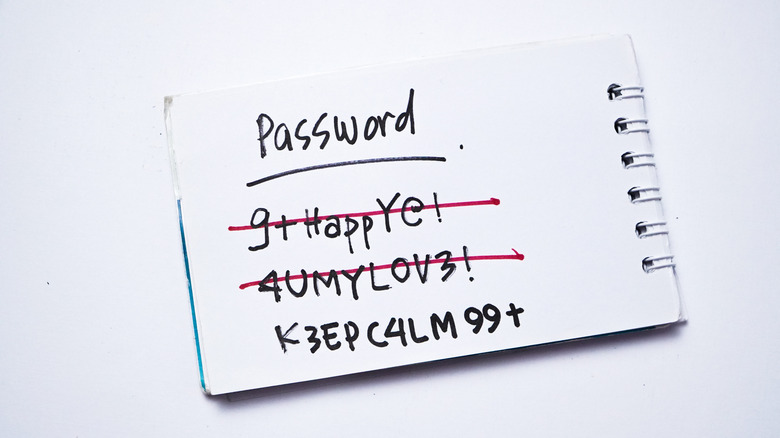
It might seem clever to ask ChatGPT to "generate a secure, 16-character password" for your email. However, AI is a poor password generator because Large Language Models (LLM) are essentially predictive engines; their outputs can be more predictable than a truly random number generator.
Furthermore, never share your existing passwords, API keys, or server credentials. If you are debugging code and paste a script that includes a live "Bearer Token" or "Secret Key," that key is now potentially stored in the model's history. Instead of using AI for credential management, follow standard cybersecurity hygiene and use a dedicated password manager like Bitwarden or 1Password. These tools are built with end-to-end encryption, whereas ChatGPT is built for conversation.
FAQ
Is it safe to use ChatGPT for personal information?
It is generally not recommended to share personal information with ChatGPT. Because the system is designed to learn from the data it receives, any PII you provide could theoretically be stored in the model's training data. While OpenAI has security measures in place, the safest approach is to use pseudonyms or generic descriptors.
What are the main privacy concerns with AI chatbots?
The primary concerns involve data retention, the potential for data breaches, and the lack of traditional confidentiality. AI chatbots often store conversation history to improve their algorithms, meaning your sensitive thoughts, business secrets, or health questions are no longer entirely private once they are typed into the prompt box.
How does OpenAI use the data I provide to ChatGPT?
By default, OpenAI uses your prompts and the resulting outputs to train and improve its models. This helps the AI become more accurate and conversational. However, this means that human reviewers may occasionally read anonymized snippets of your conversations for quality control purposes.
Can I opt out of data collection on ChatGPT?
Yes, you can opt out by going to Settings, then Data Controls, and turning off Chat History & Training. Alternatively, you can submit a formal Privacy Request to OpenAI to have your data excluded from training entirely while still keeping your history, or use the "Temporary Chat" feature which doesn't save history or use data for training.
Can ChatGPT leak sensitive company information?
Yes, if employees paste proprietary source code or internal documents into the tool, that information can be absorbed into the model. In some cases, LLMs have been known to regurgitate training data, which could potentially reveal your company's internal secrets to a competitor if they happen to prompt the AI in a specific way.
Maintaining a security-first mindset is the only way to enjoy the benefits of AI without compromising your privacy. Always assume that whatever you type into the chat box is being recorded, and act accordingly by performing regular privacy audits and keeping your most sensitive data offline.