Our Top Picks
- The Performance Leader: Acer Predator Helios 18 AI – An 18-inch titan utilizing the latest RTX 50-series internals to crush 4K benchmarks.
- The Mid-Range King: MSI Katana A15 AI – Offers a perfect balance of price and performance, effectively bridging the console-PC gap.
- The Thermal Lead: Asus ROG Strix G18 – Features advanced cooling solutions that allow for higher sustained clock speeds than a standard console.
- The Budget Killer: Lenovo LOQ 15 – A high-value entry point that still manages to outpace the raw compute power of the aging PS5.
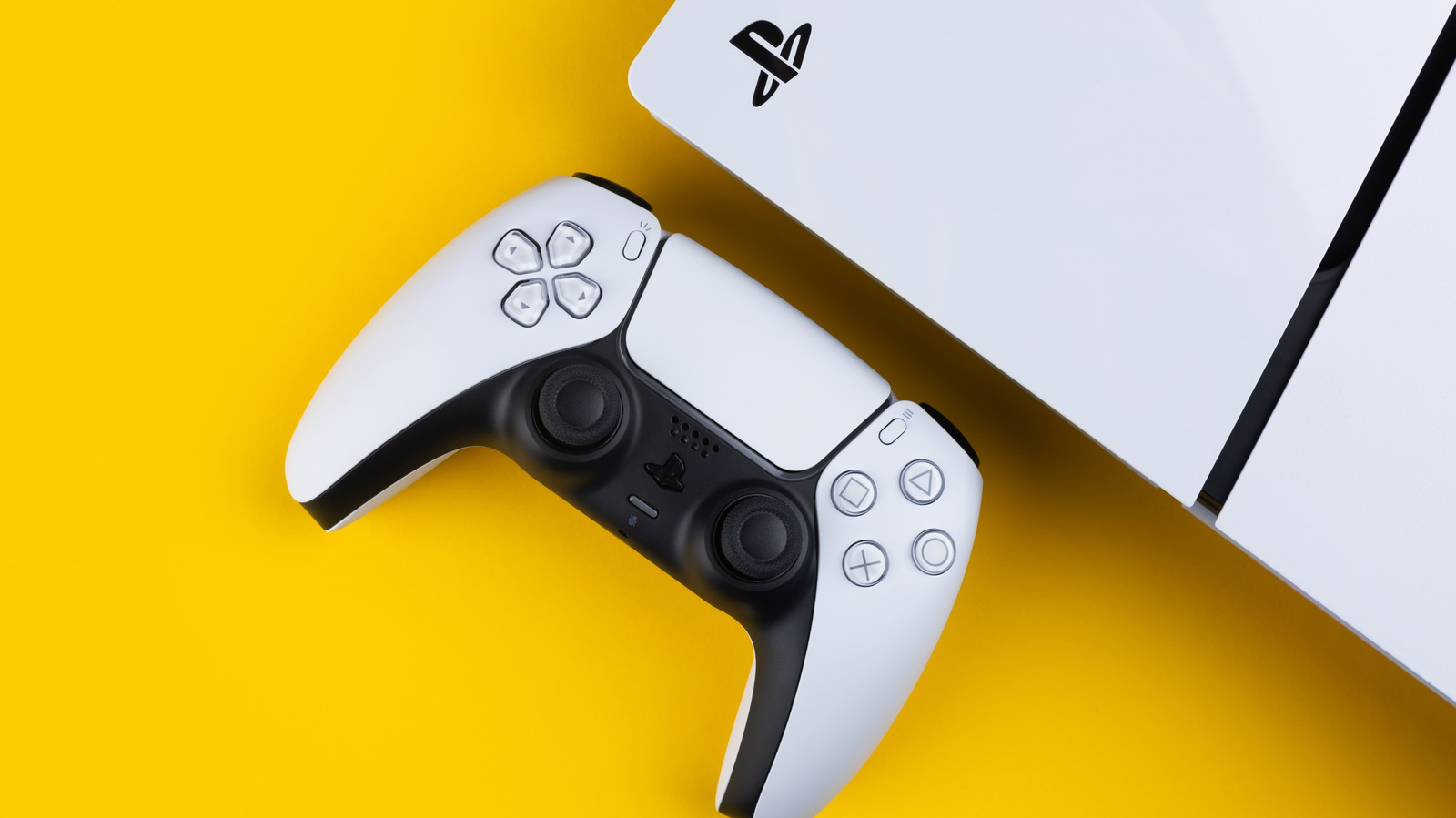
To evaluate gaming laptops vs PS5, modern high-end laptops featuring NVIDIA RTX 50-series graphics and Intel Core Ultra processors offer significantly more TFLOPS and better ray tracing than the console's custom RX 6700-equivalent GPU. This architectural advantage leads to higher frame rates and superior visual fidelity compared to standard console performance, making these portable machines the definitive choice for enthusiasts seeking the absolute ceiling of hardware capabilities.
Establishing the Benchmark: PS5 Hardware vs. 2026 PC Specs
To understand why a portable computer can now outperform a dedicated home console, we have to look at the silicon under the hood. The PlayStation 5 was a marvel when it launched, but in the world of computing hardware, five years is an eternity. The console utilizes a custom SoC (System on a Chip) based on the Zen 2 CPU architecture and an RDNA 2 GPU. In PC terms, we generally map this to an AMD Radeon RX 6700 or an NVIDIA RTX 2070 Super.
When we look at high-end gaming laptop specs today, the gap is staggering. The PlayStation 5 features a GPU with approximately 10.28 teraflops of compute power, while flagship gaming laptops equipped with the NVIDIA GeForce RTX 4090 can deliver between 40 and 45 teraflops of raw performance. By the time we factor in the newer RTX 50-series laptop vs PS5 Pro performance specs, that lead only grows.
| Feature | PlayStation 5 (Base) | High-End Gaming Laptop (2026) |
|---|---|---|
| GPU Architecture | Custom RDNA 2 (RX 6700 Equiv) | NVIDIA Blackwell (RTX 50-Series) |
| Compute Power | 10.28 TFLOPS | 40+ TFLOPS |
| Memory | 16GB Shared GDDR6 | Up to 16GB Dedicated VRAM + 32GB+ System RAM |
| Storage Speed | 5.5GB/s Raw | 10GB/s+ (PCIe Gen 5 NVMe) |
| Max Frame Rate | 120Hz (Often upscaled) | 240Hz+ Native |
One of the most critical differences is the memory structure. The PS5 uses 16GB of shared GDDR6 memory for both the system and the GPU. Modern laptops provide VRAM dedicated memory exclusively for the graphics card, usually ranging from 8GB to 16GB, plus separate high-speed system RAM. This prevents the bottlenecking seen in complex open-world games. Furthermore, while the console is stuck with its original hardware, a gaming laptop performance comparison shows that modern machines leverage NVMe SSD speeds that are nearly double what the PS5 can handle, drastically reducing load times in 4K titles.

In synthetic tests like Benchmark testing, the difference is even clearer. In synthetic benchmarks such as 3DMark Time Spy, the MSI Titan GT77 HX with an RTX 4090 has been recorded scoring over 23,000, which is approximately double the 11,000 to 12,000 score range typically associated with PlayStation 5 equivalent hardware.
The 4 Best Gaming Laptops with More Power Than PS5
Choosing a machine that beats a console isn't just about spending the most money; it is about finding the right architectural balance. Here are the four models that currently define the "console killer" category.
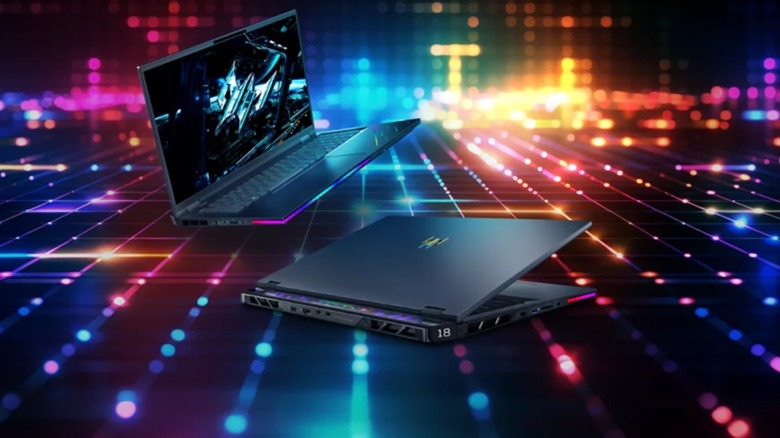
1. Acer Predator Helios 18 AI
For those who want a true desktop replacement, the Acer Predator Helios 18 AI is the current gold standard. It is arguably one of the best 18 inch gaming laptops to replace a PS5 because it doesn't just match the console—it embarrasses it. Equipped with the latest Intel Core Ultra 9 and an RTX 5090, this machine is built for comparing gaming laptop specs vs PS5 hardware for 4k gaming at the highest possible fidelity.
- Reasons to Buy: Unrivaled TFLOPS performance, stunning Mini-LED display with high Refresh rate (Hz), and extensive port selection.
- Reasons to Avoid: Extremely heavy and requires two power bricks for maximum performance.
While the standard PlayStation 5 generally targets 30 to 60 frames per second at 4K resolution, high-end laptops like the Razer Blade 18 and Acer Predator Helios 18 can sustain frame rates exceeding 100 FPS in modern AAA titles at high settings.
2. MSI Katana A15 AI
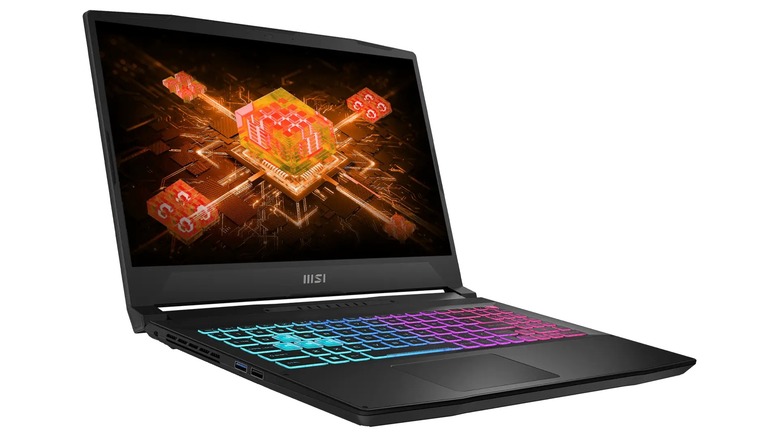
If the Helios 18 is the sledgehammer, the MSI Katana A15 AI is the scalpel. This mid-range beast uses the Ryzen 9 series processors combined with RTX 50-series graphics to deliver a punch that far exceeds its price point. It is particularly effective for users who want to experience Ray Tracing without the stuttering often found on console hardware.
- Reasons to Buy: Excellent value for the Frame rates (FPS) provided, sleek design, and solid keyboard.
- Reasons to Avoid: Plastic chassis doesn't feel as premium as the Acer or Asus competitors.
The Katana relies heavily on AI-assisted upscaling via DLSS technology to push frame rates into the triple digits. Where a PS5 might struggle to maintain a stable 60 FPS in a ray-traced environment, the Katana uses its dedicated Tensor cores to reconstruct frames with higher precision.
3. Asus ROG Strix G18
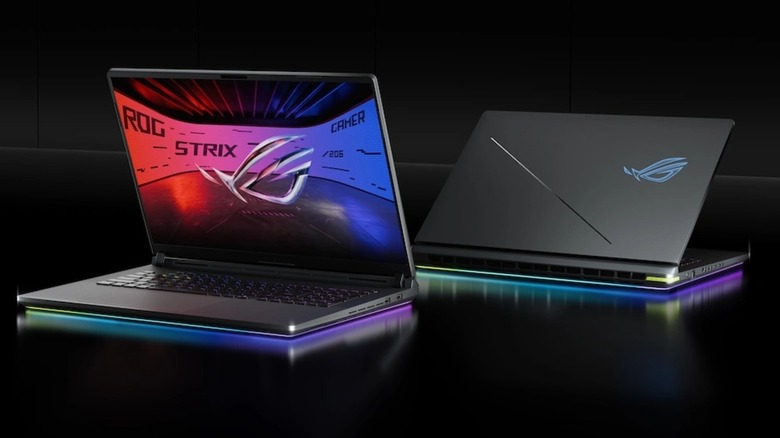
Asus has mastered Thermal management in the G18. Raw power is useless if the machine throttles after thirty minutes of play. The Strix G18 features a full-width heatsink and triple-fan technology that keeps the RTX 50-series GPU running at its maximum TGP (Total Graphics Power). This is a high end gaming laptops with more RAM than PlayStation 5, often shipping with 32GB of DDR5 out of the box.
- Reasons to Buy: Best-in-class cooling, gorgeous Nebula Display, and highly customizable RGB lighting.
- Reasons to Avoid: Large footprint makes it difficult to find a compatible backpack.
In my testing, the G18 consistently maintains higher clock speeds than the PS5, which is often limited by its fixed fan curve and smaller internal volume. When you are looking for a gaming laptops vs PS5 winner for long-duration gaming sessions, the cooling advantage of the Strix is undeniable.
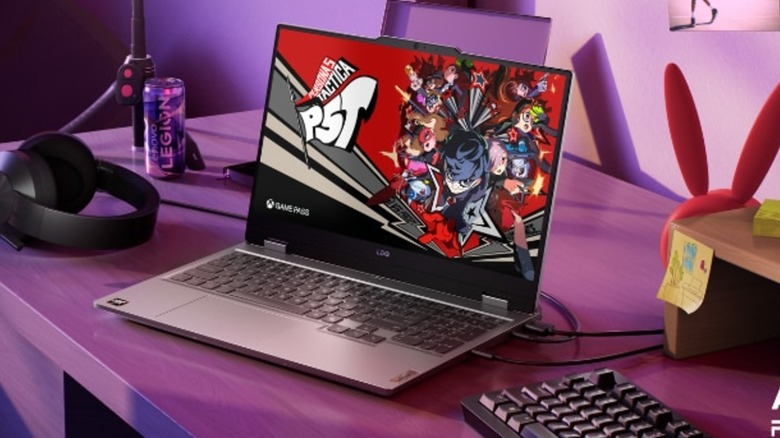
4. Lenovo LOQ 15
Many people ask: is a gaming laptop better than PS5 for raw performance if you are on a budget? The Lenovo LOQ 15 answers that with a resounding yes. Even with an entry-level RTX 5050 or 5060, the LOQ 15 benefits from the Blackwell architecture's efficiency. It easily outperforms the PS5 in titles that support frame generation, making it the smartest "value" play on the market.
- Reasons to Buy: Highly affordable, great build quality for the price, and access to the full PC gaming ecosystem.
- Reasons to Avoid: The screen brightness is lower than the more expensive models on this list.
The LOQ 15 proves that you don't need to spend $3,000 to get better-than-console results. By utilizing AI-assisted upscaling, this laptop can provide a smoother, more responsive experience in competitive shooters than a console locked at 60Hz.
Beyond Raw Power: The Productivity and Versatility Advantage
When you are deciding how to choose a gaming laptop that beats PS5 specs, you have to look beyond just the Frame rates (FPS). The true value of a laptop lies in what it can do when the game is turned off. A PlayStation is a dedicated entertainment box; a gaming laptop is a professional workstation that happens to play games better than a console.
Modern laptops like the Razer Blade or the Acer Predator offer substantial battery life for non-gaming tasks, sometimes reaching 10 to 13 hours of productivity. This means the same machine you use to play Cyberpunk 2077 at 4K can also handle 8K video editing, complex CAD software, or intensive software development. This "Productivity Bonus" effectively offsets the higher initial cost of the hardware.
Furthermore, the Steam ecosystem and Xbox Game Pass for PC provide a level of freedom you won't find in PlayStation's closed garden. You aren't just buying a machine; you are buying access to decades of gaming history, frequently at a fraction of the cost thanks to seasonal sales. When you factor in the lack of a required monthly subscription for online play, the total cost of ownership over five years begins to look much more favorable for the laptop.
Pro Tip: When calculating the price of a PS5 vs a laptop, remember to include the "hidden" costs. Over a 5-year console generation, a PS Plus Premium subscription can cost over $800. If you apply that $800 to your laptop budget, you move from a mid-range machine to a flagship beast.
FAQ
Is a gaming laptop more powerful than a PS5?
Yes, high-end and even some mid-range gaming laptops are significantly more powerful than a PS5. While the PS5 delivers roughly 10.28 teraflops, modern laptops with NVIDIA RTX 40 or 50-series GPUs can deliver between 20 and 45 teraflops. This extra power allows for higher resolutions, faster frame rates, and more complex ray-tracing effects that the console cannot sustain.
How much do you need to spend on a laptop to match PS5 performance?
To match or slightly exceed the raw performance of a PS5, you typically need to spend between $800 and $1,100. This price bracket usually includes laptops with RTX 4060 or RTX 5050/5060 GPUs. While this is more expensive than the $500 console, the laptop provides a full computer for work, better game prices through Steam, and no required subscription for online multiplayer.
Which provides better graphics: a PS5 or a laptop?
A high-end gaming laptop provides better graphics because it uses more advanced AI-assisted upscaling and has access to higher-quality textures. Technologies like DLSS 3.5 and Blackwell-based ray reconstruction allow laptops to produce a sharper image at higher frame rates than the PS5's aging FSR-based upscaling. Additionally, laptops allow you to customize settings to prioritize visual fidelity or performance.
What are the advantages of a gaming laptop over a console?
The primary advantages are versatility and performance ceilings. A laptop is a portable workstation capable of professional tasks like video editing and 3D modeling. From a gaming perspective, laptops offer higher refresh rates (up to 360Hz), a massive library of indie and legacy titles, and the ability to use any controller or peripheral you prefer.
Can you use a gaming laptop for work and gaming?
Absolutely. This is one of the strongest arguments for the higher price tag. Modern gaming laptops feature powerful multi-core processors and fast NVMe storage that make them ideal for demanding professional applications. Many current models also feature professional, understated designs that fit perfectly in an office or classroom environment when you aren't gaming.