Our Top Picks
- Best Overall Premium Thermostat: The Nest Learning Thermostat 4 is the most advanced smart thermostat Google has ever produced, featuring native Matter support for Apple HomeKit and a high-resolution crystal lens display, making it the best premium smart upgrade for modern HVAC automation.
- Best for Older Homes: With its integrated power sharing technology, this model often bypasses the need for a C-wire, simplifying the DIY thermostat installation process in aging properties.
- Best for Multi-Room Comfort: The inclusion of a 2nd-gen Nest Temperature Sensor ensures that hot and cold spots are eliminated through targeted remote temperature sensors monitoring.
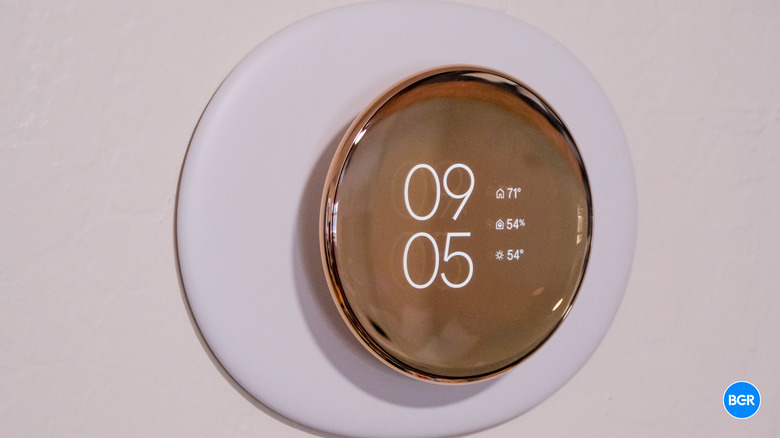
The Nest Learning Thermostat 4 features a redesigned floating glass display inspired by the Pixel Watch and introduces native Matter support. This compatibility allows users to integrate the device with Apple HomeKit, Amazon Alexa, and Samsung SmartThings via the Google Home app. It utilizes Dynamic Farsight technology to display information like time and outdoor temperature on its high-resolution crystal lens.
The Floating Design: A High-Resolution Smart Masterpiece
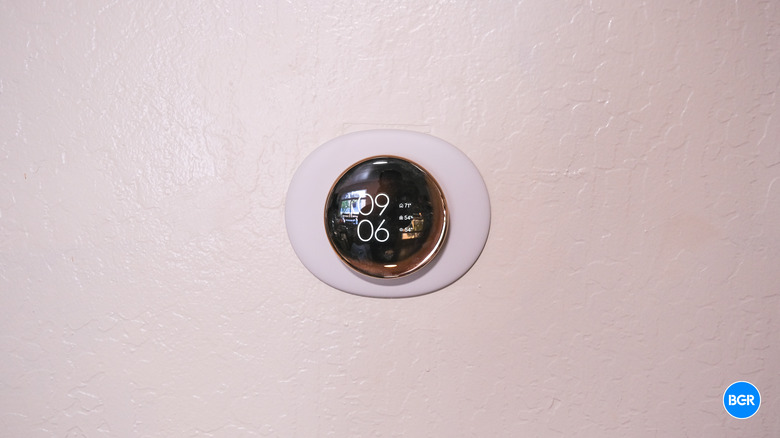
In my years of reviewing smart home hardware, I have rarely seen a thermostat that demands to be looked at as much as this one. The Nest Learning Thermostat 4th Gen floating design and display features represent a significant departure from the industrial look of previous generations. Google has clearly taken design cues from the Pixel Watch, opting for a curved, mirror-finish glass that appears to hover over the stainless steel base.
The most striking upgrade is the screen itself. This generation boasts a 2.7-inch LCD display, which provides a 60% larger viewing area compared to the previous 3rd Generation model. With a 600x600 resolution, the text is crisp and readable from across the room. Google has leveraged Soli motion sensing technology to power its Dynamic Farsight feature. As you approach the device, the display shifts from a minimalist clock to a detailed dashboard showing the temperature, weather, or air quality. The crystal lens display is not just about looks; it is an interface that feels alive.
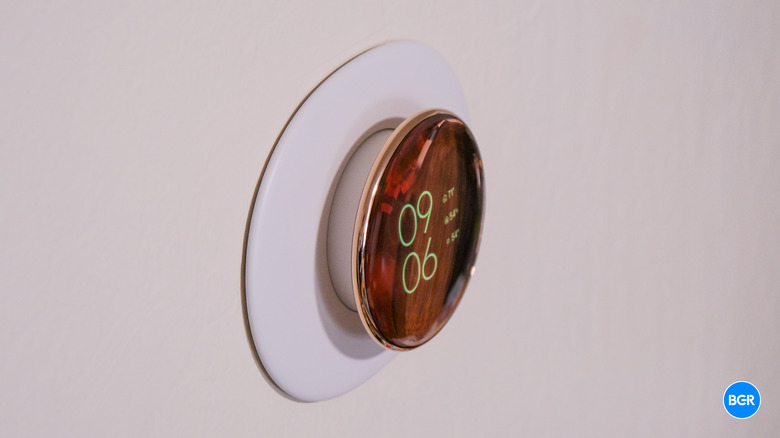
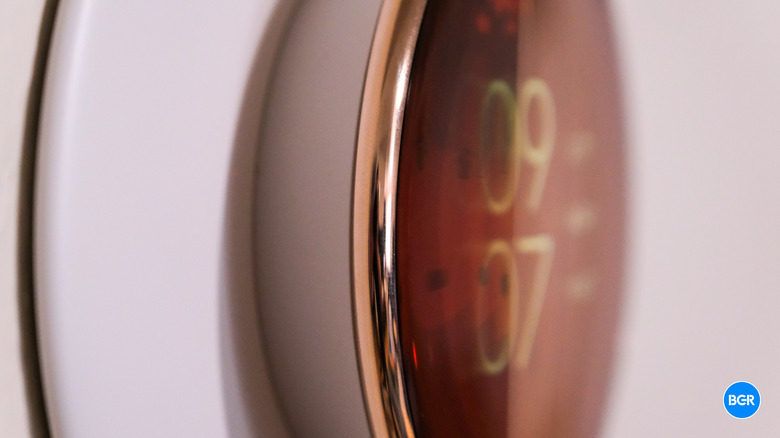
However, the hardware realism means acknowledging the trade-offs of such a high-gloss finish. In my testing, the mirror-finish glass is beautiful but prone to glare if placed directly opposite a large window. You will also find yourself wiping away fingerprints if you prefer manual adjustments over voice or app control. Despite this, the build quality remains top-tier, maintaining the satisfying mechanical "click" of the rotating outer ring that long-time Nest users have come to love.
Universal Connectivity: Native Matter and Apple HomeKit Support
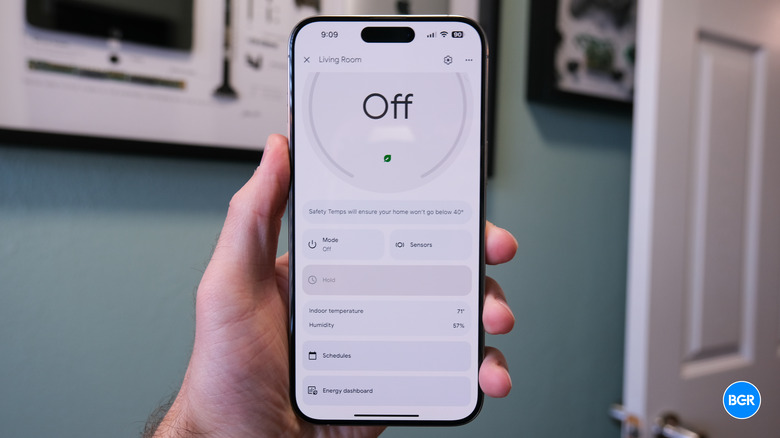
For a long time, the biggest hurdle for Google Nest products was their "walled garden" approach. That changes entirely with this release. The Google Nest Matter compatibility is the headline feature for anyone running a heterogeneous smart home. Because it supports the Matter standard natively, you are no longer limited to the Google Home app.
If you are an iPhone user, setting up Nest Learning Thermostat 4 with Apple HomeKit via Matter is now a straightforward process. You simply scan the Matter QR code, and the thermostat appears in your Apple Home app just like any other native accessory. This level of smart home interoperability is a game-changer, allowing you to include your thermostat in "Good Night" scenes that involve Apple-compatible lights and locks.
Beyond Matter, the device acts as a Thread border router. This strengthens your local smart home mesh network, ensuring that other Thread-enabled devices have a more stable and faster connection. Whether you are using Amazon Alexa or Samsung SmartThings, the Nest Learning Thermostat 4 integrates seamlessly, effectively ending the era of choosing a thermostat based solely on your phone's operating system.
Installation for Every Home: The No C-Wire Advantage
One of the most common questions I get from readers living in older homes is whether they need to pull new wires through their walls. Traditionally, smart thermostats required a "C-wire" or common wire to provide constant power. Google has addressed this by refining its power sharing technology.
In my experience with various HVAC automation setups, the Nest Learning Thermostat 4 installation in older homes without C-wire is remarkably reliable. The device can "steal" a small amount of power from the heating or cooling wires to keep its internal battery charged. While some complex systems might still require a Nest Power Connector, the majority of four-wire systems will work out of the box.
The DIY thermostat installation is further simplified by the redesigned backplate. It features a built-in bubble level and easy-to-press wire terminals. Included in the box is the new 2nd-gen Nest Temperature Sensor. These remote temperature sensors are essential for homes where the thermostat is located in a hallway that doesn't accurately reflect the temperature of the living room or bedroom. By placing the sensor in a "cold spot," you can tell the Nest to prioritize that specific room's comfort during certain times of the day.
Energy Efficiency: Marketing Claims vs. Real-World Savings
Google prominently states that the Nest Learning Thermostat 4th Gen can help homeowners save up to 31% on their heating and cooling energy costs. As an editor, I always advise taking "up to" figures with a grain of salt. While that 31% is technically possible under perfect conditions, most users should realistically expect Nest 4th generation energy saving features and bill reduction to hover between 12% and 15%.
The real magic happens through Smart Recovery technology. The thermostat doesn't just turn on the heat at 7:00 AM; it learns how long your specific home takes to reach a target temperature based on the outdoor weather. If it’s a particularly cold morning, it might start the furnace at 6:30 AM so you wake up to a perfectly warm house exactly at 7:00 AM.
Furthermore, the device is Energy Star certified and integrates with the Nest Renew service. This service analyzes the local power grid to prioritize running your HVAC system when cleaner, renewable energy is available or when electricity prices are lower. By automating these micro-adjustments, the Nest Learning Thermostat 4 manages to save money without requiring the user to constantly micromanage the settings.
Nest 4 vs. Ecobee Premium: Which Premium Thermostat Wins?
The battle for the wall has long been between Nest and Ecobee. When comparing the Nest Learning Thermostat 4th Gen vs Ecobee Smart Thermostat Premium, the choice often comes down to whether you value aesthetics and AI-driven learning or additional built-in sensors and speakers.
| Feature | Nest Learning Thermostat 4 | Ecobee Smart Thermostat Premium |
|---|---|---|
| MSRP | $279.99 | $249.99 |
| Display | 2.7-inch Borderless Crystal Lens | 4-inch Rectangular LCD |
| Smart Protocol | Native Matter & Thread | HomeKit, Alexa, Google (Native) |
| Installation | Power-Sharing (often no C-wire) | Power Extender Kit included (needs C) |
| Sensors | Includes 1 Remote Sensor | Includes 1 Sensor (Occupancy/Temp) |
| Unique Feature | Soli Motion Sensing & AI Learning | Built-in Speaker & Air Quality Monitor |
The Nest Learning Thermostat 4th Gen vs Ecobee comparison reveals that Nest has taken the lead in industrial design. The borderless glass on the Nest is far more modern than the somewhat dated look of the Ecobee. However, Ecobee still includes a built-in air quality monitor and a speaker for Siri or Alexa directly on the unit. If you want your thermostat to act as a smart speaker, go with Ecobee. If you want a piece of high-tech art that learns your schedule autonomously, the Nest Learning Thermostat 4 is the clear winner.
The Upgrade Verdict: Is It Worth It for Gen 3 Owners?
If you are currently using the 3rd Generation model, deciding if upgrading to Nest Learning Thermostat 4th Gen is worth it from 3rd Gen depends on your ecosystem. If you are deeply embedded in the Apple HomeKit world, the Matter support alone makes this a mandatory upgrade. The improved display and the inclusion of the new remote sensor add significant value to the $279.99 price point.
The Google Nest Learning Thermostat (4th Generation) was officially released on August 20, 2024, and it represents a "future-proof" investment. For those still using Gen 1 or Gen 2 models, the decision is even simpler. With Google planning to sunset certain legacy services and older hardware by October 2025, moving to the 4th Gen ensures your smart home remains functional and secure.
Ultimately, the Nest Learning Thermostat 4 is about more than just temperature control. It is a central hub for climate intelligence. It looks better, works with more platforms, and installs more easily than any of its predecessors. If you are looking for the absolute best smart thermostat on the market today, this is it.
FAQ
Is the Nest Learning Thermostat 4th Gen worth it?
Yes, particularly for users who want a premium aesthetic and cross-platform compatibility. The combination of the high-resolution display, Matter support, and the included remote sensor justifies its $279.99 price tag for those looking to modernize their home automation.
What are the differences between the Nest Learning Thermostat 3rd Gen and 4th Gen?
The 4th Gen features a 60% larger borderless display, native Matter support, and Soli-powered Dynamic Farsight. It also uses updated power-sharing technology and includes a redesigned remote sensor, whereas the 3rd Gen relies on a more traditional screened design and older software protocols.
Does the Nest Learning Thermostat 4 require a C-wire for installation?
In most cases, no. The Nest Learning Thermostat 4 utilizes advanced power-sharing technology to draw power from existing HVAC wires. However, complex systems or very old wiring may still require a Nest Power Connector or a dedicated C-wire for consistent operation.
Does the Nest Learning Thermostat 4th Gen work with Matter?
Yes, it features native Matter support. This allows it to work seamlessly with Apple Home, Amazon Alexa, Samsung SmartThings, and any other Matter-certified platform, significantly improving its interoperability compared to previous models.
Does the Nest Learning Thermostat 4 include a temperature sensor?
Yes, every Nest Learning Thermostat 4 comes with one 2nd-gen Nest Temperature Sensor in the box. This remote sensor helps manage multi-level climate control by allowing the thermostat to monitor and prioritize the temperature in a specific room rather than just where the main unit is mounted.